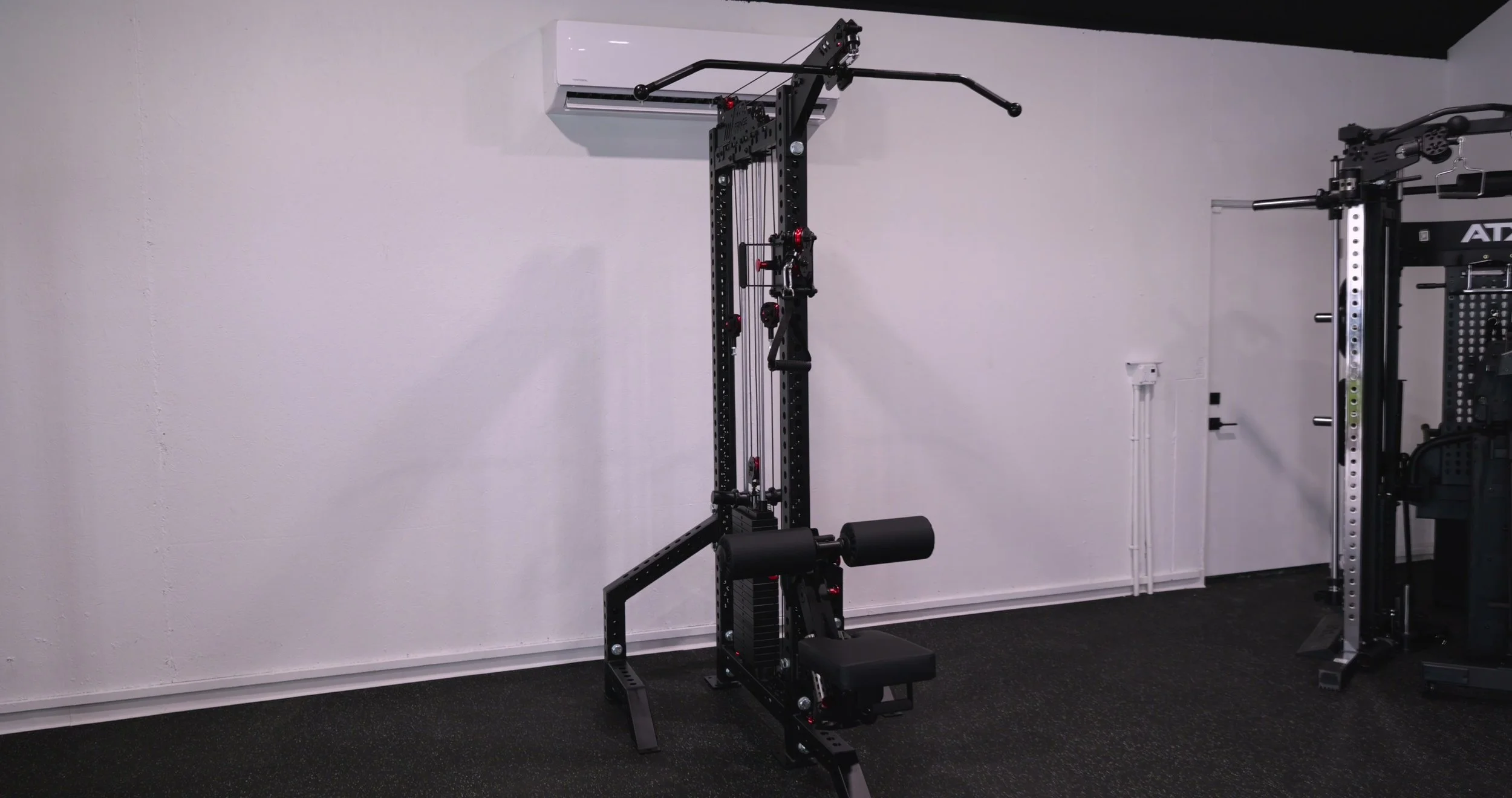
This product was reviewed in-house by Michael at The Jungle Gym Reviews.
The Fringe Sport Cloverfield is a standalone cable/lat tower that nails heavy pulldowns and low rows with dedicated 1:1 pulls, while its front functional-trainer trolley works fine but feels a touch sticky at lighter loads, making it a strong fit for home gym owners who want a compact, modular single-stack tower that still takes serious weight.
Fringe built the Cloverfield as a single 220-pound stack station with three cable exit points, center high (1:1) for lat pulldowns, center low (1:1) for low rows, and a front functional-trainer trolley (2:1) on the main upright for single-handle and lighter accessory work. It’s self-braced, uses metric 3x3 uprights with one-inch holes on two-inch spacing, and includes loadable horns so you can add plates for more headroom.
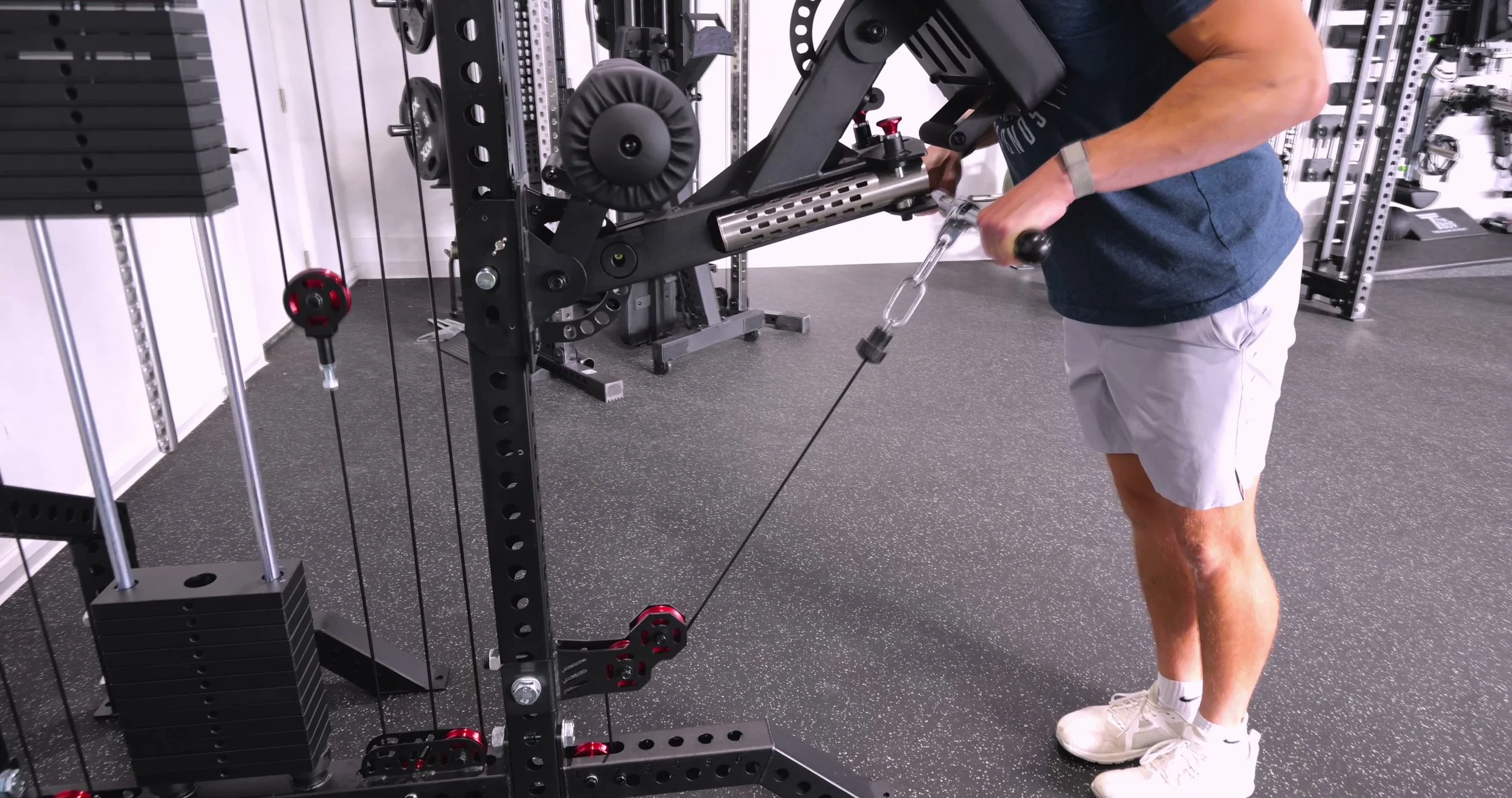
Fringe also launched the Gatling Seat alongside the tower. It adapts to both 3x3 one-inch and 5/8-inch hole patterns, uses a “sundial” adjustment setup for seat and leg rollers, and can be positioned for chest-supported work or unlocked for hip-thrust setups. Below I’ll break down how I used the tower and seat, with the good and the not-so-good called out plainly.
Quick Takeaway
If your main goal is heavy lat pulldowns and low rows in a smaller footprint, the Cloverfield delivers. The front 2:1 trolley is handy for typical cable work but shows some drag at lighter settings, and the trolley’s rollers wobble a bit. The 220-pound stack plus loadable horns gives you headroom for stronger pulls, and the 3x3 uprights keep it attachment-friendly. Think of it as a practical, compact lat/row tower with functional-trainer capability rather than a silky-smooth dual-stack functional trainer.
Quick Specs
Type: Standalone single-stack cable/lat tower (self-braced)
Cable Exit Points: 3 (center high 1:1, center low 1:1, front trolley 2:1)
Weight Stack: 220 lb single stack
Additional Loading: Loadable weight horns on both sides (about 3 inches each; more possible if stoppers are removed, plate-thickness dependent)
Effective Range (2:1): Half the selected weight with increased cable travel (e.g., 10 lb selection feels like 5 lb; up to about 110 lb effective from the stack)
Included Accessory: Low row footplate (noted in small print)
Uprights & Holes: Metric 3x3 uprights, one-inch holes, two-inch spacing (metric pattern)
Front Trolley: Four-roller carriage; height adjustable on front upright
Pulleys: Red anodized pulleys throughout
Price at review time: $2,499 for Cloverfield; $2,799 for Cloverfield + Gatling Seat bundle (Gatling Seat typically $400)
Where to Buy
You can purchase the Cloverfield cable tower and Gatling seat from Fringe Sport below:
My Real-World Experience
I set up the Cloverfield as intended: heavy 1:1 pulls on the high and low lines, lighter accessory work on the front trolley. The high 1:1 for pulldowns and the low 1:1 for rows were solid, smooth and direct, exactly where I liked to load up. The front 2:1 trolley was usable and easy to adjust, but I noticed drag and less crisp return at very light effective weights (think a 10-lb pin feeling like 5 lb). The floating pulleys can twist and the four-roller carriage wobbles and makes some noise as you move it, though heavier selections overcome most stickiness.
What sells the Cloverfield for me is the compact footprint and the modular, open 3x3 frame. It’s not a sealed, shrouded machine, so you can bolt on rack-style accessories or pair it with other Fringe gear. That openness is a tradeoff: you get attachment flexibility at the cost of a bit less refinement on the front trolley compared with an enclosed dual-stack unit.
Cable Points and Ratios
The Cloverfield has three distinct cable exits:
Center high (1:1) for lat pulldown
Center low (1:1) for low row
Front functional-trainer trolley (2:1) on the main upright
The 1:1 lines behave like you’d expect, select 100, you pull 100. The front trolley’s 2:1 gives twice the travel and half the effective weight (a 10 lb pin feels like 5), which can be handy for smaller jumps and for mid-row setups that need more cable travel. If you want to do a mid-row using the Gatling Seat’s bar position, you’ll likely use the 2:1 front trolley because the 1:1 line doesn’t run far enough out for that configuration.
Weight Stack and Loadable Horns
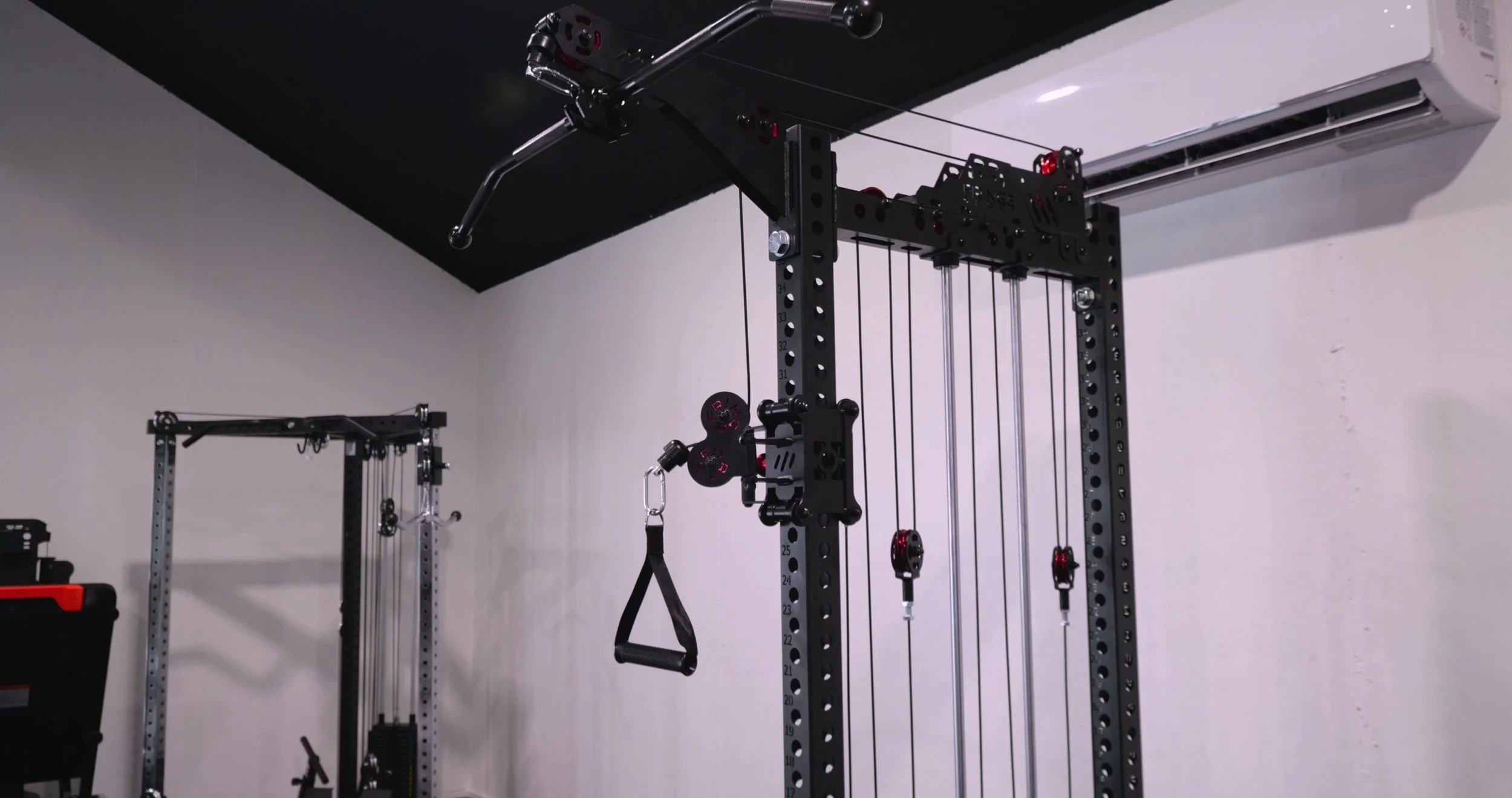
The single stack is 220 pounds. Fringe added loadable horns on both sides of the stack housing—about three inches of usable sleeve per side with the stoppers in place; removing the stoppers gets you a little more, depending on plate thickness. In practice, you can expect roughly two 45s per side plus the stack itself—around 400 lb total available for a heavy pulldown, give or take. That’s useful headroom if you need it.
The included low row footplate is a simple but important detail for bracing on the 1:1 low row without needing another accessory.
Cable Feel and the Front Trolley
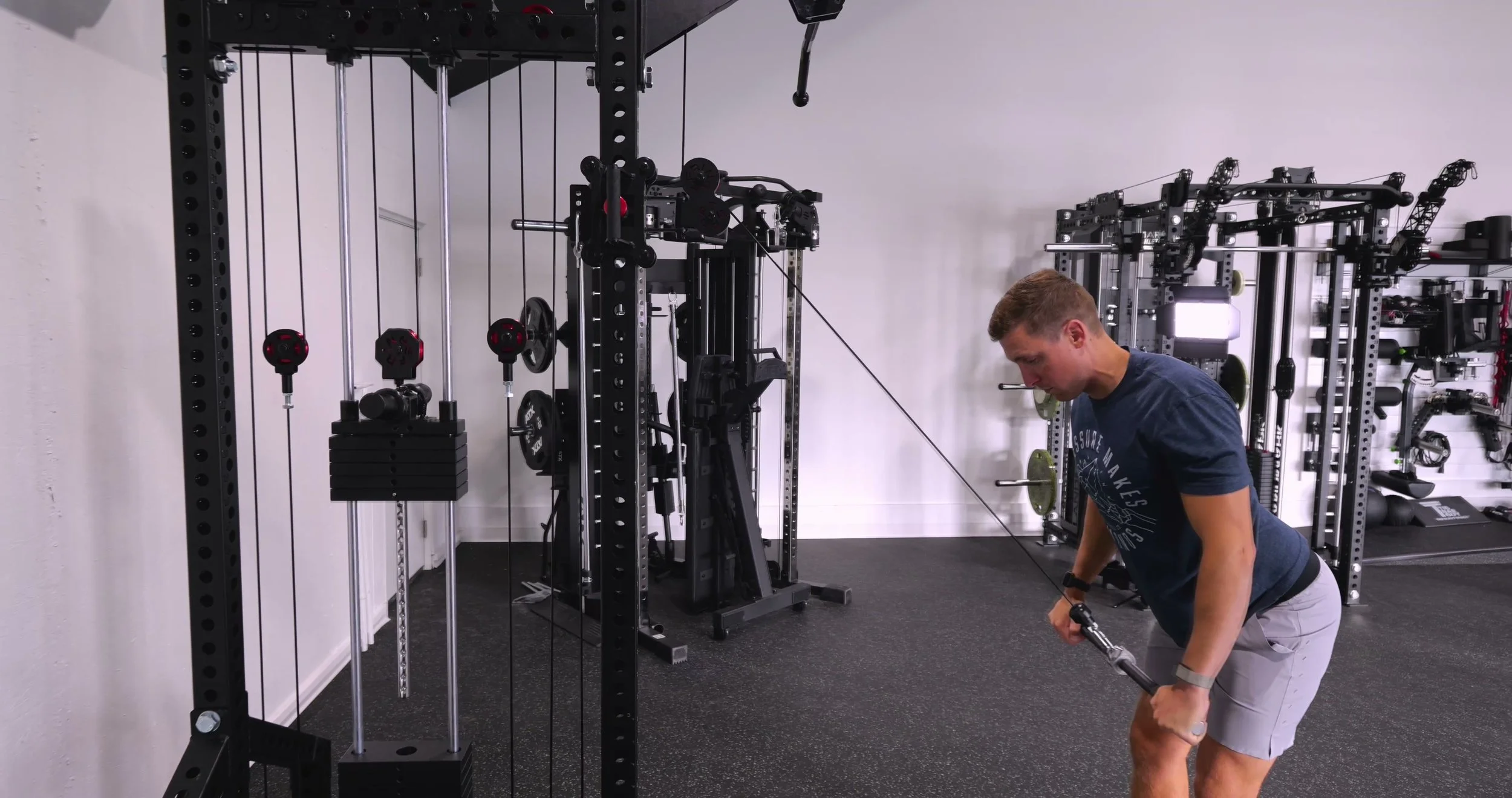
The front trolley rides on four rollers and moves easily, but the rollers wobble and add some noise. At light settings the pulley routing and floating pulleys introduce drag and reduce the crispness of return, most noticeable with very light effective loads (e.g., a 10-lb selection in 2:1). Heavier loads mask this. The high and low 1:1 lines felt smooth and direct.
This floating-pulley twist behavior isn’t new to Fringe, older setups showed similar tendencies, but the open frame here leaves the trolley more exposed. You get the benefit of being able to hang attachments off the uprights without a bulky shroud, but you trade a little refinement in light-load feel.
Footprint and Modularity
This is a self-braced tower, no rack or wall required. The metric 3x3 uprights with one-inch holes and two-inch spacing mean you can use common rack-style attachments. Because there’s no large shroud encasing the stack, it’s easier to mount or remove accessories compared with a fully enclosed machine. If you want to expand, you could add a crossmember and another post to create a hybrid that handles barbell work on one side and cables on the other. Fringe has suggested the Cloverfield may tie into broader setups later, which fits with the open-frame design.
The Gatling Seat
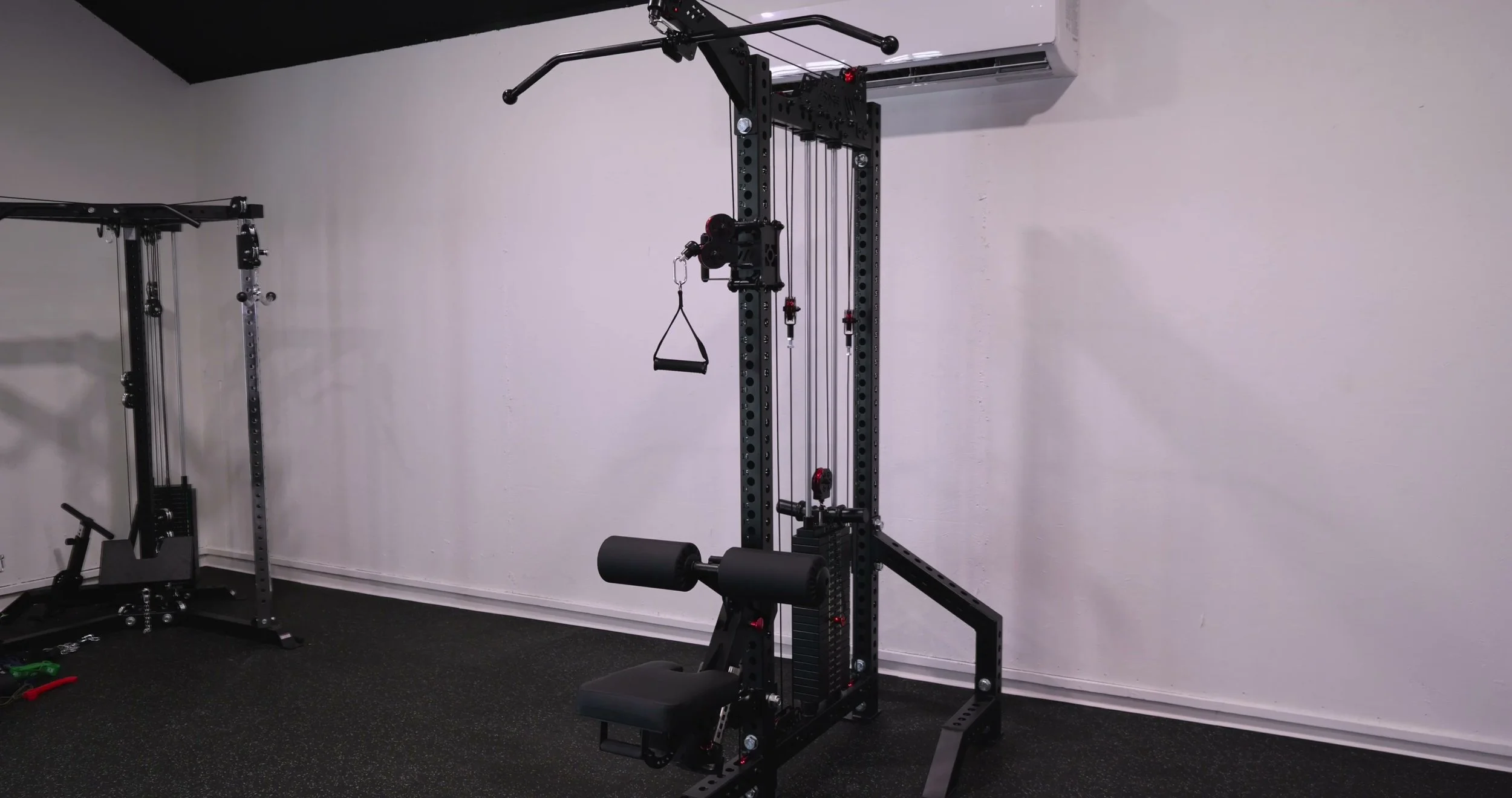
The Gatling Seat pairs with the Cloverfield but also fits other racks. Fringe includes a different-size main peg and elongated mounting holes so it works with 3x3 racks using one-inch or 5/8-inch holes. That keeps it flexible if your setup changes.
Adjustment is the standout: both the seat pad and leg roller use a sundial-style indexed pattern with pop pins so you can dial angles for lat pulldowns, set a posture for other movements, or raise the unit as a chest support. There’s also an unlocked mode so you can use the leg roller for hip thrusts.
One quirk: the low-row section sits where the seat mounts, so you may need to fine-tune the hole and height to work with the footplate area. I usually let the seat rest on top of that section; it’s supported and has been solid. The pad’s cutout prevents banging into the frame when folded and provides a face/chin recess when used as a chest support. The Gatling’s front cylindrical bar makes a mid-row station possible when angled and loaded, and you can pair it with face pulls off the front trolley. It’s clearly built for the Cloverfield but remains versatile.
Comparisons / Alternatives
Rep Fitness Adonis: I’ve used the Adonis side by side with the Cloverfield. Price-wise (without a seat), they’re almost the same. Rep’s machine is a bit more refined in pulley feel, especially at lighter loads—the enclosed design and internal guide rod keep pulleys aligned and reduce twist and drag. The tradeoff is that the shroud makes bolting on outside attachments less straightforward than the more open Cloverfield frame.
Fringe Sport Dane 2.0: The Dane 2.0’s functional-trainer side uses a 1:1 ratio, which differs from most 2:1 FT setups. Earlier Danes had some floating pulley twist behavior similar to what I see on the Cloverfield’s front trolley; Fringe has iterated on that. On the Cloverfield, the dedicated 1:1 high and low lines are smooth, while the front trolley still shows slight stickiness at very light settings.
Tradeoffs
Strong 1:1 performance on high/low pulleys vs. slightly sticky feel on the front 2:1 trolley at light loads
Open, attachment-friendly frame vs. a less refined, lightly wobbling trolley carriage
Compact single-stack footprint vs. not a dual-stack functional trainer experience
Loadable horns for more weight vs. cable travel limits on certain configurations (e.g., mid-row better on the 2:1 line)
Historically, Fringe Sport runs occasional sales; pricing can shift, but don’t count on that for planning
Who Should Buy This
Home gym owners prioritizing heavy lat pulldowns and low rows in a smaller, standalone station
Anyone who values 3x3 uprights with one-inch holes for future attachment flexibility
Lifters who want a single stack but still need more headroom via loadable weight horns
People who will use the functional-trainer trolley mostly for moderate-to-heavier accessory work rather than ultra-light isolation
Buyers who want a versatile seat solution, the Gatling Seat adds a lot of positions and can fit different rack standards
Who Should Skip It
If you want dual stacks and ultra-smooth light-load isolation work as your main use case, this isn’t that machine
If wobble or light drag on the front trolley will bug you every session
If you don’t need 1:1 high/low lines and would rather have a dedicated dual-arm functional trainer
Common Questions
1) Do I need a rack or wall to use the Cloverfield?
No. It’s a standalone, self-braced tower. You can run it by itself as a single station.
2) Can I add more weight beyond the 220-pound stack?
Yes. The tower has loadable horns on both sides of the stack housing. I measured about three inches of usable sleeve per side with the stoppers in place, and you can likely fit around two 45s per side depending on plate thickness, roughly bringing total available load to about 400 pounds.
3) Will the Gatling Seat fit my rack?
It’s designed to work with 3x3 racks with one-inch holes and also with 3x3 racks that use 5/8-inch holes. Fringe Sport includes the appropriate peg and uses elongated mounting holes to make it compatible with both.
Final Verdict
The Cloverfield makes the most sense for people who primarily want heavy 1:1 lat pulldowns and low rows in a compact, standalone package, and who also appreciate the modularity of a rack-style 3x3 frame. The front 2:1 trolley is functional and gives you access to lighter accessories and finer effective increments, but it’s not the butteriest feeling at the bottom of the stack and the carriage rollers wobble some. If you understand those tradeoffs, the Cloverfield becomes a practical, expandable cable station that plays well with attachments and can grow with your space.
Check current availability for the Fringe Sport Cloverfield
See the Fringe Sport Gatling Seat
Affiliate disclosure: The links above are affiliate links. If you choose to buy through them, it may help support the channel and site at no additional cost to you. No discount code was provided for this review, and while Fringe Sport has historically run promotions at times, that’s not a promise of current pricing.