This product was reviewed in-house by Michael at The Jungle Gym Reviews.
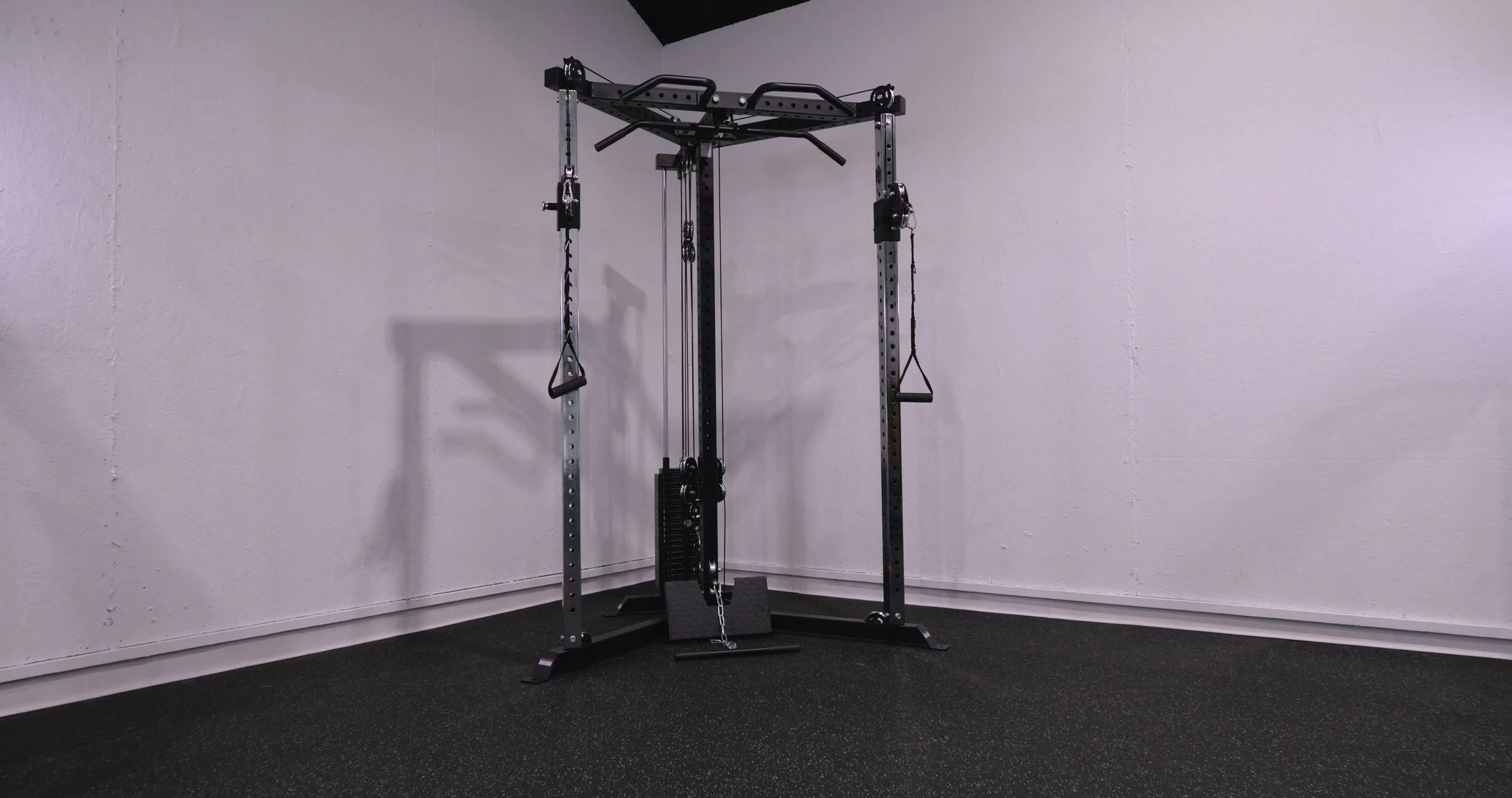
The Bells of Steel All-in-One Trainer is a compact functional trainer with a rack-style frame, and I think it makes the most sense for someone who prioritizes cable training but wants occasional barbell work in a basement-friendly footprint. It pairs adjustable side pulleys with a dedicated center lat pulldown/low-row station and optional rack accessories. After training on the selectorized V2, I found the cable action good and the design useful, but its limited 2:1 cable travel and short height create real compromises to understand before ordering.
Quick Takeaway
This is a functional trainer first and a compact half-rack second. That distinction matters. The two front trolleys are useful for cable work such as chest flyes, while the center 1:1 pulleys give you a heavier-feeling lat pulldown and low row. Add optional J-cups and spotter arms and you can do barbell movements, but I would not choose this over a conventional 3-by-3 rack if barbell training and broad attachment compatibility are the priority.
I like where Bells of Steel has positioned it: between a basic cable tower and a full rack-plus-functional-trainer build. One stack or plate-loaded trolley feeds several pulleys rather than giving each side its own stack, which helps keep the package and cost more manageable but limits front-cable travel.
Quick Specs
Reviewed configuration: All-in-One Trainer V2 with the selectorized 210 lb stack and footplate
Cable ratios: 2:1 on the adjustable side pulleys; 1:1 on the center lat pulldown and low row
Weight stack: 210 lb in 10 lb increments
Frame/uprights: 2.3 in. × 2.3 in. uprights with 5/8 in. holes
Footprint: 54.6 in. L × 59 in. W × 82 in. H
Included: Two adjustable nylon handles, a shortened lat pulldown bar, a short straight bar, aluminum pulleys, and assembly hardware
Add Ones (not included): Optional J-cups, spotter arms, and compatible 2.3 in. × 2.3 in. Bells of Steel attachments can expand its rack use
Installation Note: Bells of Steel says the plate-loaded version must be bolted down, and either version must be bolted down for barbell exercises; mounting hardware is not included
Where to Buy
You can check the price for the different configurations at Bells of Steel below.
My Real-World Experience
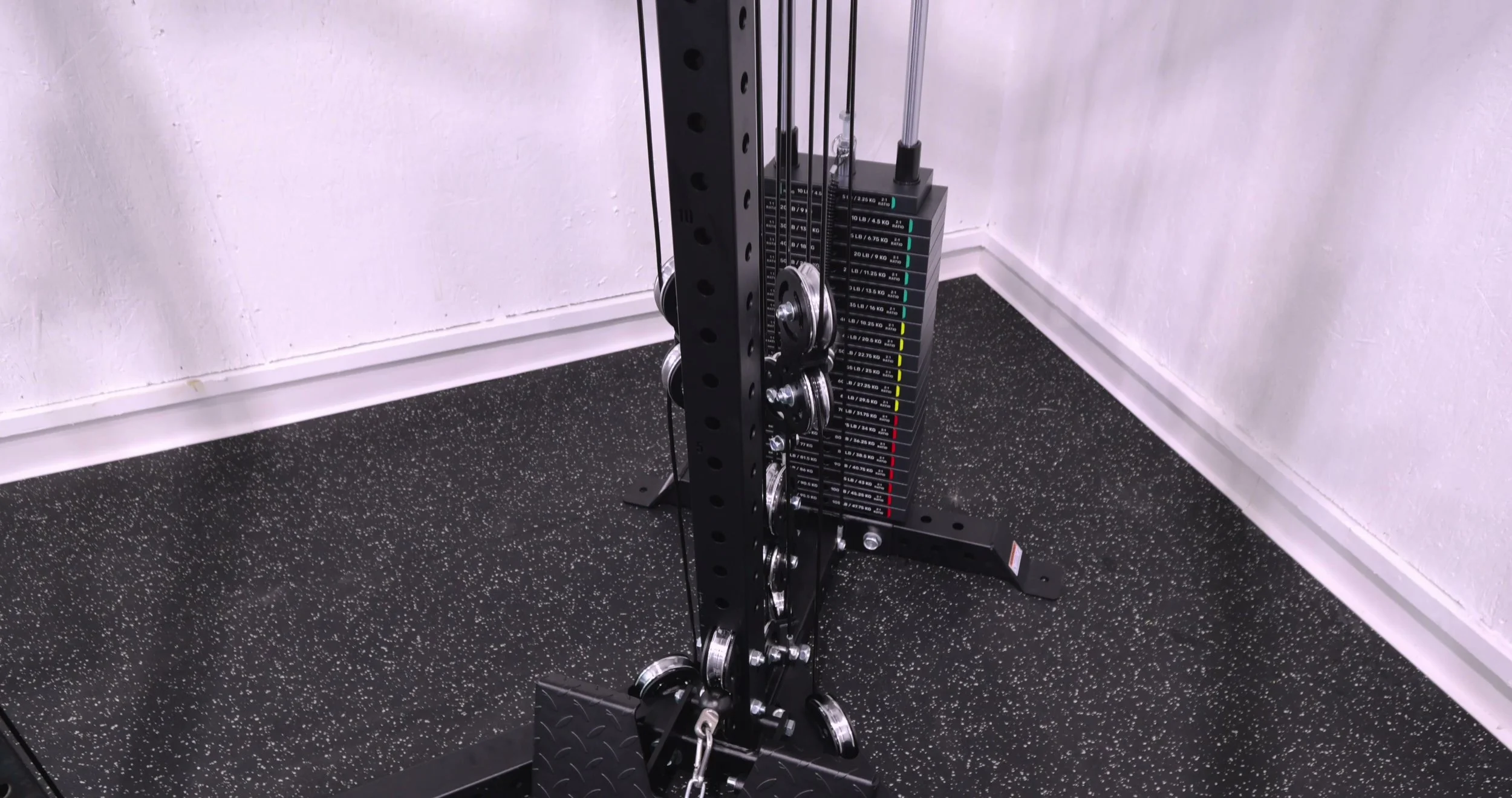
I tested the V2 selectorized version. The core idea worked well in use: one stack is routed through a set of pulleys to serve two adjustable front cables plus dedicated center high and low pulleys. At the center lat pulldown and low row, the pull is 1:1, so selecting 210 pounds means you feel 210 pounds. On either front trolley, the 2:1 ratio means that same selected weight feels like 105 pounds. The stack itself labels the 1:1 and 2:1 loads in pounds and kilograms, which is a small but useful touch when moving between stations.
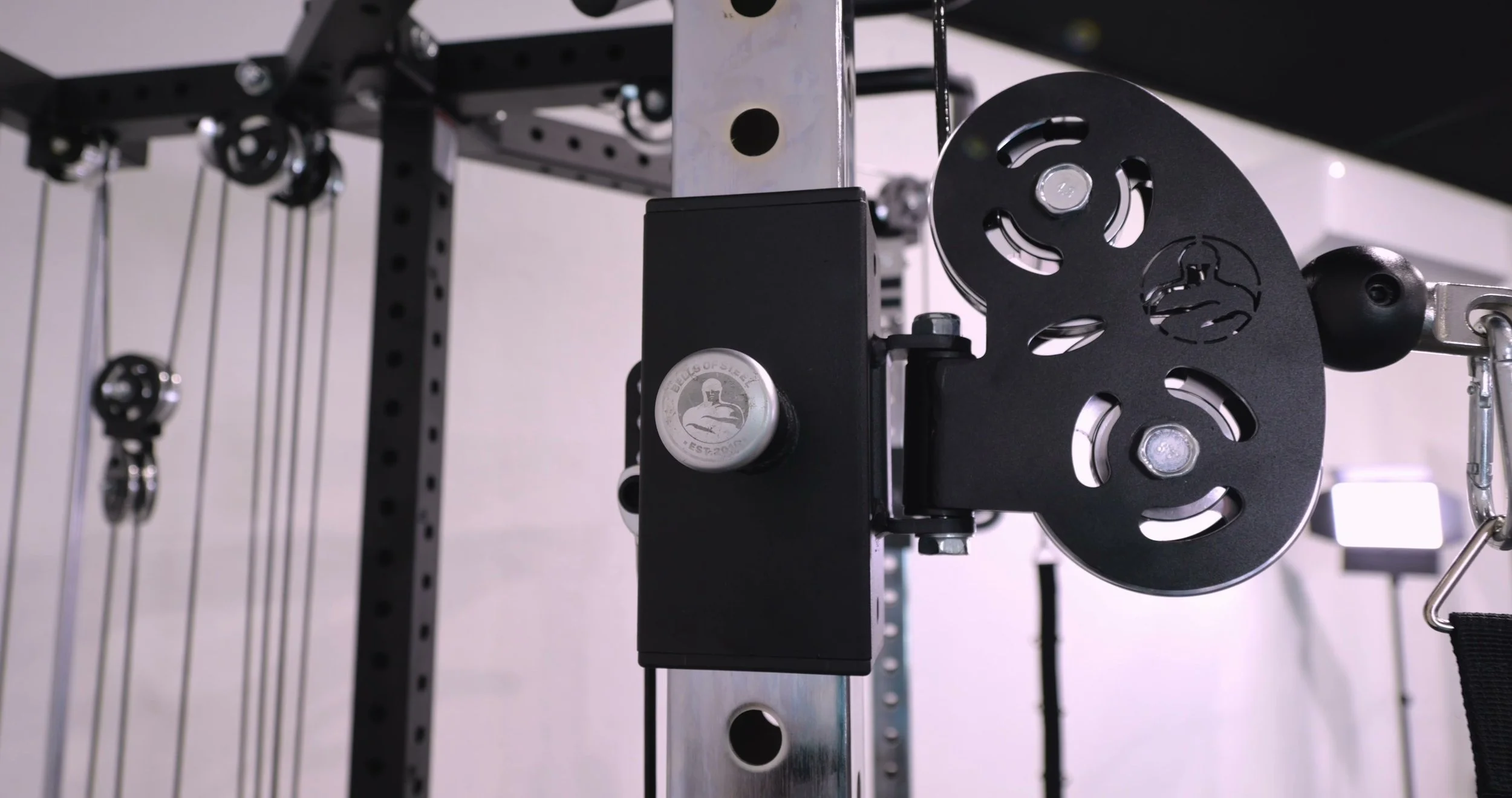
The adjustable front pulleys use simple plastic-lined, pop-in brackets. They moved easily during my testing, and the overall fit and finish was better than I expected for this category. The important point is that the cable system behaved normally: no grinding or noticeable drag. I would call the pulley feel average to above average rather than exceptional. The eccentric return had a normal, clean snap-back feel.
One Stack, Two Very Different Cable Experiences
The ratios are the key to understanding this machine. The side pulleys have the lighter, more controlled feel of a 2:1 functional trainer, while the center station makes better use of the full stack for rows and pulldowns. I like that split because it gives the machine a credible cable-training identity instead of treating the lat pulldown as an afterthought.
There is, however, a cost to sending one stack through this compact layout. Cable travel at the 2:1 front trolleys is limited. On a chest fly, for example, grabbing too close to the cable end can cause the system to bottom out near the top of the stack or pulley. Bells of Steel includes long multi-length D-handles that help you start farther from the cable and recover some usable range. That is a thoughtful inclusion, but it does not eliminate the limitation. For certain behind-the-back rear-delt flyes, the long handles can feel less natural than a more direct handle position.
That does not make the front pulleys unusable; it means you need to consider your starting point and exercise choice. Anyone whose programming depends on a huge cable-crossover range should not assume it behaves like a larger dual-stack trainer.
Compact Dimensions Help Basements, Not Every Exercise
The All-in-One Trainer is built around a tapered, corner-friendly layout rather than a square power-rack profile. Bells of Steel currently lists a 54.6 by 59 inch footprint and an 82 inch height. In my rough measurement, it was about 44 inches inside the uprights and 49 inches outside, so a barbell has room to work. I think it fits best backed into a corner, where its shape makes better use of the space than it did sitting out in the room for filming.
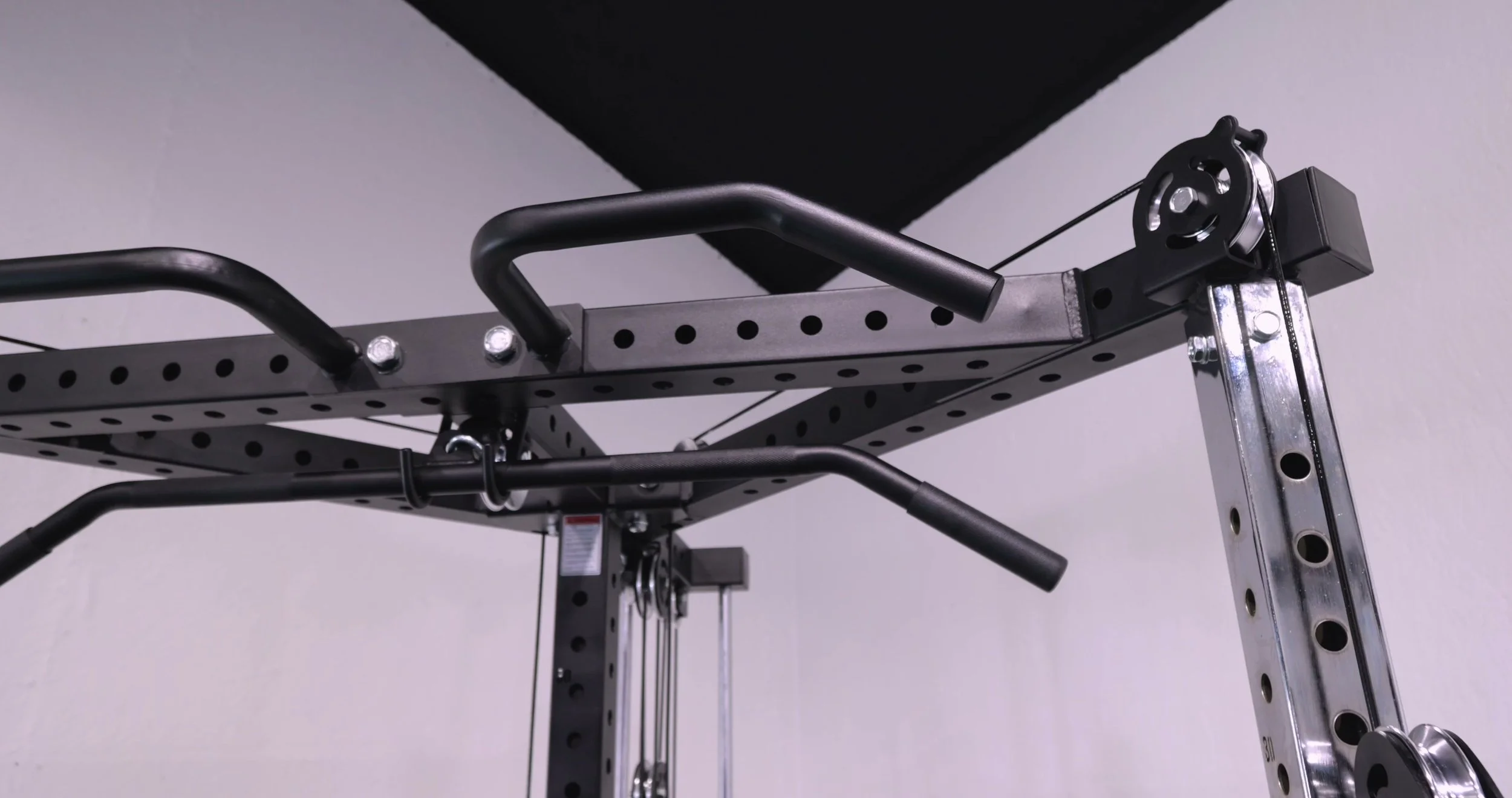
The 82-inch height is a meaningful advantage for a basement or low-ceiling gym. I am 6'2", though, and I could not fully straighten my legs on pull-ups. That is the expected tradeoff with a compact machine: it solves a ceiling problem while making full-range pull-ups less comfortable for taller users. Aside from that pull-up constraint, I did not find the form factor created major compromises in the general cable work.
Lat Pulldown and Low Row Considerations
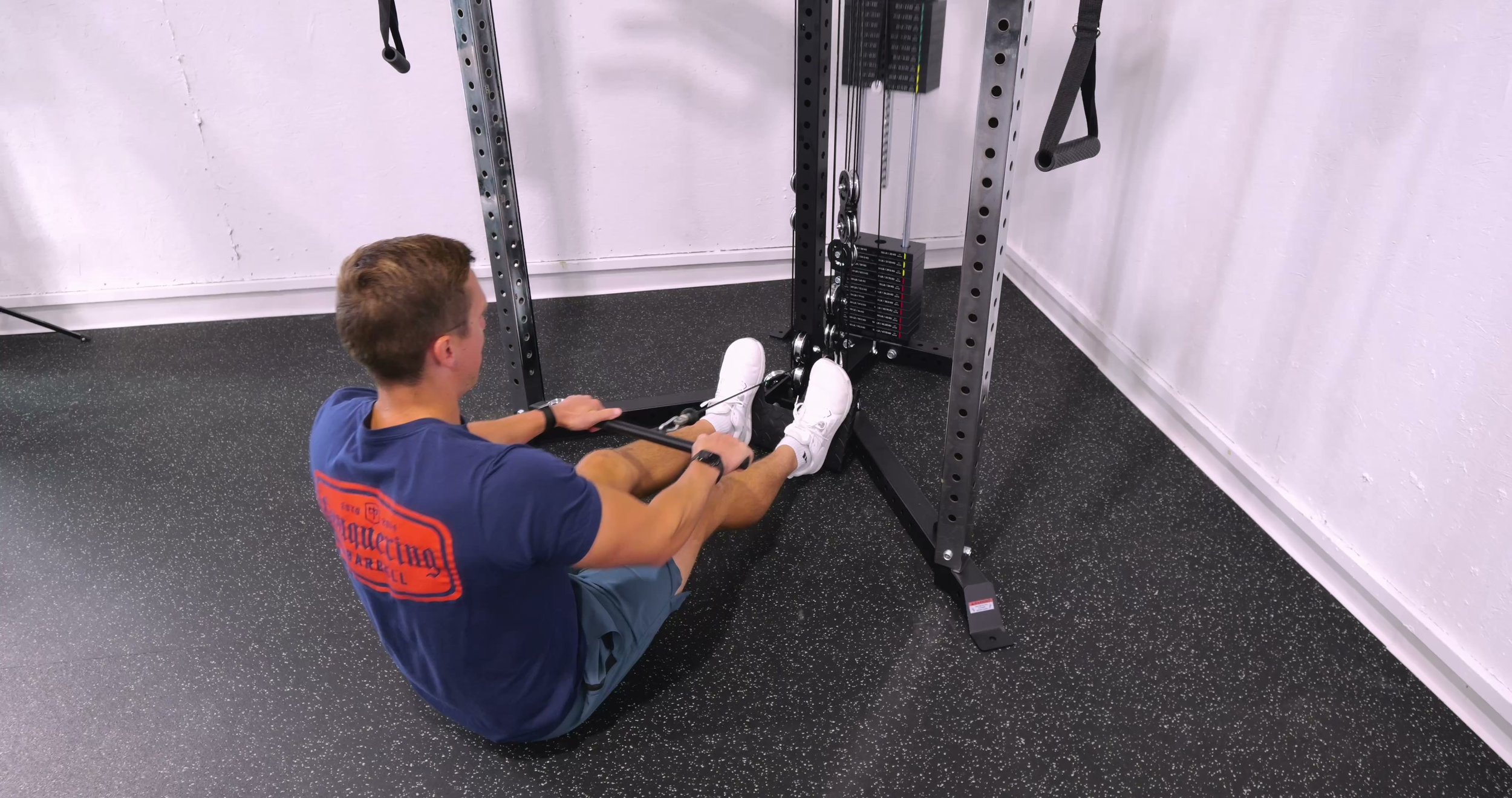
The center pulleys are a major reason to consider this unit. They are dedicated rather than an improvised cable path, and the 1:1 ratio gives them more load potential than the two front trolleys. Still, a compact frame cannot create unlimited working room. When I used a bench for lat pulldowns, I could not get a full top-end range of motion. I would either have to lift off the bench slightly or, more practically, perform the movement from the floor.
The adjustable low-row footplate is helpful for floor work. A pop pin lets you reposition it and change its angle. But it can also get in the way of certain exercises. When I wanted to do a cable RDL from the 1:1 low pulley, I could not stand directly over the cable because of the plate; lifting the plate did not leave enough room to pull without interfering with the cable. I could step on the plate and lean slightly forward to make it work, but it is not the most natural setup.
There is also a loading consideration with heavy pulls from the center station. Because the stack sits at the back of the frame, pulling hard from farther away can shift or slightly tilt the unit. I was not concerned that it would tip over, but it reinforced that this is not the place to plan every heavy, long-lever pull with the full stack. Follow the manufacturer’s bolting guidance, particularly if using barbell movements.
A Functional Trainer That Can Also Handle Barbell Work
The upright tubes are 2.3 by 2.3 inches with 5/8-inch holes, so Bells of Steel can offer J-cups, spotter arms, a seal-row pad, and other attachments made for that ecosystem. I would strongly consider adding J-cups if you want occasional barbell movements; they are what turn the frame into a usable compact rack rather than simply a cable machine with uprights.
That said, the attachment standard is not the common 3-by-3-inch upright with 1-inch holes used by many modular rack lines. It is a reasonable compromise for the buyer who wants a primarily cable-focused home-gym centerpiece and only occasional barbell work. It is a weaker fit for someone who intends to expand a rack for years with attachments across brands, more storage, and a more dedicated barbell setup.
Comparisons / Alternatives
The closest alternatives I considered in my review were the Get RX'd Phoenix and Viper single-stack functional trainers. I placed them broadly in a similar price and functionality range at the time, although pricing and configurations can change. Like the Bells of Steel, they make tradeoffs in cable travel. I also described the Viper as wall-mounted rather than freestanding and not a power rack.
That makes the choice fairly clear. If you distinctly need a functional trainer and want to save every bit of floor space, a cable-tower-style alternative may make more sense. If you want a freestanding cable machine that can also host occasional J-cup-and-barbell work, the All-in-One Trainer has more flexibility. If barbell lifting is the center of your training, I would instead start with a conventional 3-by-3 rack and add cables around it as the budget and space allow.
Tradeoffs
The 2:1 side cables have limited travel, which is most noticeable on cable flyes and some rear-delt variations.
The 82-inch height helps low-ceiling spaces, but taller users may need bent knees for pull-ups.
The center pulldown can limit top-end range when used with a bench; floor pulldowns may work better.
The low-row footplate can obstruct some low-pulley movements, including the cable RDL setup I tried.
The 2.3-by-2.3-inch, 5/8-inch rack standard is less broadly expandable than a 3-by-3-inch rack with 1-inch holes.
J-cups and spotter arms are optional, not included, and the manufacturer specifies bolting requirements for safe use.
Who Should Buy This
Home-gym owners who primarily want a functional trainer, but value the option to add occasional barbell work.
Basement or garage users working with a low ceiling and a compact corner footprint.
Lifters who want both light, controlled 2:1 cable work and a heavier 1:1 center lat-pulldown/low-row station.
Buyers deciding between a plate-loaded starting point and a selectorized stack, with the option to upgrade later.
Who Should Skip It
Tall lifters who require unrestricted pull-up height.
Anyone who needs very long cable travel for every fly, crossover, and rear-delt variation.
Lifters whose training is predominantly heavy barbell work or who want a broad, cross-brand 3-by-3 attachment ecosystem.
Shoppers who cannot meet the manufacturer’s installation and bolting requirements for their selected configuration and intended use.
Common Questions
Is the All-in-One Trainer a real functional trainer or mainly a rack?
I would call it a functional trainer first. The adjustable side pulleys work well and the center 1:1 station adds useful pulldown and rowing capacity. The rack capability is valuable, but it is better thought of as an occasional barbell option once you add the relevant accessories.
Does the 210 lb stack feel like 210 lb on every exercise?
No. The center lat pulldown and low row use a 1:1 ratio, so the selected stack weight is what you feel. Each adjustable side pulley uses a 2:1 ratio, so 210 pounds selected feels like 105 pounds at that handle.
Can I use it without bolting it down?
Follow the manufacturer’s instructions rather than treating this as optional. Bells of Steel says the plate-loaded version must be bolted down and that either version must be bolted down for barbell exercises. Mounting hardware is not included.
Final Verdict
The Bells of Steel All-in-One Trainer is a smart fit for the cable-focused home-gym owner who needs a compact, lower-height layout and appreciates having rack capability in reserve. I liked the smooth, normal cable feel, the dedicated 1:1 center station, and the thoughtful way the single stack is labeled and routed. Just buy it for what it is: a compact functional trainer that can do some rack work, not a full-size modular rack that happens to have cables. If that matches your training, the limitations in cable travel and pull-up height are manageable tradeoffs rather than deal breakers.
CHECK PRICE — BELLS OF STEEL ALL-IN-ONE TRAINER (US)
CHECK PRICE — BELLS OF STEEL ALL-IN-ONE TRAINER (CAN)
The review unit was provided at no cost for review. This article contains affiliate links; if you make a purchase through an affiliate link, The Jungle Gym Reviews may earn a commission at no additional cost to you. All opinions are Michael’s own.