This product was reviewed in-house by Michael at The Jungle Gym Reviews.
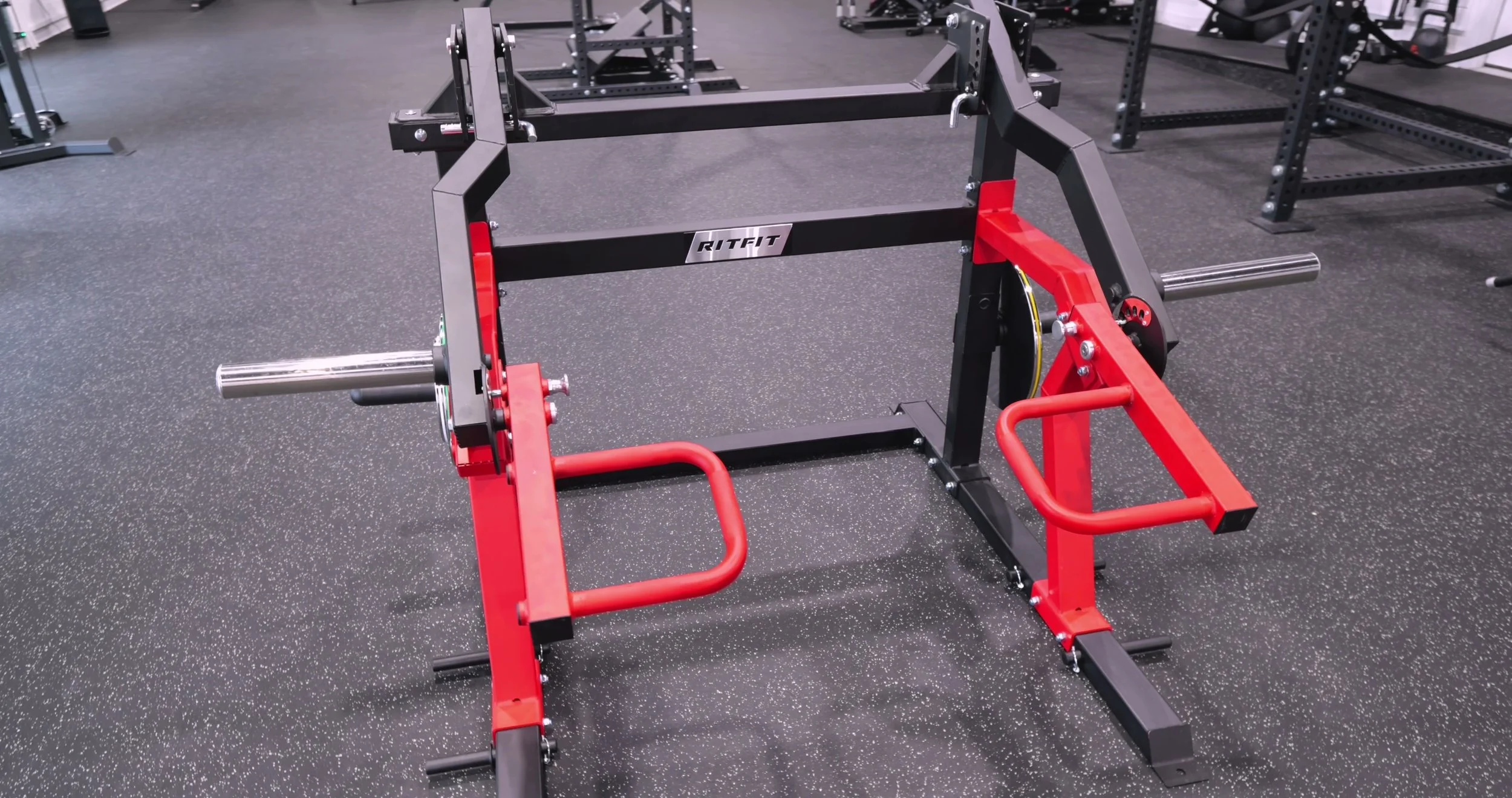
The RitFit Gorilla is a plate-loaded, fixed-path multi-press station that behaved like an adjustable lever-arm setup during my testing. For about $599 (I saw sales down into the low $540s), it gives you seven handle angles, six stop-start heights, band pegs, and plate horns that keep plates from sliding off. It’s about 190–200 lbs of frame, claims 500 lb capacity, and trades a converging press feel for a more stable, no-nonsense machine that lets you do presses, rows, shrugs, flies and more without a crazy footprint or a huge price tag.
Quick Takeaway
On paper the RitFit Gorilla looks like a simple 2-in-1 press machine. In practice it behaved like a small lever-arm station that’s been bolted to a heavy frame. The multi-grip handles and six stopper heights let you micro-tune pressing arcs and starting positions in ways that made my shoulders and elbows feel more comfortable on incline work. It won’t mimic a converging-arc machine, but if you want the versatility of lever arms without dealing with a $1,200–$1,500 price tag or a less-stable bracketed system, this is a sensible compromise.
Quick Specs
Price: $599 (often on sale around $540–$550)
Weight Capacity: 500 lbs
Machine Weight: ~200 lbs (they list ~190 lbs)
Dimensions: ~70 inches wide to the ends of the weight horns
Construction: 13-gauge steel
Adjustments: 7 handle angles, 6 stop-start heights
Where to Buy
You can purchase the RitFit Gorilla 2-in-1 Chest and Shoulder Press directly from RitFit below. Use code MICHAEL for up to 10% off your order:
My Real-World Experience
I’ll be honest: I underestimated this machine when I first saw it. It doesn’t have the showroom flash of a selectorized unit or the brand cachet of a $2,000 plate-loaded machine. But once it was set up and loaded, it felt heavier and more stable than I expected. They state about 190 lbs for the frame; moving it confirmed it isn’t light, two people makes it a lot easier and that frame combined with plates makes the unit sit where you put it. I even joked about possibly having the battle scars to prove I moved it solo at one point.
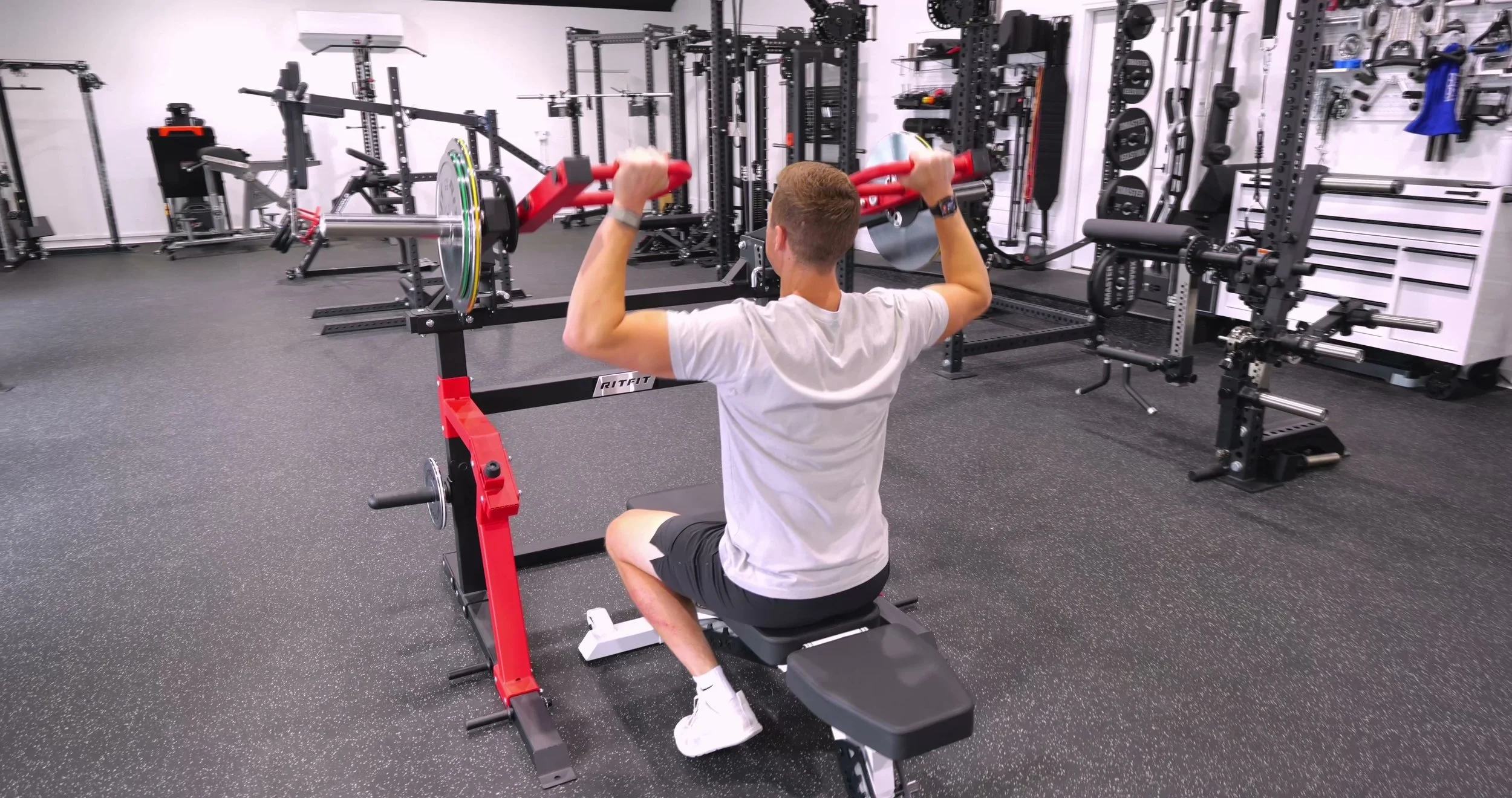
What won me over was the adjustability. The machine has seven indexed handle-angle positions and six indexed stopper heights on the rear bracket. In practice that means you can change both the arc of the movement (by moving the handle relative to the pivot) and the starting point (by moving the stopper pin) in very small increments. Those two independent adjustments let you find a pressing line that fits your anatomy, which for me matters a lot because I’ve had joint stiffness on some incline angles.
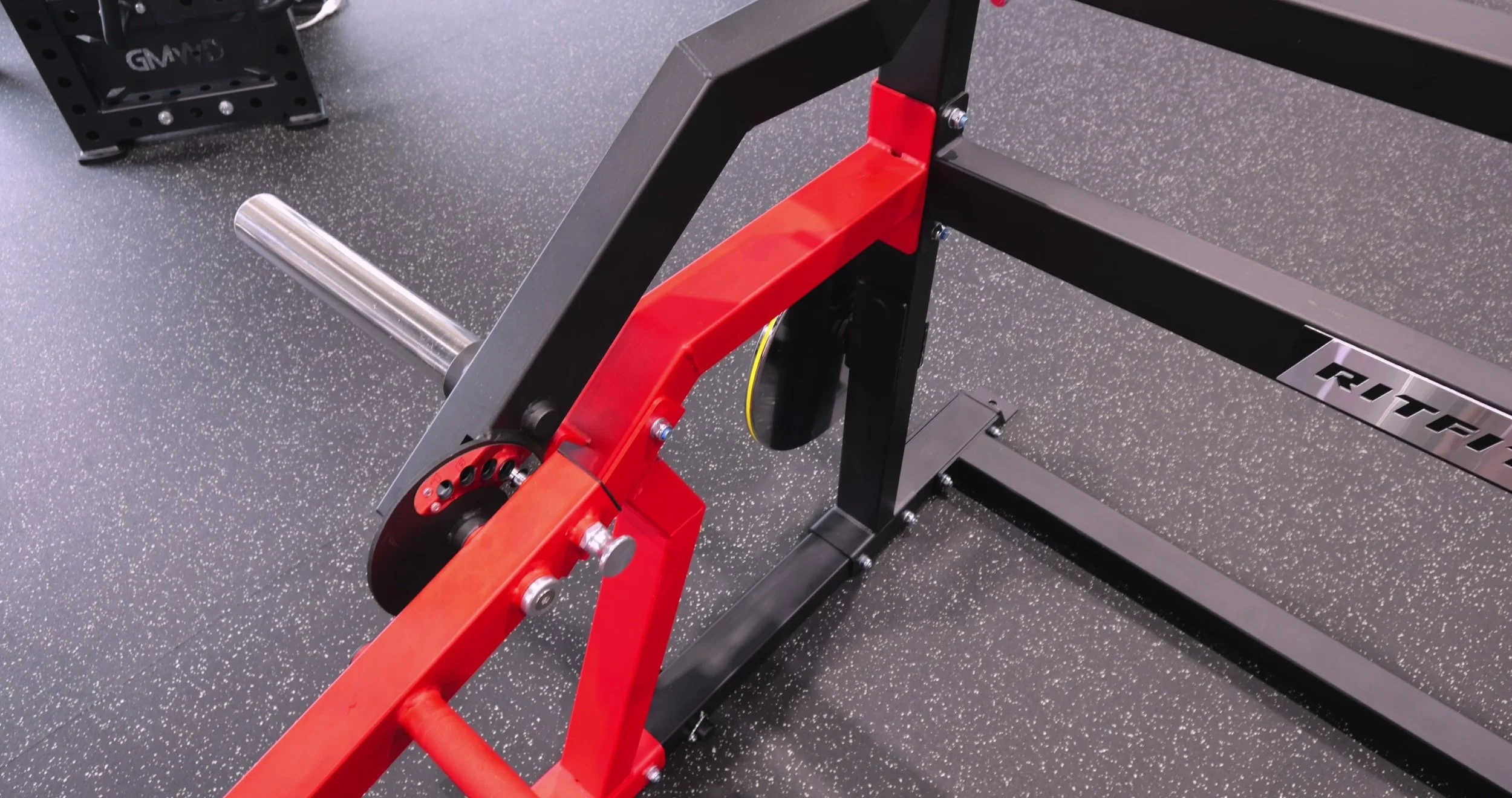
Ergonomically, the handles have light knurling, not aggressive, but enough to stop your hands from slipping during heavy sets. The plate horns are slightly angled upward; I noticed that when loading plates they didn’t slide off. The company will probably still recommend collars, but in my tests the horn angle kept plates secure without them. The weight horns are basic steel (no factory rubber bumpers), so plates sit directly against the metal; I bought simple rubber rings for about ten bucks to protect plates and the horns.
Adjustability and Movement Options
The two things that define this machine are the handle-angle increments and the stopper-height increments. The handle positions change how far the grip sits from the pivot point, when a handle is more in line with the arm it produces a longer, shallower arc; when set in a more aggressive angle the arc becomes tighter and more circular. Combine that with the six back-stop heights and you have fine-grain control over where the press starts and ends.
Practically, I used those adjustments several ways: dialing an incline press angle that didn’t pinch my shoulders, closing the grip for a triceps-focused press, and setting a lower stopper for chest flies. The bottom stopper hole is also convenient for storing the pin when the arm is in the lowest position. Those micro-adjustments are the feature that makes this feel more like a multi-machine station than a single-purpose press.
Beyond Pressing
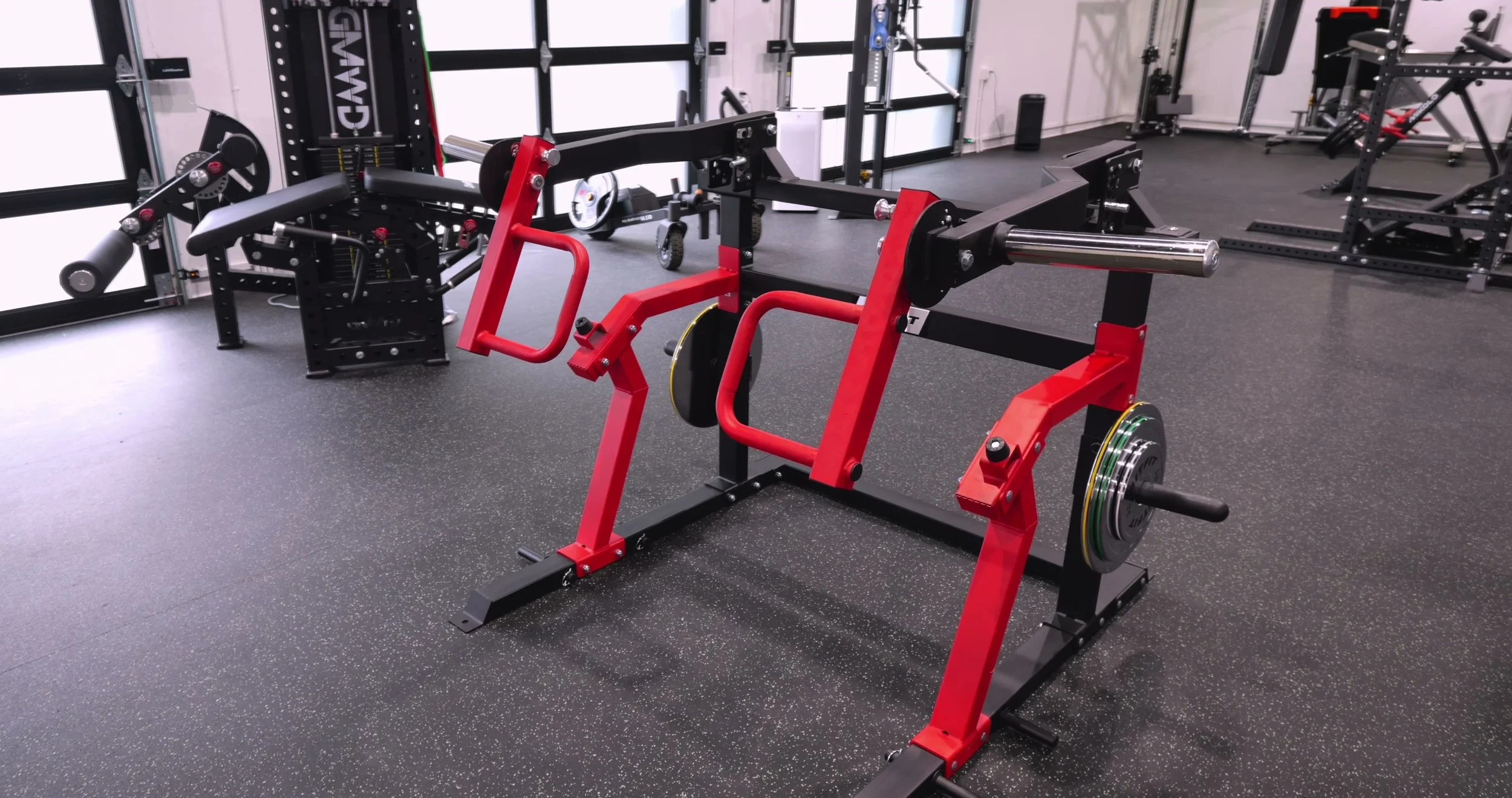
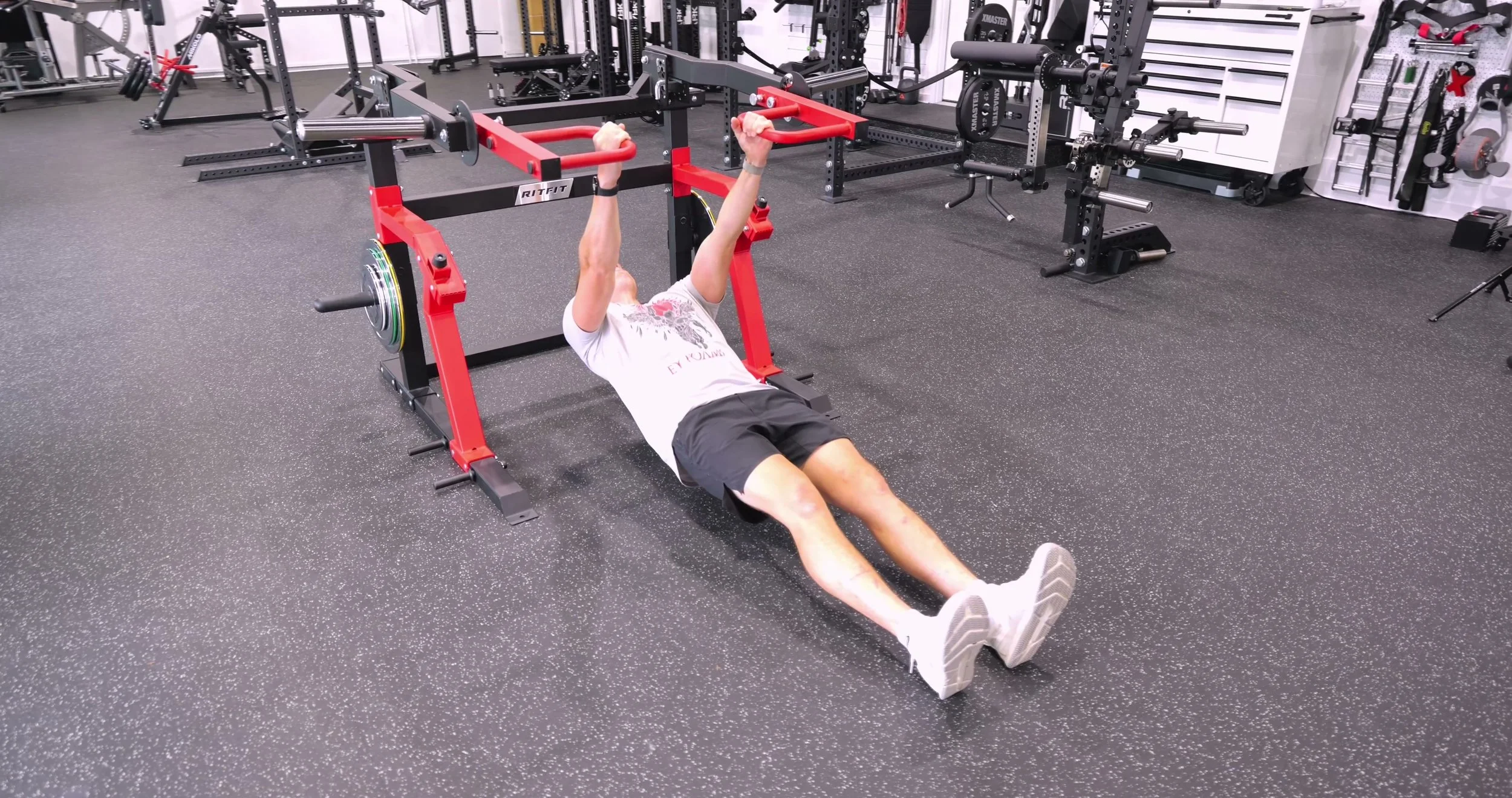
RitFit advertises chest and shoulder pressing, and that’s clearly where it’s strongest, but treating it like a lever-arm station opens up a lot more. I ran sets of unilateral presses, chest flies, chest-supported rows, shrugs, face pulls, upright rows, and even some inverted rows without a bench. The arms can be lowered to a near-ground stopper so you can set up one-arm rows or use the unit for dips if you raise the arms and stand into them. There are band pegs on the sides so you can loop bands around the plate horns or use them for accommodating resistance.
Movement feel is predictably machine-like because the path is fixed and the pivot points are robust. There’s very little wobble in the arms under load, you can notice slight play at the pivot in an unloaded inspection, but once plates are on and the arm is loaded it feels tight. The result is a predictable resistance curve determined by the lever geometry, not a cable-like constant tension or a converging path. That predictable curve is useful; it makes a lot of pressing and rowing variations feel secure and safe to push heavy on.
Footprint, Setup and Storage
The machine itself is fairly compact for what it offers, but the effective footprint includes the plate horns. When you account for fully loaded plates the width comes in around 70 inches. Plan for space to walk around it and load plates, I’ve been in cramped garages where slipping a plate on at the end of a 70-inch spread is tight. There’s no built-in folding or compact storage; it’s a heavy, fixed piece meant to sit in place. If you need a machine you can move daily, this is not it.
Assembly is not complicated, but because of the weight of the frame and the need to index handles and stoppers correctly you’ll want two people for the heavy-lifting steps. The multi-piece design means replaceable wear parts, the arm stoppers use UHMW pads that can be swapped cheaply if they wear or crack, which I like because it keeps long-term maintenance simple.
Resistance Behavior and Ergonomics
This is a plate-loaded lever arm: resistance behavior follows the lever geometry rather than cable tension. You’ll feel the load change through the arc depending on which handle position you choose and where the stopper is set. That variability is a feature, it’s how you tune the exercise to your joints, but if you prefer a converging or diverging press path you’ll notice this is strictly linear in its plane and doesn’t converge.
The handles are comfortable for heavy pressing; knurling is modest but functional. The stop-start system lets you set a positive start height for shoulder presses or a lower start for bench-style movements. The band pegs are nice to see on a machine at this price point, they’re detent-pin style, so you can remove them if you don’t want them in the way.
Comparisons / Alternatives
The one I personally reviewed that sits in the same price neighborhood is the GMWD V7 Chest and Shoulder Press. On paper the two are similar: both are roughly $599 list. The GMWD V7 uses a converging path, which can feel a bit more natural for some pressing movements. The tradeoff I noted with the V7 was stability, the converging brackets introduced a bit more movement under load on that design. The RitFit Gorilla trades that converging motion for a firmer, more stable linear path and a bit more versatility because the arms can go lower for rows and shrugs.
Higher-end adjustable lever-arm systems can cost $1,200–$1,500. Those will mimic lever arms more directly and often have different geometry and finishes. The Gorilla’s advantage is the price-to-function ratio: for roughly $599 (or lower on sale) you get most of the movement versatility of a lever-arm system without the high price and while keeping the unit anchored to a stable frame.
Tradeoffs
No product is perfect. The Gorilla’s main tradeoffs are simple and predictable. First, it’s a linear-path machine: it does not converge or diverge during the press. If you specifically want that converging feel for every press, this won’t replicate it. Second, the footprint with plates is about 70 inches wide, and you need space to load plates and move around the machine. Third, the weight horns have no factory rubber bumpers; plates contact the metal, which is an inexpensive aftermarket fix but something I’d prefer out of the box.
On the flip side you get clean mechanics, a heavy frame that stays put, micro-adjustability for joint-friendly pressing, and a lot of exercise options for a relatively modest outlay. Minor nitpicks like the two-tone finish and lack of rubber horns are cosmetic or cheap fixes; the core functional pieces are well thought out for the price.
Who Should Buy This
Buy this if you want a solid, versatile upper-body machine that behaves like lever arms without the lever-arm price or the operational hassles of bracketed, moving systems. It’s a good fit for home gym owners who press frequently, need micro-adjustments to protect joints, and want a machine that supports rows, shrugs, flies and single-arm work without adding a bulky selectorized unit.
Who Should Skip It
Skip it if you have a very tight footprint and can’t accommodate ~70 inches when plates are loaded, or if you strictly require a converging-arc press for every exercise. Also skip if you need a machine you’ll move around a lot, this is meant to be installed and stay put.
Common Questions
Does it feel stable when lifting heavy?
Yes. The frame weight (they list ~190 lbs and I’d estimate ~200 lbs assembled), the fixed pivot points, and the plate-loading horns make the unit sit firmly. There’s minor unloaded play in the pivots if you grab and wiggle the arms, but under real loading the arms don’t wobble and the whole station feels secure.
Do I need to use collars on the weight horns?
The weight horns are angled slightly upward; in my testing that angle kept plates from sliding off. The manufacturer will likely recommend collars for shipping and safety standards, but practically the angled horns keep plates in place and I didn’t experience sliding during use.
Can I use it without a bench?
Yes. The arms lower to a bottom stopper, which lets you do standing shrugs, bent-over rows, inverted rows and other movements without a bench. You can also leave a bench in for presses or remove it for rows and other standing work.
Final Verdict
The RitFit Gorilla surprised me. For roughly $599 (and frequently on sale into the low $540s), you get a heavy, plate-loaded multi-press station with genuine micro-adjustability, replaceable wear parts, band pegs, and a frame that feels like it wants to stay put. The linear path won’t replace a converging press for someone who cares only about that feel, but it will give most home gym owners a safer, more versatile alternative to expensive lever-arm systems. If you want a practical, no-frills machine that expands your upper-body options without a huge price tag, this is worth considering.
Shop the RitFit Gorilla and use code MICHAEL for up to 10% off.
This review contains affiliate links. If you use these links to buy something, we may earn a commission at no extra cost to you.