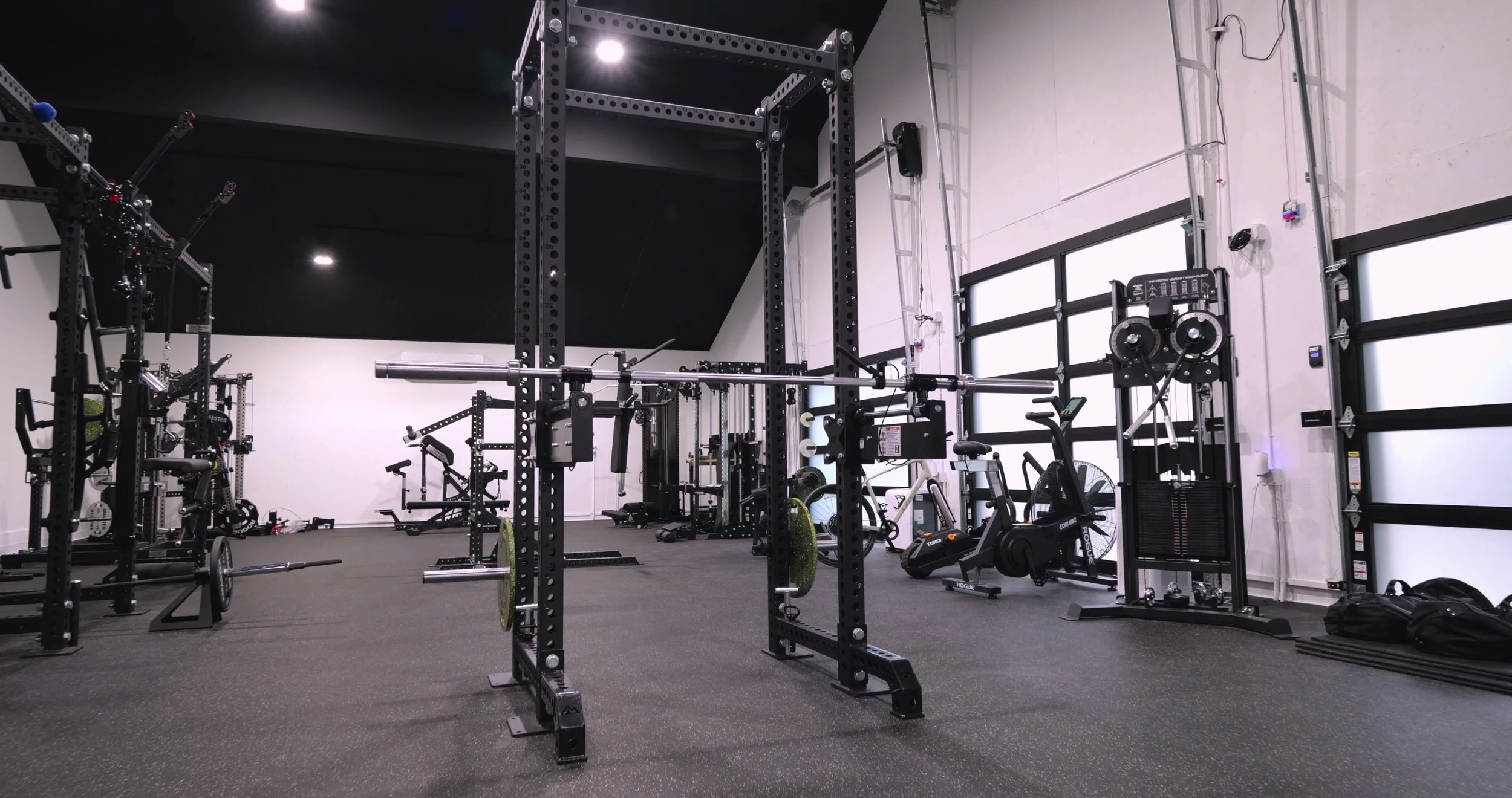
This product was reviewed in-house by Michael at The Jungle Gym Reviews.
The XPT Self-Spotting Bar is a clever, well-engineered rack attachment that gives you 3D bar movement and an instant self-locking safety system. In practice it feels more like a free barbell that fights back (think “bamboo bar”), locks almost instantly when you release the handbrakes, and solves a real safety problem for solo heavy lifters, but it’s expensive, heavy out of the box (110 lb), and best used as part of XPT’s rack + counterbalance ecosystem if you need a usable starting bar weight.
Quick Takeaway
XPT built something unusual and specific: a self-spotting bar that moves front-to-back and up-and-down while giving you immediate, hole-by-hole locking via spring pins and handbrakes. It really does what it promises, I could drop weight on purpose and the pins catch almost instantaneously, but at a standalone price around $1,485 and a starting bar weight of roughly 110 lb it only makes sense for a narrow group of home lifters unless you buy the separate counterbalance (which drops the effective bar weight to about 30 lb but roughly doubles the system cost).
Quick Specs
Price: ~$1,485 (standalone attachment)
Starting Weight: 110 lbs (without XPT counterbalance system)
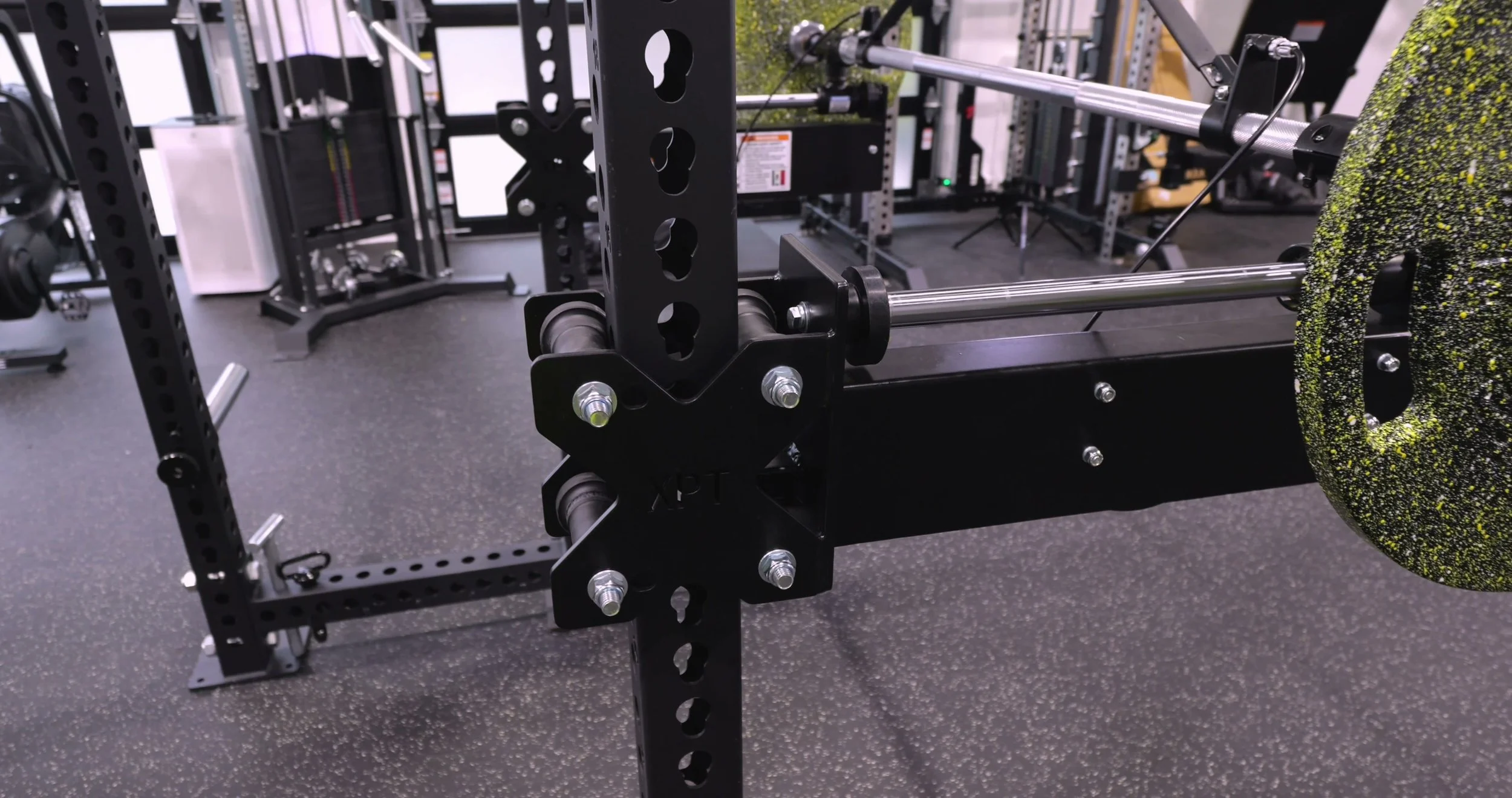
Compatibility: Fits 2x2, 2x3, and 3x3 racks with at least 5/8" holes (2x2/2x3 may need a shim kit)
Shim kit: ~ $100 for some rack widths
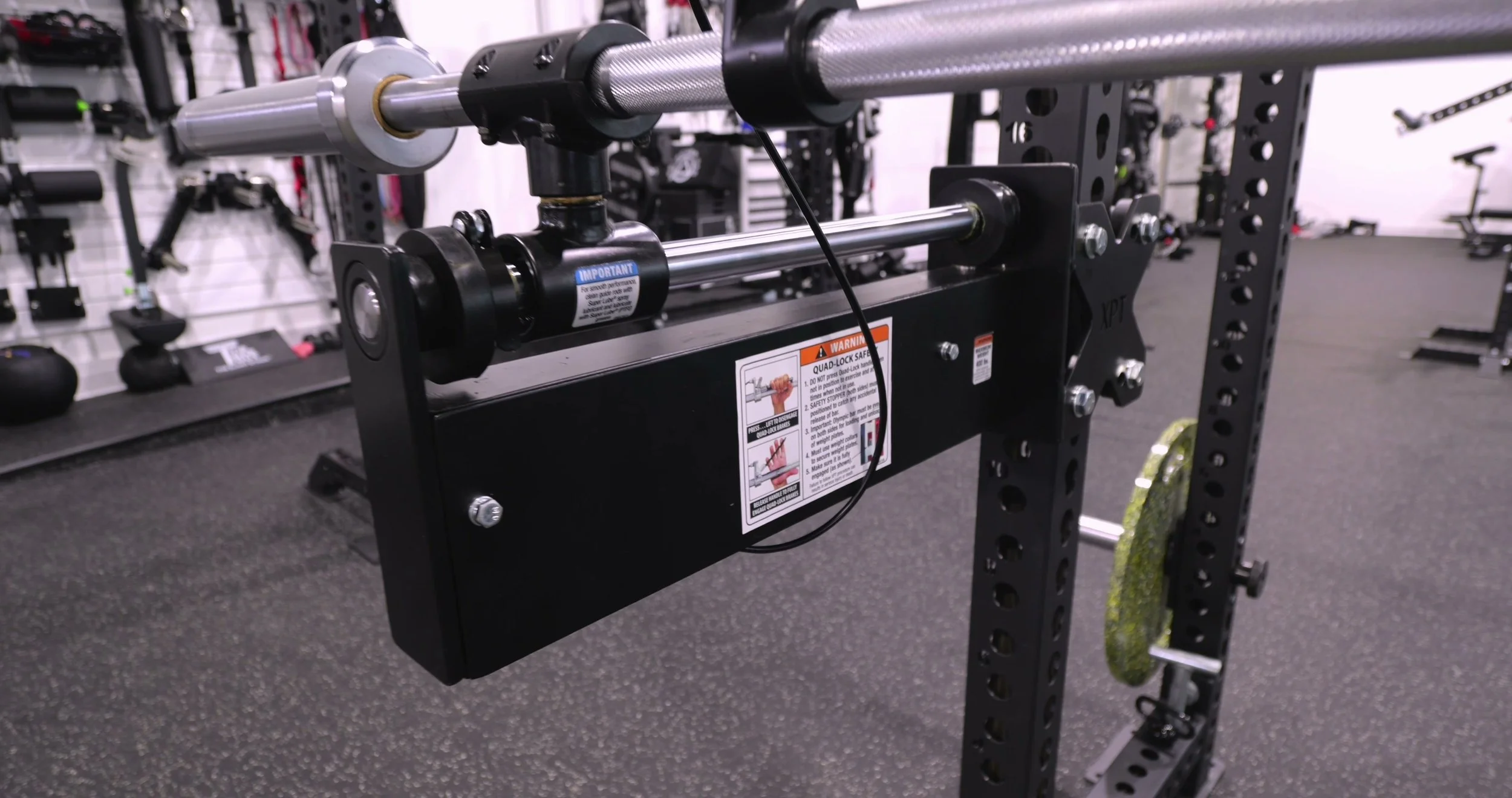
Mechanism: Handbrake-released trolley with integrated spring pins that catch rack holes
Movement: Vertical rollers + horizontal guide rods (3D-style front-to-back and up-and-down movement)
Where to Buy
You can check the price of the XPT Self Spotting bar below:
My Real-World Experience
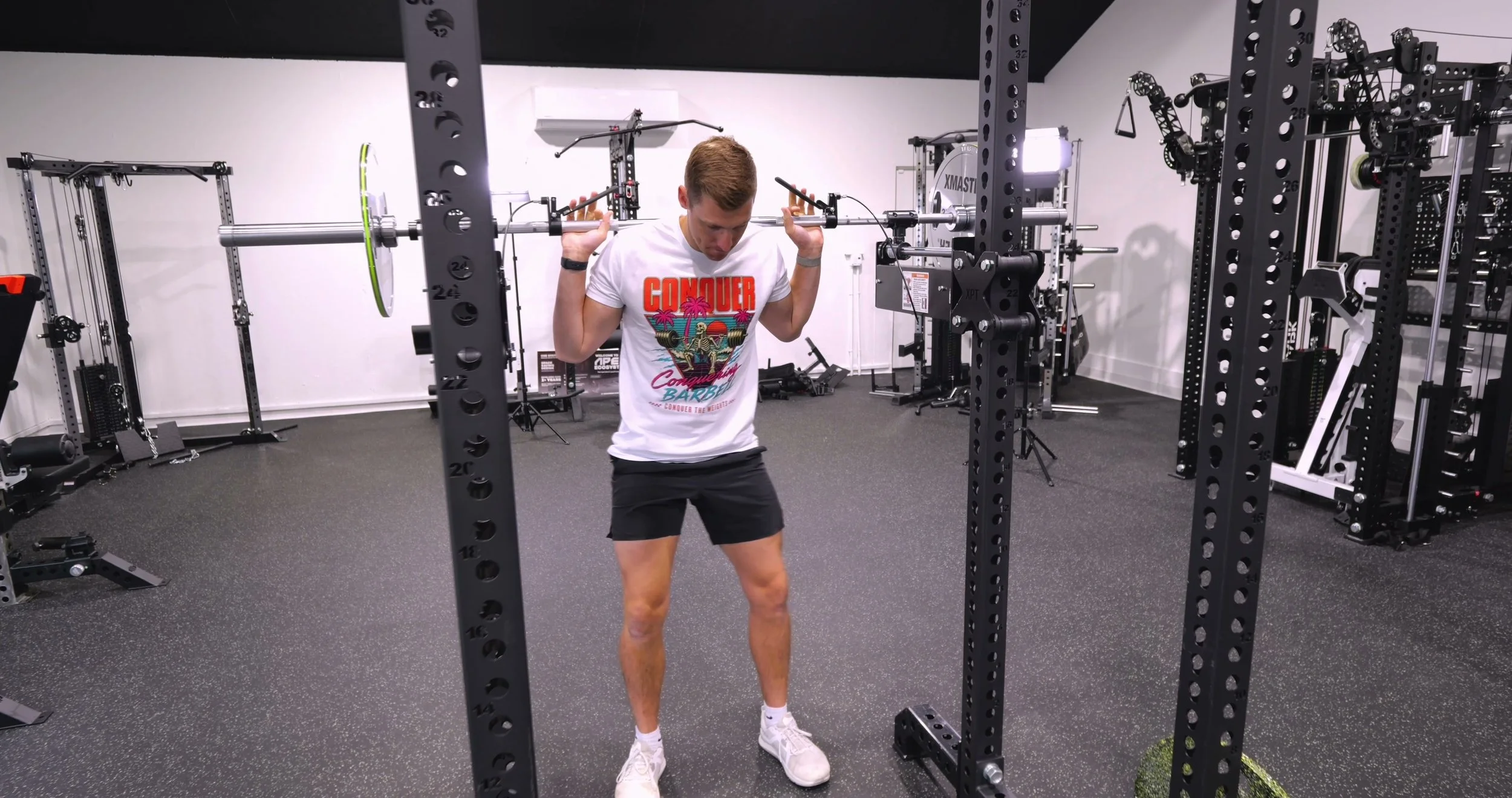
I spent time squatting, benching, and pressing with the XPT Self-Spotting Bar mounted to a 3x3 Titan rack (42" interior). I also deliberately released the handbrakes mid-rep to test the locking and experimented off-camera with a counterweight rig to approximate XPT’s official counterbalance. What follows is what I saw and felt in the gym.
First, the safety function works exactly as advertised. The bar has handbrake handles on both sides: lift the brakes and the trolley is free on its rollers and guide rods; let go and the integrated spring pins engage the nearest hole in the uprights. I intentionally dropped weight from a squat and a bench to see how the locks would behave, when the handbrakes released, the pins engaged so quickly the bar simply eased to rest rather than crashing. That immediate, hole-by-hole catch is the core value proposition here.
Movement-wise it’s not a Smith machine. The bar moves in 3D: it slides up and down on rollers and the trolley allows front-to-back travel on guide rods. Because each side can move independently you don’t get a perfectly rigid, fixed path, you get a bar that reacts to your imbalances. My cameraman described it as similar to a bamboo bar: you have to use stabilizer muscles to control shimmies and the bar’s momentum. That’s great if you want to train stability and address asymmetries, but it’s an extra demand compared with a fixed-path Smith-style attachment.
Ergonomically the barbell clamps are modular: you unthread them to move inward or outward, so the assembly fits a range of interior widths (the unit I tested fit 41–43" racks; the Titan was 42"). XPT intends the system to live on their own racks with a factory counterbalance; mounted aftermarket the bar as-built weighs around 110 lb. I simulated the counterbalance by rigging an 80 lb offset with a Beyond Power Vultra pulley off-camera, with a counterweight the bar floated near a 30 lb effective start weight and handled like a light free bar, which is how XPT’s integrated counterbalance is supposed to perform.
There are a few practical usage notes that mattered in real sessions. The spotter-arm mount points and integrated pins mean the arms sit at roughly knee height. That placement interferes with deadlifts and chest-supported rows from the floor unless you add a plyo box or platform to stand on. Also, if you lock the front-to-back guide (more on that below) the clamp used to stop horizontal motion relies on friction; at heavier loads the clamp can creep due to lubrication on the guide rods. Nothing catastrophic, but it means locking the bar into a Smith-like track isn't as seamless or as confidence-inspiring as a purpose-built fixed-path Smith device.
Finally, setup and on-the-fly adjustments are not instantaneous. This unit has rollers, clamps, and an array of small moving parts, that means more time adjusting compared with a simple J-cup/spotter-arm workflow. The trade here is deliberate: you get a unique combination of free-movement training and instant self-spotting, but you pay in weight, setup complexity, and cost.
Installation and Compatibility
XPT designed the attachment to cross-fit into 2x2, 2x3, and 3x3 uprights that have at least 5/8" holes. If your rack is a 2x2 or a 2x3 you may need a shim kit (the kit is roughly $100) to make the mount sit correctly. Width is handled by the removable clamps on the barbell ends, you unthread them and slide them to fit your rack’s interior width, so the system isn’t locked into one fixed hook spacing like many Smith attachments.
Two details worth calling out from installation and fit testing: first, each trolley contains two spring pins (one higher and one lower) that will engage a hole at any given time, so the bar won’t free-fall more than an inch or two between catches. Second, the vertical travel uses rollers that bear the weight against the uprights rather than a guide rod for the vertical axis. Those rollers feel robust in use and are sized appropriately for the loads I put on them, but because they’re rolling elements you’ll notice a mechanical noise and the need to pay attention to lubrication and clamp friction over time.
Using it as a Smith Machine
If you want something closer to a fixed-path Smith, XPT includes small clamps that can lock the front-to-back guide rods. That gives you a Smith-like vertical-only motion. In practice I found this workable for occasional use, but not identical to a dedicated Smith machine: the clamp relies on friction with lubricated guide rods, and at heavier weights there can be slippage or creep. The clamps are similar to quick-release clamps you see on bike seats, simple, but they don’t feel as pristine or as rock-steady as a built-in Smith track.
Because the system is built around a trolley and rollers, toggling between full 3D motion and a Smith-style path takes a few more hand motions than a single-purpose rig. That’s fine if you’re intentionally switching modes in a set-up session, but if your training includes frequent changes between free-bar and fixed-bar modes you’ll notice the extra adjustments add small amounts of friction to your workflow.
Comparisons / Alternatives
Think of the XPT Self-Spotting Bar as a middle ground: more freedom and instability than a Smith attachment, but with a built-in safety fail-safe that a free bar doesn’t offer. If what you want is simply a fixed-path Smith for benching and pressing, standard Smith attachments or standalone Smith rigs cost substantially less and provide a more consistent fixed track. If you want pure free-weight safety at a lower cost you can fit strap safeties, spotter arms, or automatic strap systems to racks for much less money.
Where the XPT stands apart is in marrying free-bar dynamics with instant, hole-by-hole locking. If you want that combination, your alternatives are limited and typically less refined, either you build a counterweight rig yourself or you buy an integrated rack + counterbalance solution from a manufacturer built around that approach. XPT’s unit does both reasonably well; the trade-offs are cost and the heavier starting weight in aftermarket installations.
Tradeoffs
There are three core tradeoffs to keep in mind:
Weight vs. accessibility: At ~110 lb out of the box the bar is heavy. That limits its usefulness for lighter accessory work and makes it a poor match for novices, children, or anyone whose working overhead-press weight is near that starting mass. To get a usable starting weight you need XPT’s counterbalance (their intended configuration), which adds significant cost and ties you to their rack ecosystem.
Complexity vs. capability: The trolley, rollers, clamps, and pins give you unique capabilities (3D motion + instant spot) but they also increase setup time and introduce more components that can need adjustment or maintenance. The clamp used to lock horizontal motion can creep under heavy lubrication; the system is extremely functional but not as quick to change as a simple bar and J-cups.
Versatility vs. floor-level work: With the spotter arm mounts sitting near knee height, deadlifts and floor rows are awkward unless you raise yourself onto a platform. That’s an avoidable workaround, but it’s a real constraint in an otherwise flexible attachment.
Who Should Buy This
Buy this if you train heavy alone, want the instability challenge of a free bar but also want immediate, mechanical self-spotting, and are willing to accept the cost and setup complexity. It’s especially sensible if you plan to buy XPT’s rack + counterbalance package, in that configuration the effective bar weight drops to about 30 lb and the whole system behaves like a true self-spotting bar with a realistic empty-bar feel.
Who Should Skip It
Skip this if you want a simple Smith machine, if you need an empty-bar starting weight near a standard 45 lb, or if you do heavy floor-based movements like deadlifts and rows as core parts of your program without room to add platforms. Also skip it if you’re on a budget: the standalone unit is pricey for a single attachment, and adding the counterbalance essentially doubles the investment.
Common Questions
Can I use this on any power rack?
It fits most 2x2, 2x3, and 3x3 racks with at least 5/8" holes. XPT sells a shim kit for certain rack sizes (about $100) to adapt the mounts. Width is adjustable via the barbell clamps, which can be unthreaded and moved to fit interiors roughly 41–43" (I tested it on a 42" Titan). If you mount it aftermarket remember the bar will be about 110 lb unless you add XPT’s counterbalance.
Does it feel exactly like a barbell?
No. It feels like a free bar with extra demands: each side can move independently and the trolley picks up imbalances and momentum. Expect more stabilizer engagement and subtle shimmies, a similar feel to a bamboo bar. The win is you get that free-bar instability with an instant self-locking option; the compromise is the extra effort to stabilize and the higher starting weight without the counterbalance.
Final Verdict
The XPT Self-Spotting Bar is an elegant solution for a specific problem: safely training heavy barbell movements alone while preserving the freedom and instability of a free bar. I came away impressed with how reliably the handbrake/pin system locks and how the trolley/roller architecture delivers a genuinely different training stimulus compared with fixed-path attachments.
That said, the standalone price (~$1,485), the 110 lb starting weight in aftermarket configurations, and the extra adjustment time mean this isn’t a broad-appeal accessory. It makes the most sense for lifters who either buy XPT’s rack + counterbalance ecosystem or are already committed to heavy, solo barbell training and can accept the weight and cost trade-offs.
CHECK PRICE — XPT Self-Spotting Bar
This article contains affiliate links. If you purchase through these links, I may earn a small commission at no extra cost to you. This helps support the channel and allows me to keep testing equipment.