This product was reviewed in-house by Michael at The Jungle Gym Reviews.
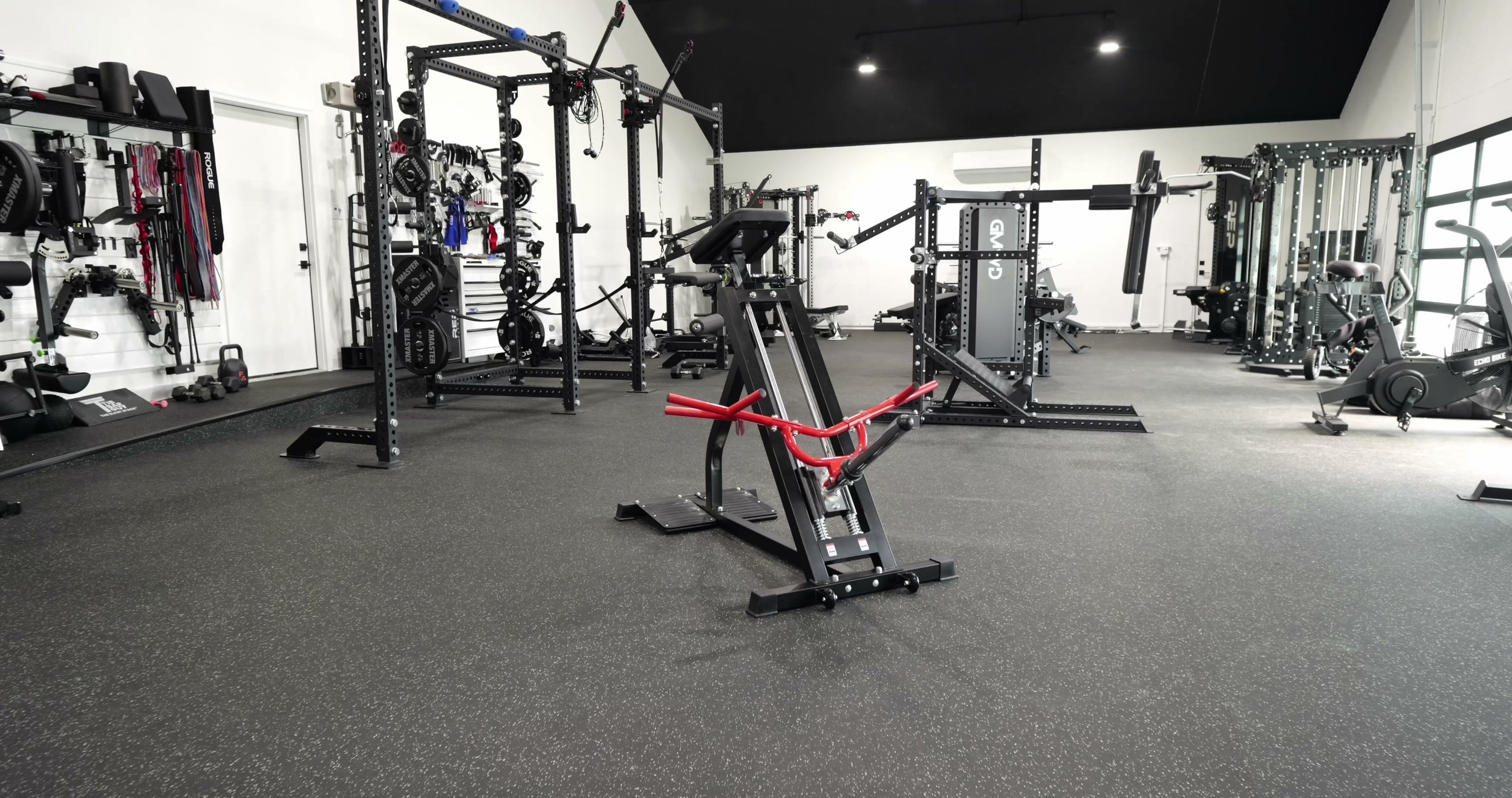
The Mikolo S7 T-Bar Linear Row Machine is a budget-friendly, chest-supported row that isolates your back effectively if you’re willing to make a couple of cheap, easy tweaks. It’s compact, smooth on the rails, and genuinely useful for home gym owners who want a dedicated row without spending big on commercial pieces.
Quick Takeaway
The S7 gives you an affordable, plate-loaded, chest-supported row on linear bearings. In stock form, the pad angle and handle geometry feel a bit off, but inexpensive add-ons like a wedge pad and neutral grips transform it from okay to something I’m happy to use regularly.
Quick Specs
Price: ~$369 (frequently on sale)
Machine Type: Chest-supported linear bearing row
Load Capacity: 220 lbs (approx. five 45lb plates)
Loadable Sleeve Length: 12 – 12.5 inches
Adjustability: 5 pad height options
Footprint: Compact, includes rear transport handle
Where to Buy
You can purchase the Mikolo S7 T-Bar Linear Row Machine below. Use code “JUNGLEGYM” for 5% off:
My Real-World Experience
I gravitate toward chest-supported rows because they keep my torso honest and let me focus on pulling, not on bracing my lower back. My favorite in this category is the Hammer Strength isolateral row, but that’s a different animal, heavy, pricey, and not remotely compact. The Mikolo S7 doesn’t try to be that. It’s a connected single bar on linear bearings, so the movement is fixed on one axis, like a Smith machine or leg press. That fixed path gives you a predictable stroke and a consistent line of pull every rep.
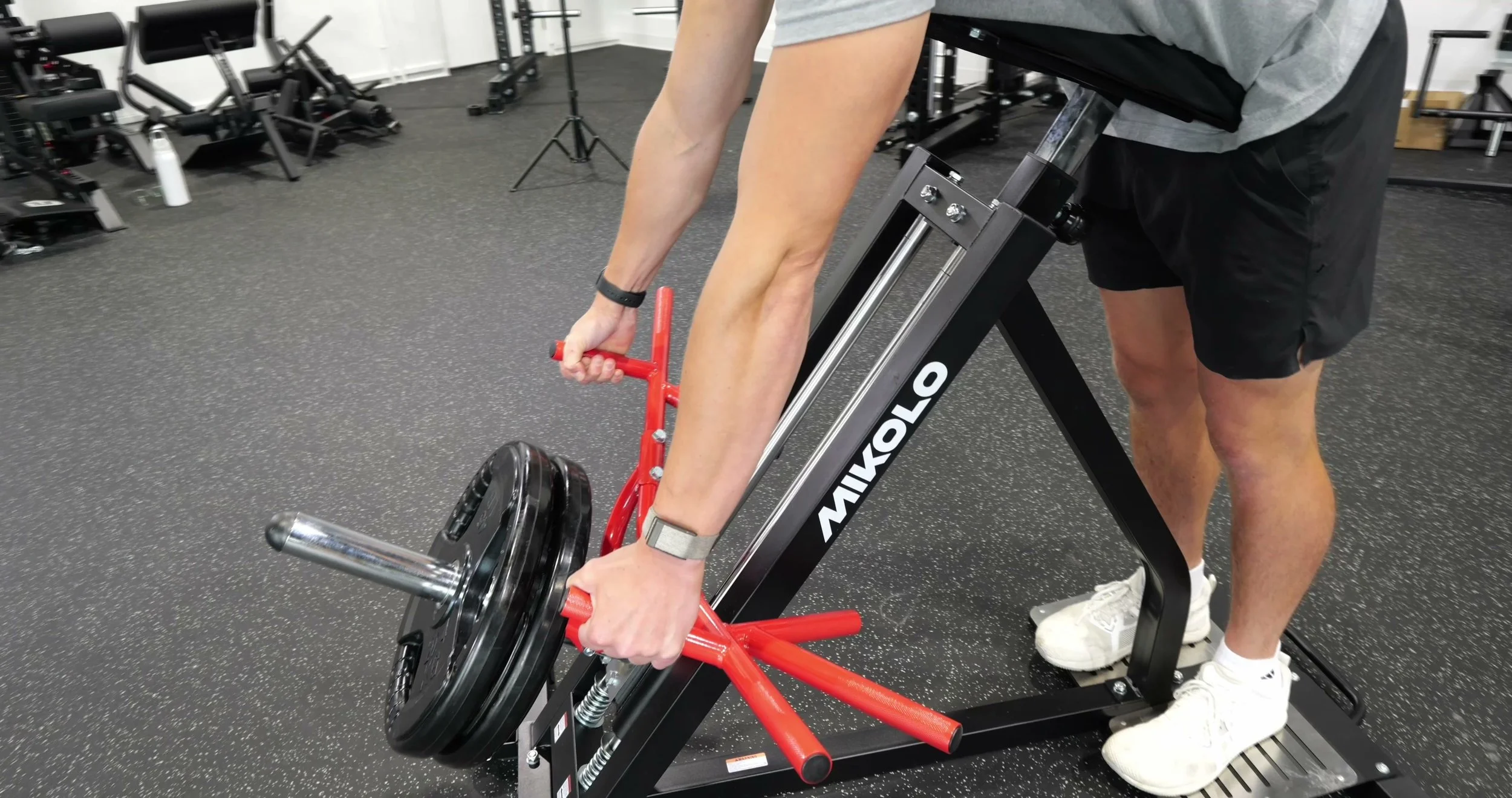
At 6’2” with long arms, I often fight range-of-motion limitations on budget machines. Here, I set the chest pad using the pop pin (there are five height settings), leaned in, and was surprised to get a full ROM immediately. No fussing, no reaching for the last inch. The carriage slides smoothly, there’s an audible swish from the linear bearings as it rides the guide rods, but the motion is clean and consistent. Load the horn, step onto the rear footplates, and pull. Simple.
Where I ran into friction was the stock ergonomics. The chest pad angle relative to the bar’s path felt a little “off,” like my torso wanted to be pitched just slightly differently to line up with the pull. The handle set gives you a few fixed positions, including a very wide overhand grip. Even for me, that wide position is wider than I care to use for rows. The other grips (higher and lower) are serviceable, but the overall geometry doesn’t feel fully dialed. It works, but not in that intuitive, locked-in way you get on a refined commercial machine.
Still, the basics deliver. The rails are smooth, the carriage doesn’t bind, and with the pad height set appropriately, I can get a solid stretch and contraction. In practice, the top of the stroke is where I notice the path and pad relationship most, there’s a point where the machine “tops out” and you feel it. That’s not a deal-breaker for me; it’s just part of using an affordable, fixed-path setup instead of a fully refined, multi-adjustable unit.
DIY Modifications for Better Ergonomics
Because this unit lives in the $330–$369 range (and is often discounted), I give it more leeway than I would a high-dollar machine, and I’m more willing to tweak it. Two quick changes made the biggest difference for me:
1) Neutral grips via Kensui Fitness Swissies. I looped a pair of Swissies around the main red bar to create neutral hand positions just inside the frame. They don’t interfere with the plates, and they immediately felt more natural on my wrists and elbows. Swissies are inexpensive, about $29 a pair, and they come in different angles if you want to play with wrist position. With these attached, the machine went from a 5–6 out of 10 feel to a 6–7 out of 10. One note: the straps do drop the grip height an inch or two, so I bumped the chest pad setting to compensate.
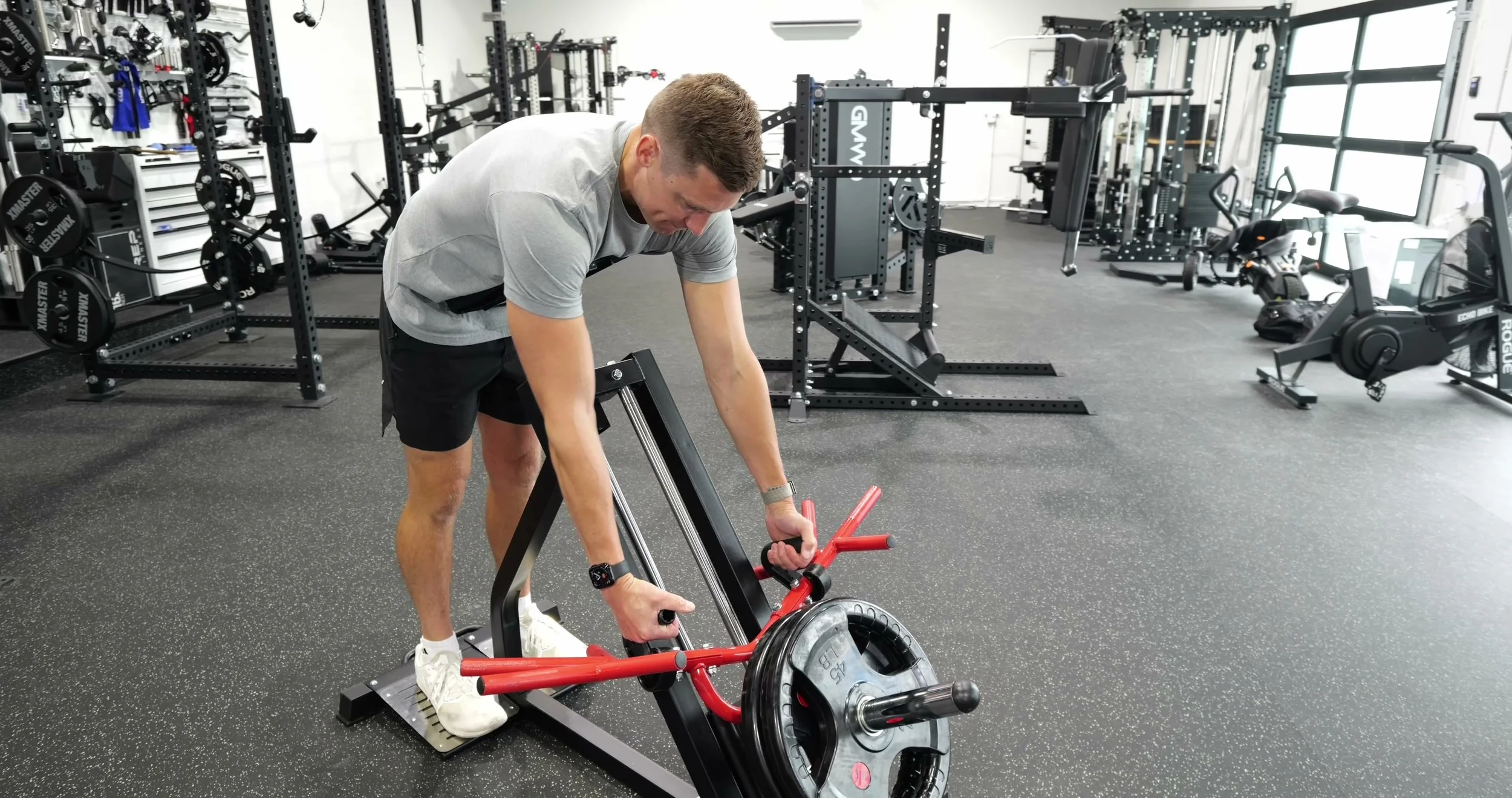
2) A wedge pad on the chest support. I slid an Ab Mat-style wedge between my chest and the stock pad to change my torso angle slightly. For me, that small change lines my lats up better with the path of the pull. You can cobble this together with a wedge, a rolled yoga mat, or foam blocks, anything that reliably changes the angle without slipping. The goal isn’t extra range; it’s changing the torso angle so that the line of pull matches where you want to feel it. Between the wedge and the neutral grips, I got a much more satisfying contraction without having to wrestle the machine’s geometry.
If you want to go further, there’s also a simple handle-hack that broadens your options: wrap a short strap, chain, or even an eye bolt setup around the main attachment shaft (the section where the load horn is fixed to the carriage) and clip on your favorite cable handles, think D-handles or a MAG-style row attachment. It’s a little awkward to rig at first, but once it’s on, you get the feel of your preferred handle on a fixed-path row, which hits differently than on a cable stack.
Assembly, Setup, and Adjustments
This is a classic bolt-together import piece. You see it in the frame, the handle assembly, and even the transport hardware, plenty of bolts holding sectional parts together. That keeps the shipping footprint and cost in check, and it’s one of the reasons the price lands in the hundreds instead of the thousands. The trade-off is lighter-gauge steel versus commercial units and a lower overall capacity.
Once it’s together, day-to-day setup is dead simple. I use the pop pin to pick one of the five chest pad heights, step onto the rear footplates, and start pulling. Those footplates give you a small, fixed angle that helps you find a consistent stance. They aren’t adjustable, but they keep your feet planted and your torso in a repeatable position. The linear bearings ride the guide rods smoothly, and you can hear them working, nothing alarming, just that familiar “rail” sound many of us know from Smith machines and leg presses.
One design element I appreciate is the rear transport handle. The whole unit is light for a dedicated machine, and I can grab that handle and scoot it into a corner even with plates still on the horn. In a tight garage gym, that matters. You’re trading some steel thickness and maximum capacity for something that’s easy to move and easy to live with.
Movement Feel and Resistance Behavior
The S7’s fixed path means there’s no wobble to manage and no instability benefit like you’d get from dumbbells or free rows. The advantage is repeatability: the same arc, the same stretch, and the same contraction each rep, which can make progressive overload straightforward. The downside is you’re locked into the machine’s geometry. If the pad angle and handle spacing aren’t perfect for your structure, you’ll feel it.
With stock handles, I gravitated toward the mid and lower positions, avoiding the extra-wide grip. With the neutral grips added, I could keep my elbows a touch closer and drive harder into the contraction. The machine tops out near the end of the stroke; I can still get a meaningful squeeze, it just emphasizes how fixed the ROM is. That’s where the wedge pad helped, angling my torso a bit shifts where I feel peak tension without changing the machine’s actual path.
Build Quality and Capacity
It’s a lightweight, bolt-together chassis designed for home use, not a welded, 500-pound commercial row. That’s the point, this slots into the “get a dedicated row without redesigning your gym” category. Mikolo lists a 220-pound capacity, and the loadable horn is roughly 12–12.5 inches long, which in practice fits about five standard Olympic plates depending on your set. I’ve been comfortable rowing four plates for reps, and the carriage felt stable. Very strong lifters could run up against the sleeve length and the stated capacity and find themselves wanting more.
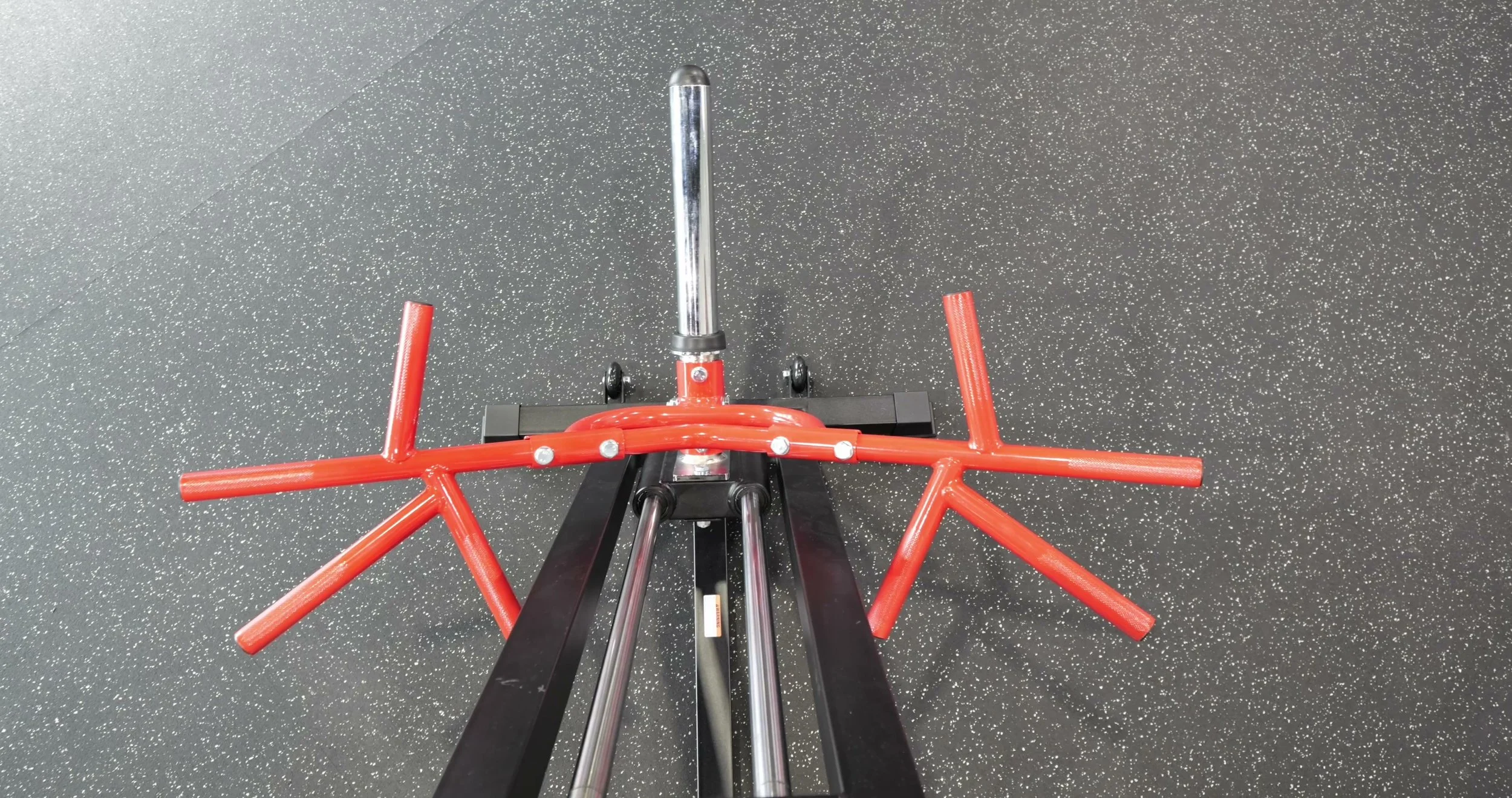
The steel is thinner than on high-end units, and you’ll see bolts along the frame and handle assemblies. That’s consistent with Mikolo and other import brands like GMWD across this category. It’s a reasonable compromise to land a dedicated machine at a few hundred dollars instead of four figures. In use, nothing felt loose or scary when loaded in the intended range; it’s just not built to be slammed with endless heavy partials by the strongest lifters in the room.
Space and Storage
Space is where this machine earns its keep. The footprint is compact for a standalone row, and that rear handle makes it genuinely easy to move. I like that I can roll it into a corner when I’m done, then drag it back out and be working sets in under a minute. If you’re juggling squat stands, a bench, and a limited floor plan, having a dedicated row that doesn’t camp in the middle of the room is a real benefit.
Price and Value Context
The S7 lists around $360–$369, and Mikolo often runs sales. There’s also a coupon “JUNGLEGYM” that takes 5% off. During events, I’ve even seen deeper discounts which brought it closer to $330 with shipping included. In the world of dedicated rows, that’s inexpensive. The “next step up” options in this space typically land in the $500–$700 range. The value proposition here is clear: it’s not a premium machine, but it’s priced so you can slot it in without rearranging your budget, and you can spend an extra $30–$50 on small upgrades that make it feel more tailored.
Comparisons / Alternatives
Within this exact price pocket, there aren’t many chest-supported, linear-bearing rows as standalone units. The closest budget alternative most home gym owners consider is a landmine T-bar row. A landmine is cheaper, more compact, and ultra-flexible with handle attachments, but it doesn’t give you chest support. The chest pad is the whole reason to buy the S7: it stabilizes your torso so you can push volume and tension on your back without turning every set into a lower-back exercise.
If you like the linear-bearing feel but prefer a different body position, Mikolo’s other row (the SR06) has a hip/butt-supported design instead of chest support. That changes how you brace and how the pull feels, though the same budget trade-offs apply. Beyond that, stepping up to more refined dedicated rows usually means $500–$700 and up. You’ll often get heavier construction, sometimes better geometry out of the box, and occasionally more adjustability. But you’ll also give up the S7’s price advantage.
Tradeoffs
Ergonomics out of the box are okay, not great. The chest pad angle and handle spreads aren’t as refined as pricier machines.
Capacity is limited. The ~220 lb rating and ~12–12.5 inch sleeve mean very strong lifters might outgrow the machine or run out of space on the horn.
Bolt-together construction keeps cost and weight down but won’t feel like a welded commercial piece.
Fixed path. You get repeatability and a smooth stroke, but you’re locked into the machine’s geometry, for better and for worse.
Who Should Buy This
Budget-conscious home gym owners who specifically want a chest-supported row and don’t want to spend $500–$1,000+.
People training in tight spaces who need a dedicated back machine that’s easy to move and store.
Users open to small DIY tweaks (neutral grip straps, a wedge pad, or a strap-on cable handle) to optimize feel.
Lifters who appreciate the smooth, predictable feel of linear bearings for back work.
Who Should Skip It
Very strong rowers who regularly use more than ~220 lbs or need more than five plates’ worth of space on the sleeve.
Shoppers who want a fully refined, highly adjustable row that feels perfect straight out of the box.
Anyone prioritizing a welded, heavy chassis over easy mobility and low cost.
Common Questions
Can I use different cable attachments with this machine?
Yes. With a simple strap or chain wrapped around the main attachment shaft, you can clip on D-handles, MAG-style grips, or other cable attachments to change your hand position and pulling angle.
Is the machine hard to move around the gym?
No. It’s very lightweight for a dedicated row and has a rear transport handle. I can pick up the back and roll it into a corner even with plates still on the horn.
Does it accommodate taller lifters?
Yes. I’m 6'2" with long arms and can get a full range of motion using the five chest pad height options.
Final Verdict
The Mikolo S7 T-Bar Linear Row Machine does exactly what a budget chest-supported row should do: it gives you a focused back exercise in a compact footprint and keeps your wallet intact. The linear bearings feel smooth, the ROM is there even for long-armed lifters, and the machine is genuinely easy to live with in a small space. The rough edges—mainly the chest pad angle and handle geometry—are real, but they’re also fixable for cheap. Add a neutral grip solution and a wedge pad, and you’ve got a home-friendly row that punches above its price.
Grab yours here: Mikolo S7 T-Bar Linear Row Machine. Use code “JUNGLEGYM” for 5% off.
The Jungle Gym Reviews may earn an affiliate commission if you purchase through our links.