MAXUM X3 Functional Trainer Power Rack Review
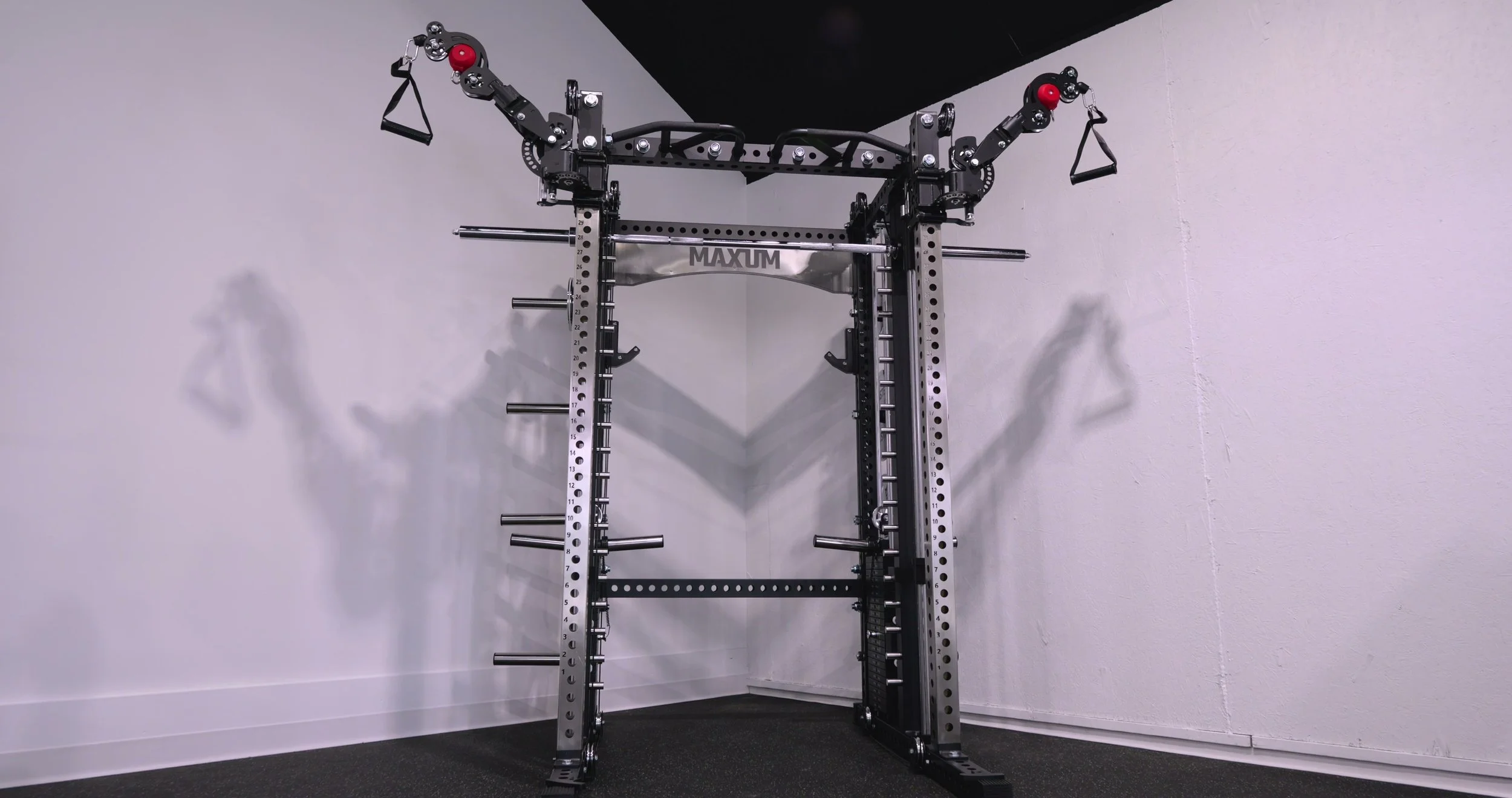
This product was tested in-house by Michael at The Jungle Gym Reviews.
The Maxum X3 is a fully loaded 4-post, 3x3 (75x75mm) 11-gauge steel half-rack with stainless front uprights, dual 220 lb weight stacks, an integrated counterbalanced Smith bar, and Maxum’s patented articulating “mutant arms” that let you swap between a 2:1 and a 1:1 cable ratio. It’s expensive at about $4,230 for the 88.5-inch model, but the combination of heavy single-sided pulling capability, smooth two-to-one cable work, and the long list of included attachments means you get a genuinely versatile home-gym centerpiece, with a few practical tradeoffs to keep in mind.
Quick Takeaway
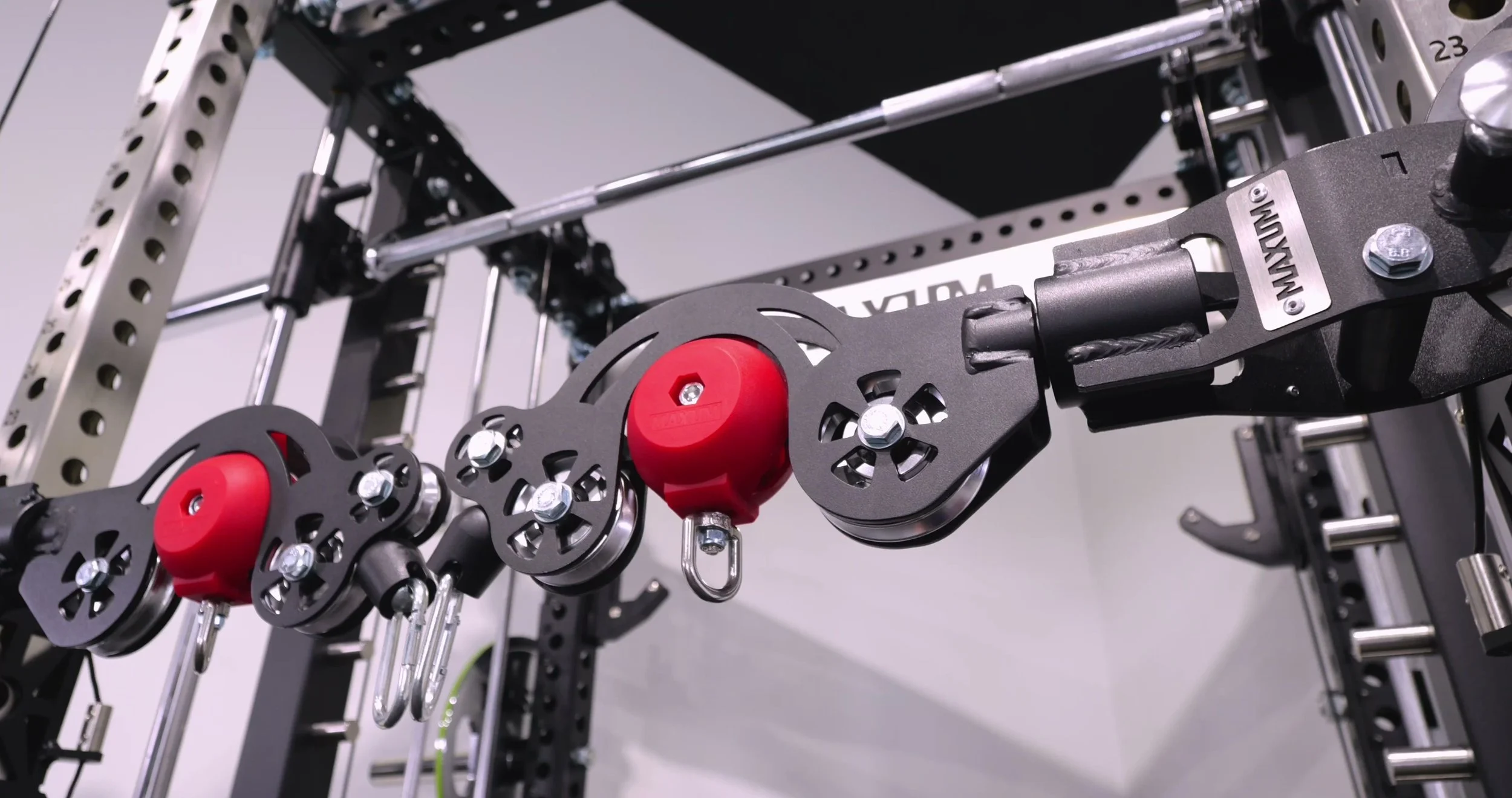
The thing that defines the X3 is the mutant arms. They move up/down and in/out across eight vertical and eight horizontal notches, they glide on roller bearings so you can reposition them quickly with one hand, and they give you a true 1:1 option via a red pulley so you can feel the full 220 lb stack per side. If you want a single machine that can do lightweight, high-precision cable work and also handle heavy single-arm lat pulls, low rows, and even belt-squat-style loading, this is one of the more capable all-in-ones I’ve tested. Expect to pay a premium, but Maxum frequently runs bundle discounts that improve the value proposition.
Quick Specs
Price (as tested): $4,230 for the 88.5-inch version (82.5-inch option available)
Dimensions: 88.5 inches tall (82.5" ceiling-friendly version available), 49 inches wide (43" interior)
Footprint: Flat-foot configuration, ~61 inches front to back (provides stability and mounting options)
Uprights: 3x3 (75x75mm) 11-gauge steel with stainless steel front uprights, 26mm holes, 2" on-center spacing
Weight Stacks: Dual 220 lb selectorized stacks with integrated weight horns (≈8 inches loadable length)
Cable Ratio: Swappable 2:1 (standard end) and 1:1 (red pulley) on mutant arms
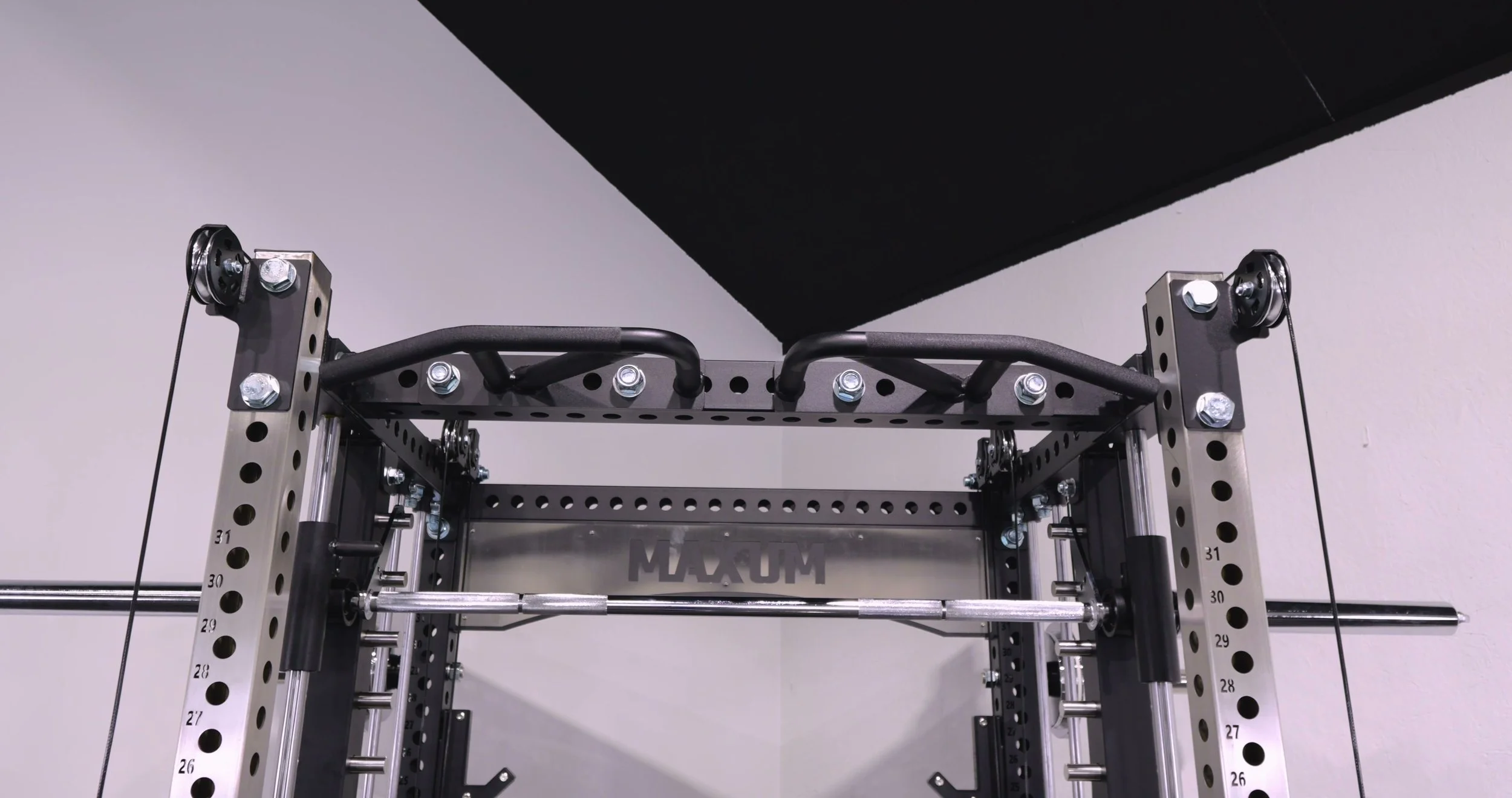
Included / Optional: Multi-grip bolt-on pull-up bar, counterbalanced Smith machine (≈8 lb counterweight), J-cups, D-handles, low-row footplate, knee holder pads, center bar, leg-press plate attachment (available), spotter arms (add-on)
Warranty: Lifetime (manufacturer-provided)
Where to Buy
You can check official pricing through Maxum Fitness below:
My Real-World Experience
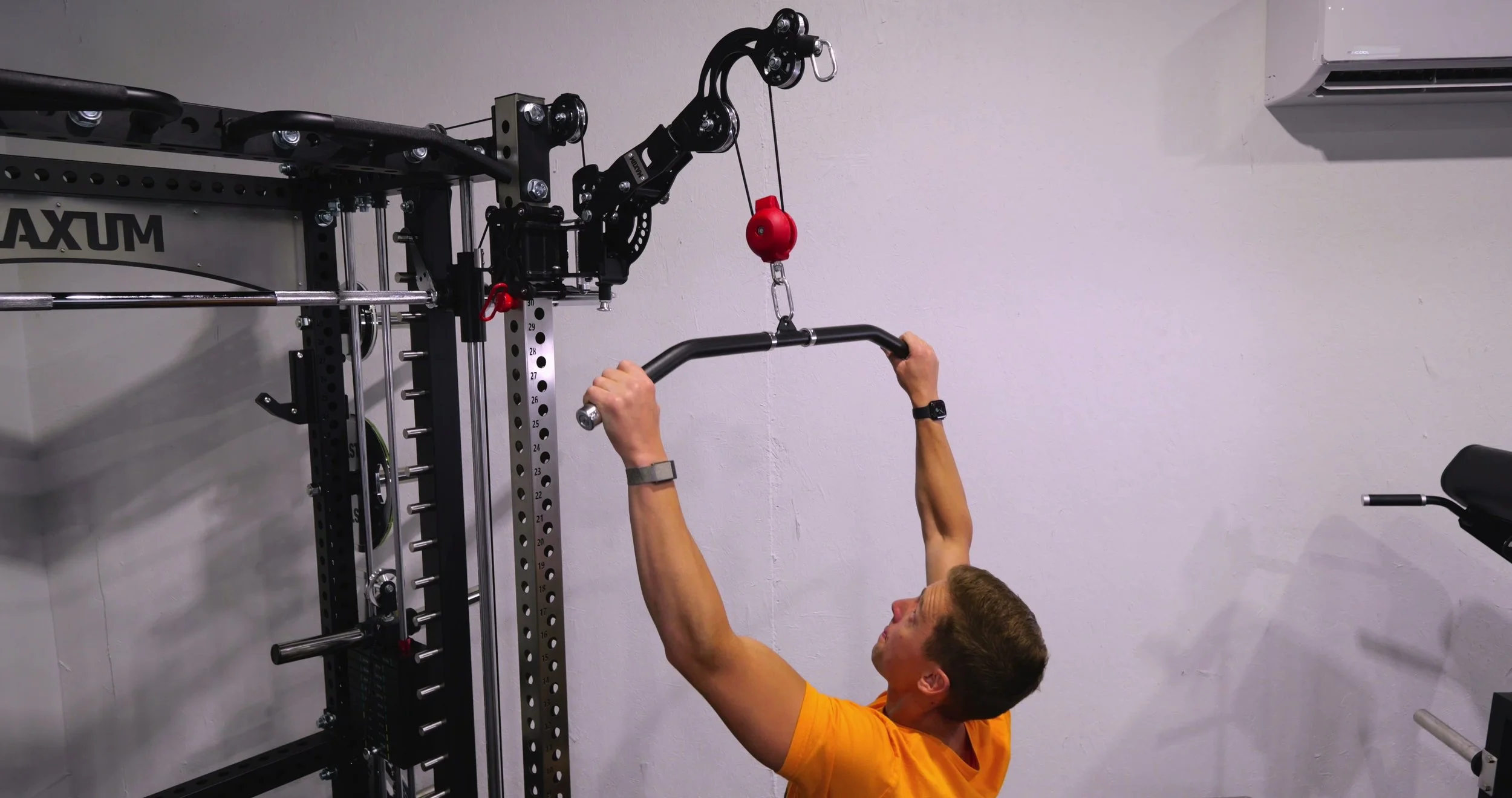
I spent my time with the fully loaded 88.5-inch X3 and focused on the parts of the rack that change what you can do in a home gym. The mutant arms are the headline, eight height positions and eight angle positions give you a lot of practical choices for everything from high lat pulldowns to very wide fly variations. The pop-pin + rollers let you slide the arms with one hand for most adjustments; toward the top you’ll sometimes use two hands, but for 80–90% of repositioning it’s pleasantly quick.
I tested lat pulldowns, single-arm cable rows, chest flies at wide and narrow spans, and used the low-row footplate and the included center extender cables for seated low rows. For lighter work, shoulder raises, triceps pushdowns, the 2:1 setting is great: it halves the selected stack weight so you get smaller increments and a lower starting weight. As an example from my testing: with 42 lb selected on the stack using the two-to-one end I felt roughly 21 lb at the handle. That makes fine-grain loading practical for families or for small-muscle work.
When I wanted heavier single-arm work I moved the carabiner to the red pulley and engaged the 1:1 path. That instantly lets you feel the full 220 lb stack on one side. Do that on both arms and you’ve got 440 lb combined available, more than most people need for pulldowns. The 1:1 path isn’t quite as slick as the 2:1, there’s a little stickiness because of the tighter cable routing and the extra bend, but it’s a deliberate tradeoff to unlock much heavier resistance.
The Mutant Arms & Cable System
Mechanically, Maxum did two smart things: the red plastic-covered pulley gives a clear visual and quick swap to 1:1, and the arms have a small counterweight and magnet that help orient the pulley depending on whether you’re pulling up or down so the cable doesn’t wrap around the arm. The downside is cosmetic and tactile: the red plastic cover looks a little toy-like (Michael calls it a bobber), and over time you’ll see scuffing where the pulley sits in its groove. Maxum covers moving parts with lifetime warranty support, and that plastic is likely a replaceable wear part, but expect normal cosmetic wear if you use the 1:1 path a lot.
Two-to-one mode is very smooth, about an 8–8.5/10 in my assessment, because the routing keeps friction low and gives more cable travel. Swapping to the red pulley introduces more bending and friction, so the 1:1 path feels stiffer. That’s completely normal physics for this style of dual-ratio design and not a defect, but it’s worth knowing if you expect butter-smooth motion at all resistance levels.
One real-world practical tip from setup: the modular center bar that Maxum includes (for center-mounted leg-holders or pulldown center work) needs to be installed before you torque down certain bolts. I had a near-miss where, after tightening the frame, the center bar was a hair too long to slip in. Don’t make that mistake, stage the center bar and check alignment before final tightening so it drops in without forcing or risking the UHMW pad.
Smith Machine & Pull-Up Bar
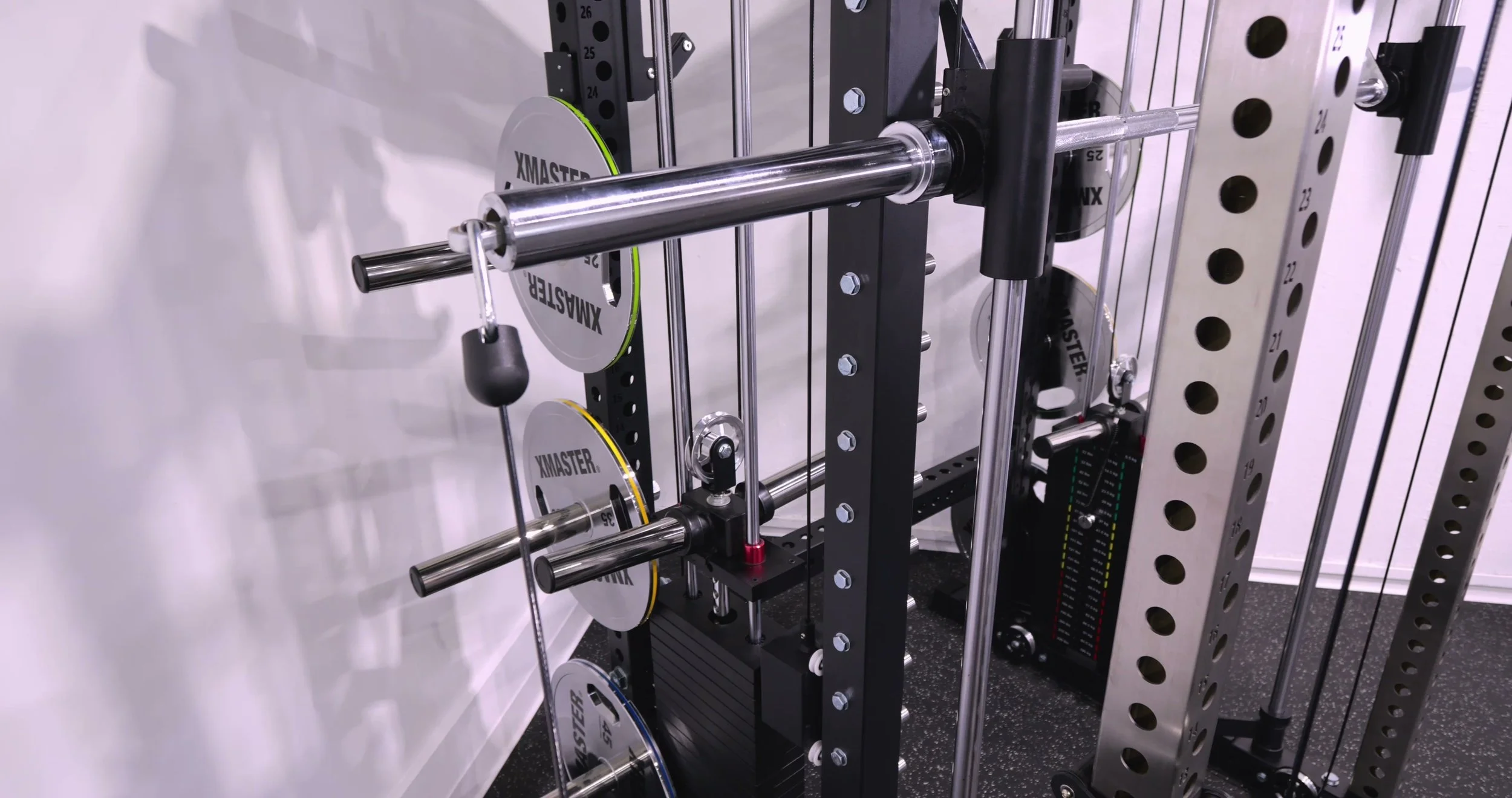
The integrated Smith runs on a fixed vertical guide rod and includes a counterweight that brings the unloaded feel to about eight pounds. You can choose not to install that counterweight if you prefer the bar to feel like a regular free-weight barbell (≈45 lb). Because the rack is flat-footed, the Smith bar can sit lower than many integrated systems; I measured roughly 12.5 inches to the top of the bar at the lowest setting, which gives usable range for rows and squats. The one exception most people encounter is Romanian deadlifts, like many Smith setups, you may want a small step-up platform to get full range for traditional RDLs.
The Smith bar knurling is lighter than a competition bar but grippy, sandpaper-like, which is exactly what I want for a Smith. I measured the bar diameter at about 29.5 mm (≈1.15 inches). Maxum also built an eyelet at the end of the Smith assembly so you can cable-drive the bar from the functional trainer trolley; in practice I often just load plates, but it’s a clever, low-cost option for people who want a cable-driven Smith experience.
Build Quality & Dimensions
Construction is 11-gauge steel with stainless-steel front uprights and a hybrid hole design: 26 mm holes on a 2" on-center spacing. In practice I’ve not had attachments fail to seat, and the hybrid approach gives the benefits of metric tube strength with imperial spacing convenience. The rack’s width is 49" outside (43" interior), and Maxum claims a 100" maximum arm span from pulley end to pulley end, the measurement checks out in my testing and it’s useful for wide fly variants. The flat-foot frame extends front and back (about 61" total depth), which increases stability and gives more real estate for mounting attachments and storing things like spotter arms.
Storage-wise Maxum includes integrated plate horns on each weight stack with roughly eight inches of loadable length. That lets you add plates to each stack and approach much higher effective resistance beyond the 220 lb stack; Maxum suggests checking cable ratings before extreme loading, but the option is there and useful for heavy belt-squat or single-arm work.
Comparisons / Alternatives
If you like the Maxum concept but want to lift inside the rack, Maxum offers the X2 six-post version that’s designed for barbell work inside the rack. The X1 is an earlier model with fewer articulating features. For competing functional trainers, if you want a pure 1:1 stack-only path without swappable ratios you can look at things like the Fringe Sport Dane (which is a 1:1 system), but the X3’s two-to-one default gives you smaller increments that a true 1:1 selectorized machine won’t. I’ve also tested other one-to-one-to-two hacks on different rigs (Voltra and a few others) and the friction behavior is similar: tighter routing means slightly less smooth 1:1 motion, so the X3’s behavior is consistent with other hybrid designs.
Tradeoffs
Every big, versatile machine has tradeoffs. For the X3 the main ones are:
Offset pulley mounting: The mutant arms are not centered on the center holes, which lets Maxum get a wider maximum span but means center-mounted lat seats or leg holders will see the cable approach at a slight angle. In practice you won’t lose much function, but it’s a workflow nuance—Maxum supplies center extender cables for low rows, and there are aftermarket offset leg holders that line up perfectly if you want a truly centered vertical path.
1:1 smoothness vs. capability: The 1:1 option unlocks heavy single-arm pulls, but it’s inherently a little less slick than the 2:1 setup. That’s normal physics not poor design, but if you expect equal smoothness at both ratios you’ll be disappointed.
Setup nitpicks: The included center bar can be a millimeter off during a rushed assembly if you torque bolts before test-fitting. Install the center bar early in the assembly process. Also, the red plastic pulley will scuff over time where it sits in its groove, expect cosmetic wear.
Who Should Buy This
Buy the X3 if you want a single, compact footprint to do both precise, low-start-weight cable work and legitimately heavy single-arm pulling without buying separate machines. It’s for people who value articulation: high/low positions, in/out control, and the ability to change cable ratios on the fly. If you plan to take advantage of Maxum bundle discounts (they frequently offer ~20% on bundles), the overall value for a full-featured home gym goes up considerably.
Who Should Skip It
Skip the X3 if you primarily want to do barbell training inside a six-post safety box, consider the Maxum X2 instead. Also skip it if your budget is very limited and you don’t need the articulating arms or the dual-ratio capability; a simpler single-purpose rack or functional trainer will cost less.
Common Questions
Can I use the full weight stack for heavy pulls?
Yes. Move the carabiner to the red pulley on the mutant arms to engage the 1:1 ratio and you will feel the full 220 lb stack on that side. You can also add plates to the integrated weight horns on each stack to increase total load, Maxum notes roughly eight inches of loadable length per horn.
Does the imperial hole spacing cause issues with metric attachments?
The X3 uses 26 mm holes with 2" on-center spacing, so it’s a hybrid metric/imperial upright. In practical use I didn’t encounter attachment fit problems; two-hole metric-to-imperial conflicts are rare with this upright design.
Final Verdict
The Maxum X3 is a thoughtfully engineered all-in-one that solves the biggest gripe I have with many functional trainers: limited heavy single-arm pulling. The mutant arms give you useful height and angle control, the swappable 2:1/1:1 ratio dramatically expands what one machine can do, and the included attachments (plus the frequent bundle discounts) make it an attractive value if you plan to use most of its features. If you care about a perfectly centered lat-seat path or prefer the feel of a free-standing six-post rack for barbell-only training, weigh those preferences, otherwise the X3 is one of the most capable single-unit setups I’ve tested.
MAXUM X3 — USA
MAXUM X3 — Canada
The Jungle Gym Reviews may earn a commission from purchases made through our affiliate links.