Freedom Fitness Equipment HammerClad Flooring Review
This item was tested in house by Michael at The Jungle Gym Reviews.
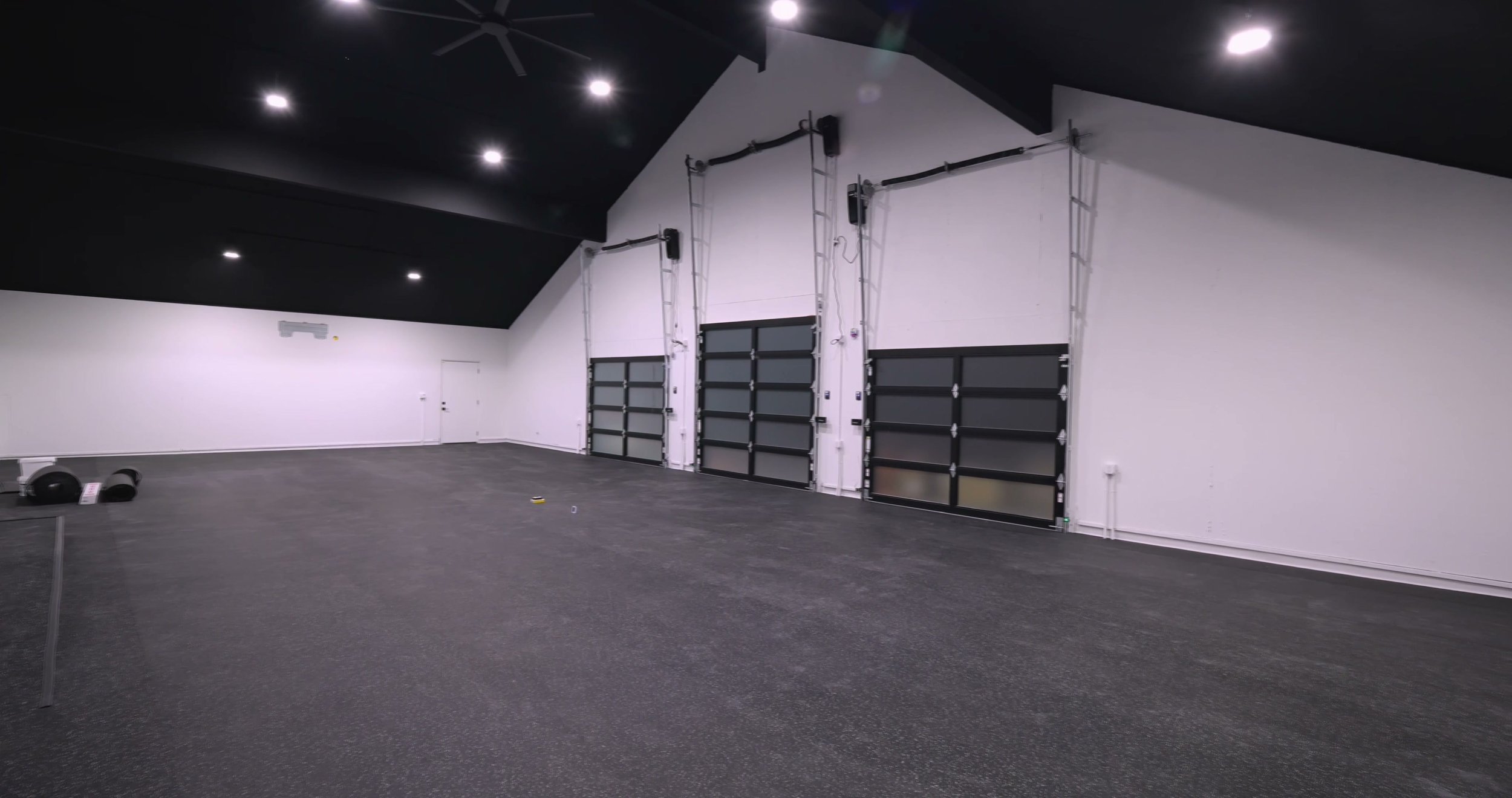
The Freedom Fitness Equipment HammerClad Flooring is a premium rolled rubber option that offers a cohesive, professional look and low off-gassing, making it an excellent choice for dedicated home gym owners who prioritize aesthetics and indoor air quality. After years of relying on traditional horse stall mats for my various home gyms, moving into a new 1,900-square-foot studio prompted me to rethink my flooring strategy. I needed something that looked great on camera, provided a seamless surface, and most importantly, offered a healthier environment for me and my family.
Quick Takeaway
The HammerClad rolled rubber flooring delivers a virtually seamless, high-end appearance with significantly less rubber odor than standard stall mats, thanks to its virgin EPDM and recycled rubber construction. However, it requires a more intensive, often professional, installation process and the 8mm thickness I chose is less durable against heavy drops compared to thicker alternatives.
Quick Specs
Type: Rolled rubber flooring
Thickness: 8mm (0.32 inches) tested; up to 3/4-inch available
Material: Recycled rubber and virgin EPDM
Fleck: 10% Gray (looks like white/gray)
Roll Width: 4-foot sections
Certifications: Clean Air Gold Certification [VERIFY exact name]
Origin: Made in USA
Where to Buy
You can find the HammerClad Rolls directly from Freedom Fitness Equipment below. Use code “JUNGLEGYM” for 5% off:
My Real-World Experience
For the last six years, I’ve used Tractor Supply horse stall mats across multiple iterations of my basement and garage gyms—my garage gym 1.0, 2.0, and maybe even 3.0. They are the tried-and-true budget option, usually costing around $2.50 per square foot. But when we moved into this new 1,900-square-foot space, which we've been in for about six weeks now, I wanted to weigh my options carefully. I knew I would be spending many hours a week here, potentially for the rest of my life. As a dad of two kids turning 34 later this year, the health and longevity aspects of my flooring choice became a major priority.
I ended up choosing the HammerClad rolled rubber flooring from Freedom Fitness Equipment, which is made in the USA. I went with the 8mm thickness and a 10% gray fleck. Interestingly, when I priced it out for this massive space, the cost of the 8mm rolled flooring was about $2.60 per square foot, compared to roughly $2.50 per square foot for stall mats. The pricing was surprisingly similar, which made the decision much easier to justify.

Health and Indoor Air Quality
One of the biggest driving factors for this purchase was indoor air quality. In my previous basement gym, which had no airflow, I always wondered how safe it was to breathe in the off-gassing from standard recycled rubber stall mats. Stall mats often have a very strong rubber smell that lingers because of the recycled rubber and chemicals added to them. Now that I am older and more health-conscious, I wanted to ensure I was choosing something safer for my family and me, especially since we are in and out of the studio frequently.
The HammerClad flooring uses a mix of recycled rubber and virgin EPDM, which results in significantly lower off-gassing. It even carries a third-party Clean Air Gold Certification, meaning it is independently tested. In this new studio, where there is no direct inside-to-outside air exchange (the doors are well-sealed and we use mini-splits), there was only a faint rubber smell for a few days after installation, and then nothing. Compared to stall mats that smell strongly for a long time, this was hugely valuable.
Aesthetics and Maintenance
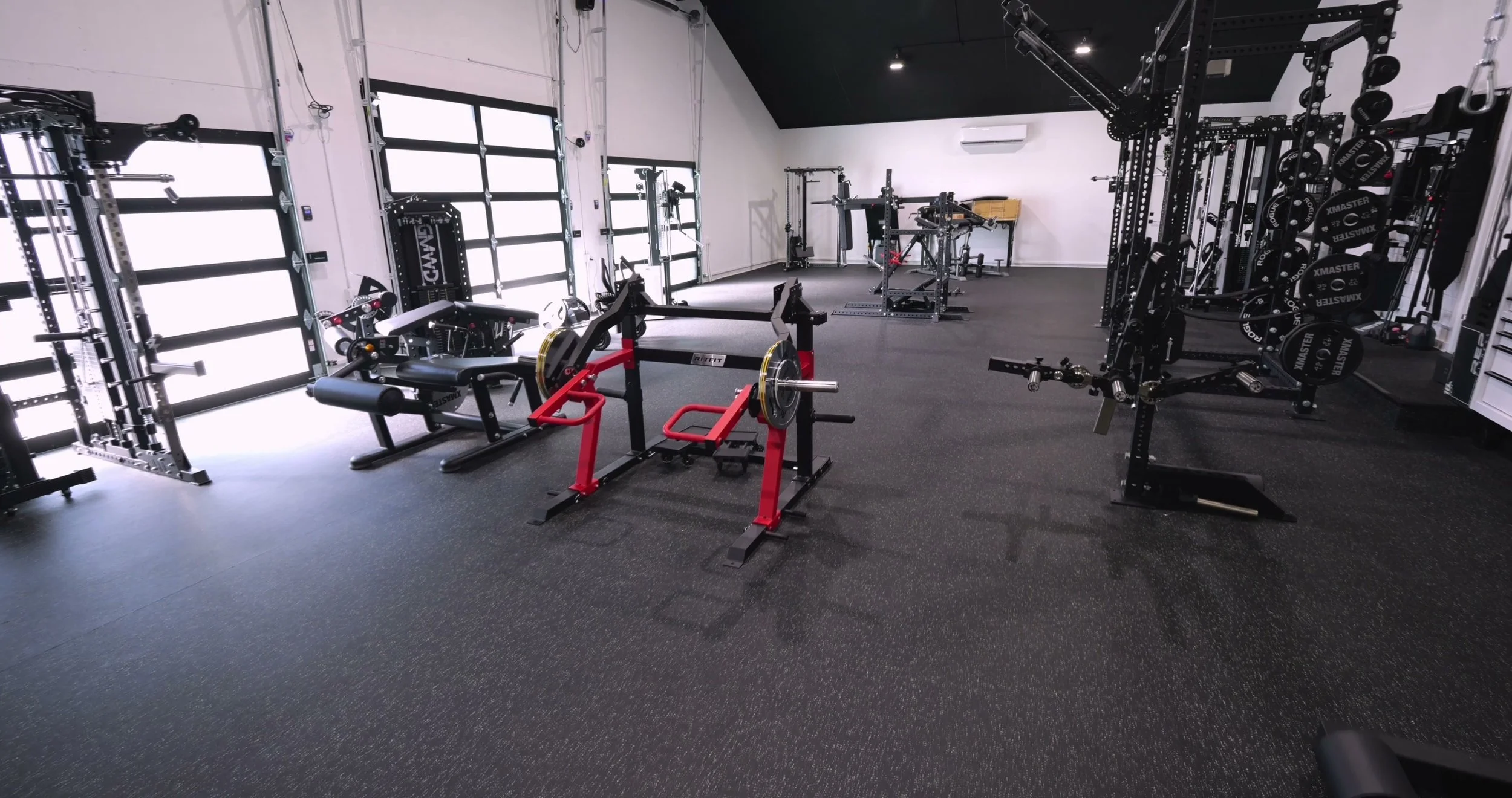
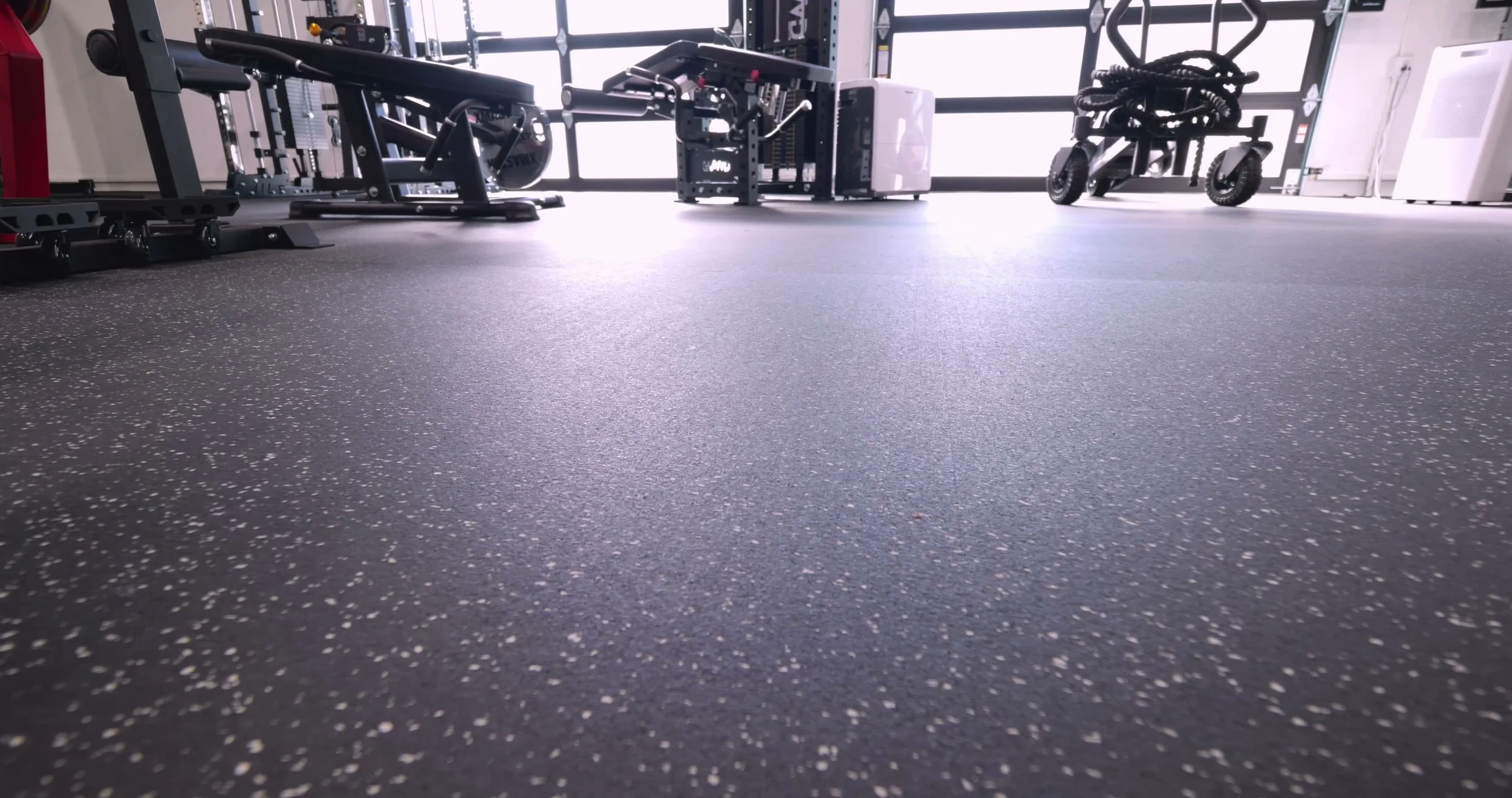
Because this space serves as an equipment studio meant to look professional on camera, aesthetics were crucial. The flooring comes in 60-foot long, 4-foot wide rolls. When installed correctly, the seams butt up against each other so tightly that they are very hard to see unless you have specific backlighting. It creates a clean, cohesive, and continuous look that you just can't achieve by taping stall mats together with black Gorilla Tape.
I chose the 10% gray fleck, which actually looks more like a white-gray in person. I don't have a great frame of reference for what 10% fleck should look like, but there are plenty of specks all over the flooring, and it perfectly complements the white walls and black ceiling I wanted for the studio. I didn't want anything other than that white and gray theme. An added benefit of the fleck pattern is how well it hides imperfections. While moving in, setting up equipment, and tracking in dirt and mud, the floor hid scuffs and debris incredibly well. A quick pass with a leaf blower was all it took to clean up the big chunks of cardboard and tape, and you couldn't even tell the floor was dirty.
Installation Process
This is where rolled rubber flooring differs significantly from stall mats. I opted for professional installation, and it was an intensive, five-day process. Our studio used to be a pickleball court, so the installers had to literally sit there and scrape off all the paint lines, filling three big black trash bags with paint chips. They then took rotary tools to sand down and level the concrete, and filled all the expansion joints to ensure a perfectly prepped surface, just like prepping a house for painting.
They then rolled out the 60-foot strips of flooring and let it acclimate for a few days. After that, they got back in and painstakingly glued it down section by section, starting from the middle and working outwards. They would roll back the flooring, put down glue, let it get a little tacky, put the flooring back down, roll it out, and move to the next section. While the flooring itself cost about $5,000 for the room, the professional installation cost $12,000. Depending on your area, professional install can run anywhere from $3 to $8 per square foot, and in the Metro Detroit area, it was actually hard to find installers who knew what they were doing with this surface prep. If you're tackling a large space and want that permanent, seamless look, you have to factor in the substantial cost and time required for proper glue-down installation.
Durability and Thickness
To keep the cost comparable to stall mats, I opted for the 8mm thickness (about 0.32 inches). While this thickness is adequate for general use and protecting the concrete under most equipment as long as you aren't making high drops, it is less durable than a 3/4-inch stall mat when it comes to heavy impacts.
During installation, the installers had a ramp, and at the end of the ramp when they were trying to make cut lines, it accidentally got away from them. Since it's only 8mm thick, it ripped a corner for about a two-foot section, which visually does not look the greatest. My installers offered to cut it out and fix it, but since it's a huge 60-foot strip, I didn't want patch lines. This highlights that if you plan on dropping heavy weights or deadlifting frequently, you should either opt for a thicker version of the HammerClad flooring (which is available up to 3/4-inch, though it costs quite a bit more) or use a dedicated lifting platform or drop pads up to two inches thick on top of the 8mm floor.
Comparisons / Alternatives
The most direct alternative to rolled rubber is the standard 4x6 horse stall mat. Stall mats are typically 3/4-inch thick, making them more durable for heavy drops, and they are much easier to move around since a single mat weighs roughly 100 pounds. In contrast, a 60-foot roll of the HammerClad flooring weighs close to 400 pounds. The installers really struggled carrying it in and out because it's huge and awkward to maneuver, especially if you have to walk far or go down stairs. Stall mats are also much easier for a DIY setup since you can just drop them in place, whereas rolled rubber is best when glued down over a meticulously prepped surface.
However, stall mats have far more seams, lack the clean fleck aesthetic, and typically emit a much stronger, longer-lasting rubber odor compared to the virgin EPDM blend used in the HammerClad flooring. Another consideration I had was installing rolled turf, but I decided against it because it would limit the visual appeal of the equipment studio, I didn't have a good area to run or sled on it, and my wife wants to park in here eventually, which means avoiding car fluids and oil on turf.
Tradeoffs
The biggest tradeoff with the HammerClad rolled flooring is the installation. Achieving the seamless, permanent look requires intensive surface prep and gluing, which often means hiring expensive professionals. Additionally, a 400-pound roll is incredibly difficult to move if you ever need to relocate your gym. Finally, the 8mm thickness, while cost-effective, won't withstand sharp, heavy drops as well as thicker stall mats.
Who Should Buy This
This flooring is ideal for home gym owners who want a permanent, highly professional aesthetic with minimal visible seams, such as those building a forever home gym in a barndominium or pole barn. It is also a great choice for those who are health-conscious and want to minimize the strong rubber off-gassing typical of cheaper flooring options.
Who Should Skip It
You should skip this if you are on a tight budget and cannot afford professional installation, or if you frequently move and need flooring that can easily pack up and go with you. It is also not the best choice if you drop heavy deadlifts directly on the floor and aren't willing to pay the premium for the thicker 3/4-inch rolled option or use a separate platform.
Common Questions
Can I install rolled rubber flooring myself?
Yes, you can lay it loose or use double-sided tape, but to achieve a truly seamless and permanent result, a full glue-down installation with proper concrete surface prep is recommended, which is often best left to professionals.
Is the 8mm thickness enough for a home gym?
For most machines, racks, and general workouts, 8mm will protect your concrete. However, if you are doing heavy deadlifts or dropping weights from overhead, you will need a thicker floor or a dedicated lifting platform to prevent damage.
Does the flooring smell bad?
Compared to standard stall mats, the HammerClad flooring has very little off-gassing. There was a faint rubber smell for a few days after installation, but it dissipated quickly, making it a much more pleasant option for enclosed spaces.
Final Verdict
The Freedom Fitness Equipment HammerClad rolled flooring transformed my studio, providing a clean, cohesive look with the added peace of mind of better indoor air quality. While the installation process and costs are significant hurdles compared to throwing down some stall mats, the end result is a premium, permanent foundation for a serious training space.
You can purchase the HammerClad Rolls directly from Freedom Fitness Equipment. Use code JUNGLEGYM for 5% off.
Shop Freedom Fitness Equipment HammerClad Rolls
I receive a commission if you purchase through my links, which helps support the channel and allows me to keep testing equipment.