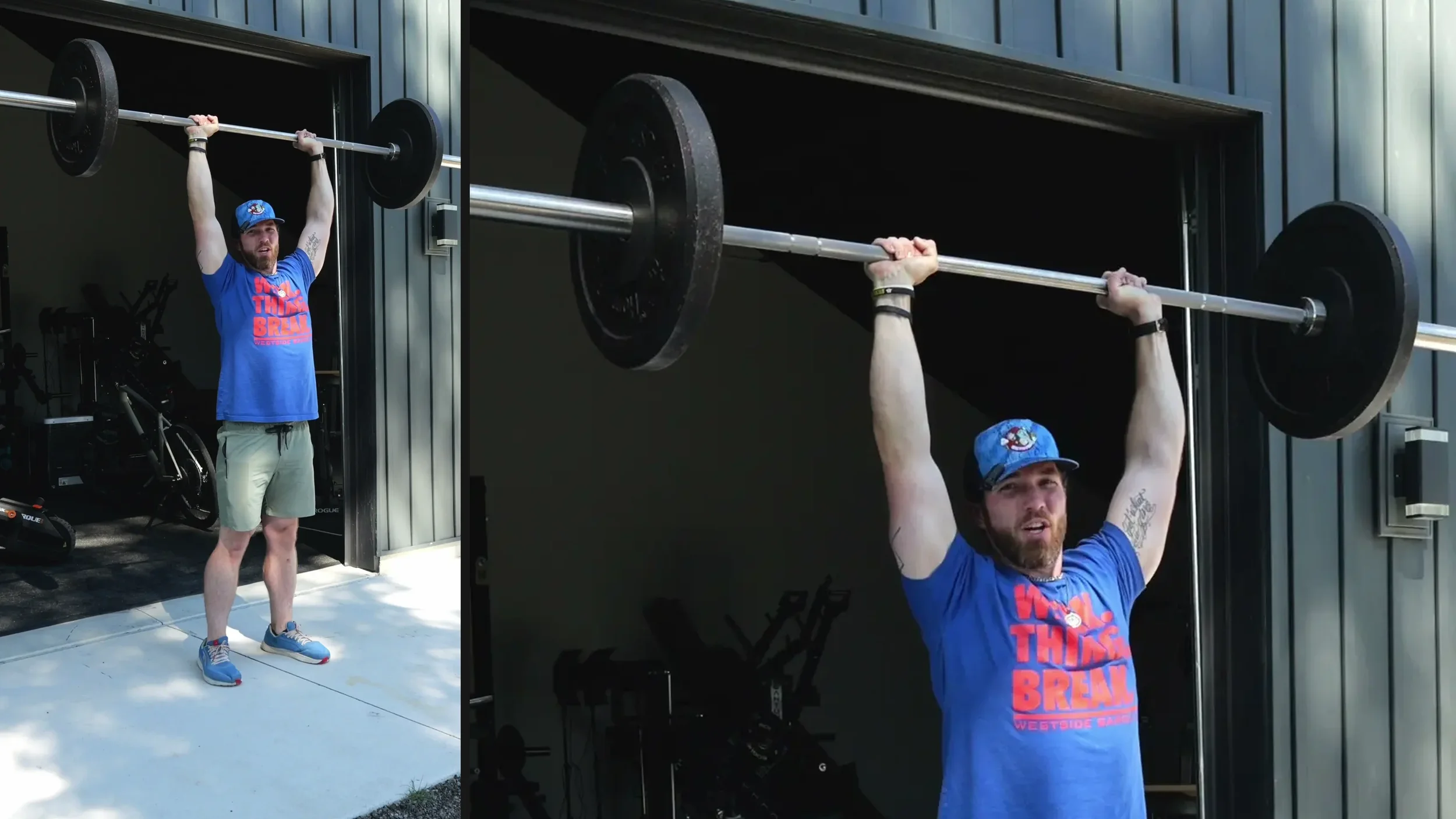
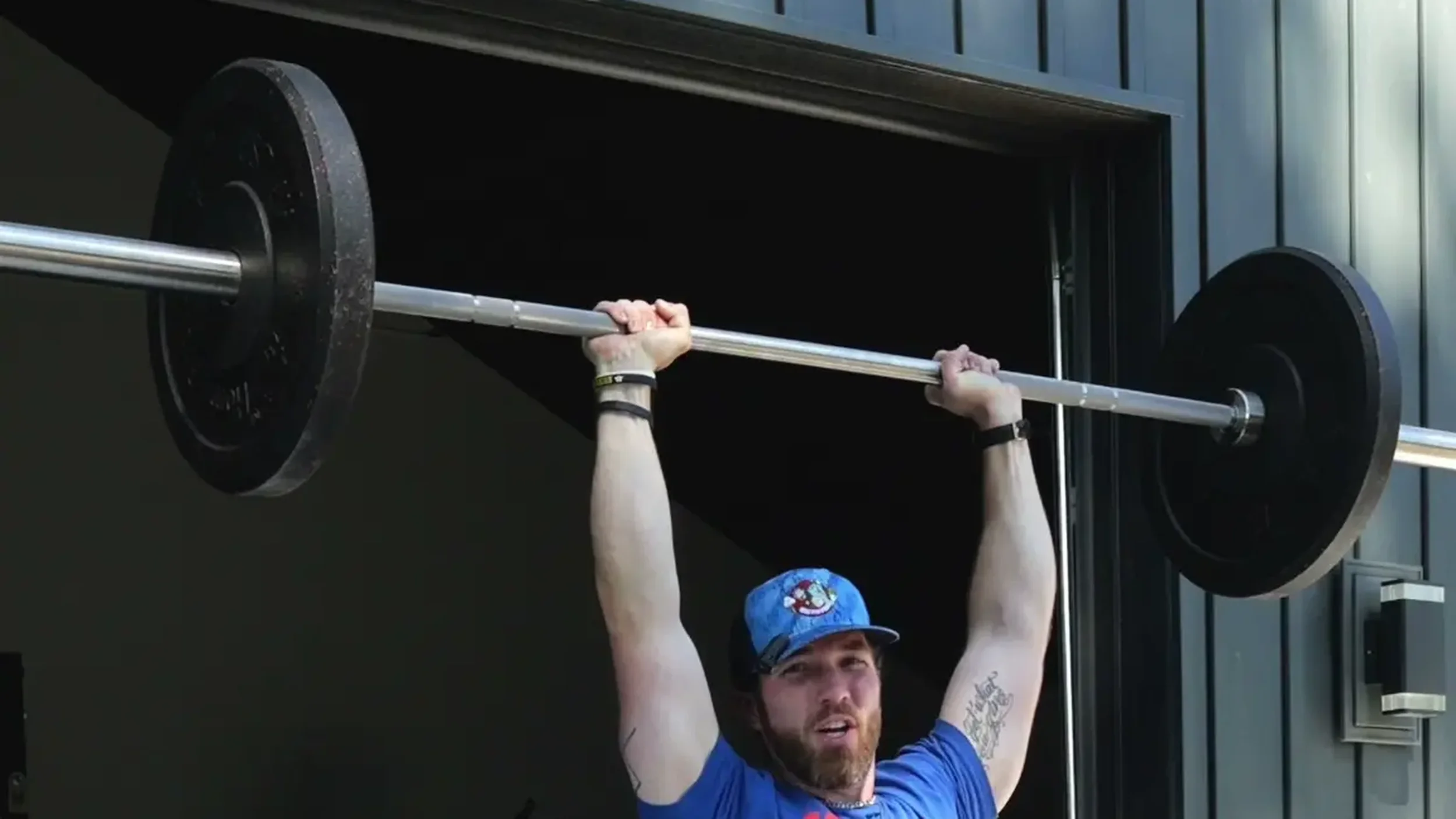
This item was tested in-house by Eric at The Jungle Gym Reviews.
Homegrown Lifting’s colored bumper plates are a practical choice for a home gym built around bumper-style lifting, with color-coded weights for everyday loading and optional Hyper-Thin 45s when sleeve space becomes a problem. The appeal is straightforward: crumb-rubber construction, a metal center insert, and a choice between standard 45s and a narrower version rather than one thickness for every lifter.
I would choose between those versions based on how much weight you actually put on the bar. A standard bumper set can cover a lot of home-gym training. The thinner 45 becomes more useful when several plates per side are realistic, or when you are working with shorter loading sleeves.
Quick Takeaway
The standard plates are the sensible starting point if you want bumpers and do not routinely run out of bar space. The colored flecks make the weights easier to distinguish, while the Hyper-Thin 45s address the main drawback of thick crumb-rubber plates: how much sleeve length they consume. I would also leave room in the budget for smaller loading increments instead of buying only enough 45s to reach a headline total.
Quick Specs
Type: Colored crumb-rubber Olympic bumper plates
Current product listing: Homegrown Lifting URA-MAX Colored Bumper Plate Sets
Construction: Recycled crumb rubber with a urethane binder and recessed stainless-steel inserts, according to Homegrown
Manufacturing location: Lexington, Kentucky, USA
Standard diameter: 17.72 inches across the listed weights
Color code: 10 lb white; 15 lb orange; 25 lb yellow; 35 lb blue; 45 lb red
Standard 45 thickness: 3.6 inches
Hyper-Thin 45 thickness: 2.4 inches; sold separately in pairs
Hyper-Thin collar: Manufacturer-listed 2-inch press-fit 304 stainless steel
Dimensions, construction details, and current configurations above are Homegrown’s published specifications.
Where to Buy
You can find these directly from the manufacturer's website at Homegrown Lifting:
Color Coding That Makes Loading Simpler
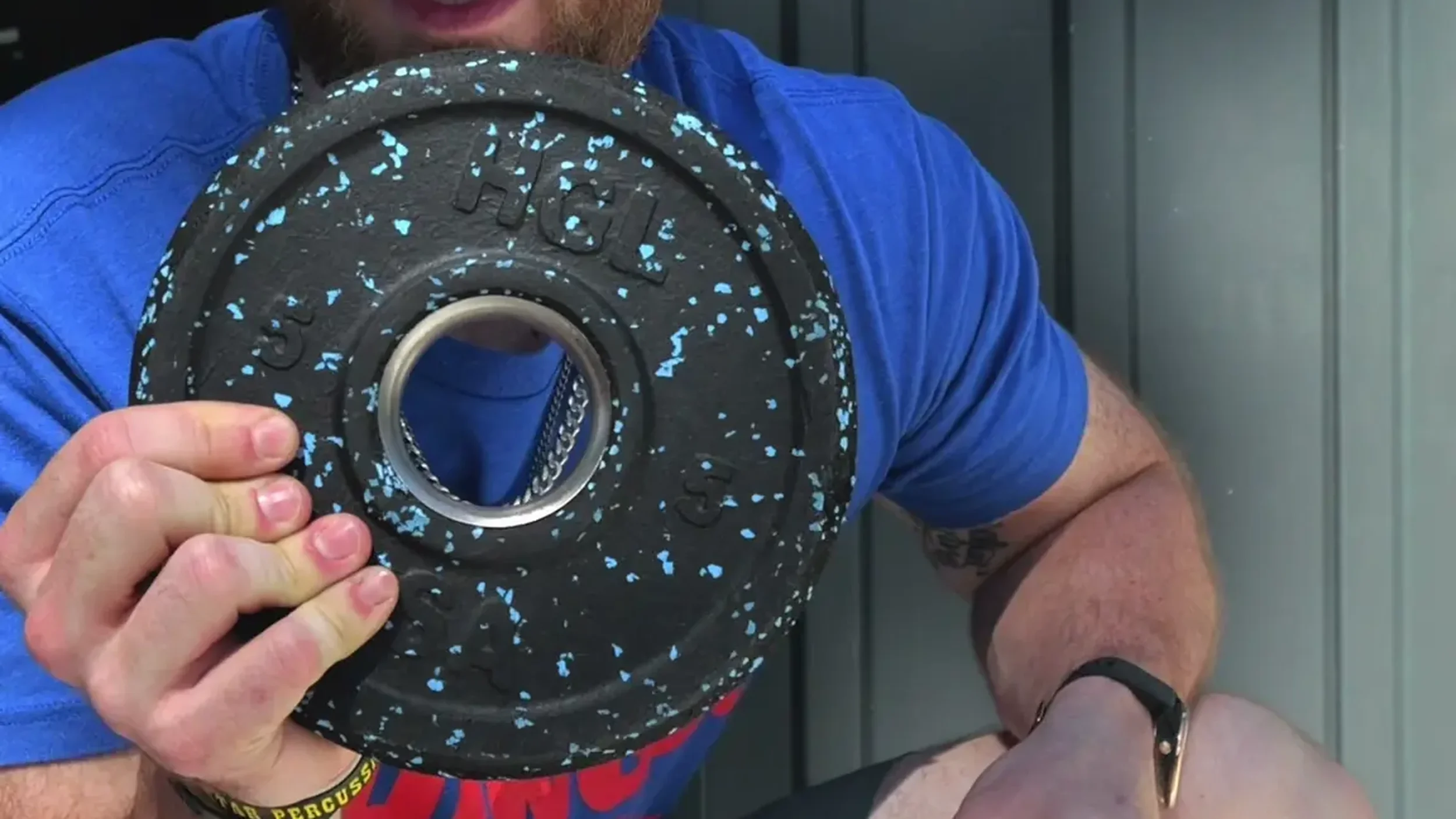
The regular 10, 25, and 45-pound plates use white, yellow, and red flecks, respectively. That is a simple detail, but it helps when different weights are stacked together or several people share the gym. You can identify a plate without turning its face toward you to read the number.
Homegrown’s current colored lineup also includes orange-flecked 15s and blue-flecked 35s. You do not need every denomination, though. I would start with the combinations that fit your training and add weights when they solve a loading problem, not just to complete the color range.
Standard 45s vs. Hyper-Thin 45s
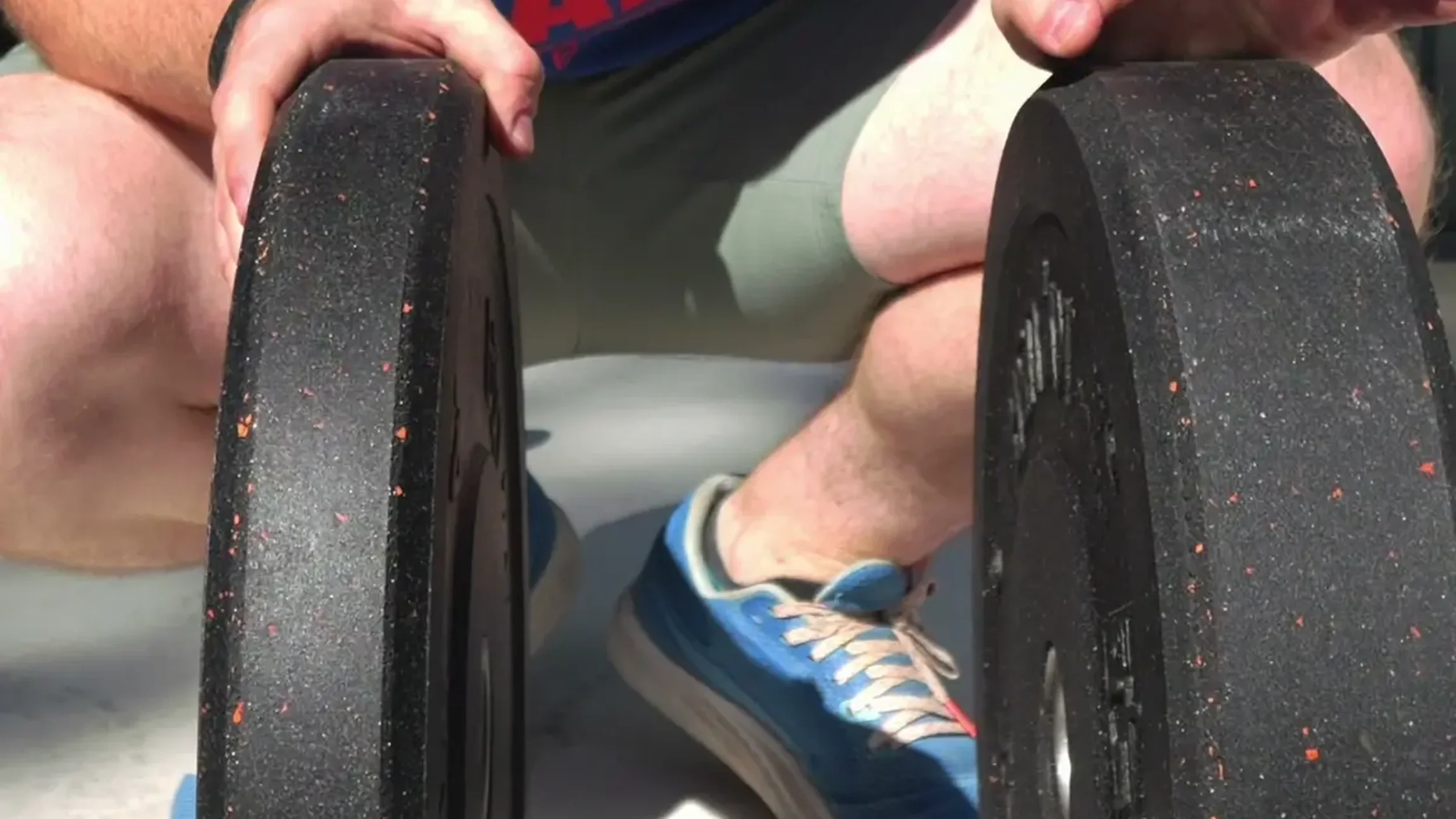
The thickness difference is easy to see side by side. Homegrown lists its standard colored 45 at 3.6 inches and the Hyper-Thin 45 at 2.4 inches, with the same 17.72-inch diameter. The narrower plate saves 1.2 inches of sleeve space each time you add a 45.
That matters more as loading increases. With one pair of 45s, sleeve space may barely enter the decision. With several 45s on each side, the space taken up by the standard plates becomes much harder to ignore. Collars and any smaller plates still need room, too.
The Hyper-Thin version is therefore a targeted upgrade, not the automatic choice for everyone. If your existing loading fits comfortably, a thinner plate does not give you more weight or change your program. If sleeve length is what stops you from adding plates, it solves a real equipment constraint.
Homegrown sells the Hyper-Thin 45s separately as colored pairs. Check the package contents rather than assuming that a standard bumper set includes them.
Crumb Rubber, Center Inserts, and Drop Use
These use the familiar bumper-plate layout: a rubber body surrounding a metal center insert. Homegrown describes its current URA-MAX construction as recycled crumb rubber held together with a urethane binder, with recessed stainless-steel inserts. It also lists manufacturing in Kentucky.
The company says its URA-MAX plates have been drop tested 8,000 times from seven feet. That is Homegrown’s durability claim, not my own drop-test result. I would not turn it into a promise that dropping a loaded bar is harmless on any surface. Suitable flooring, secure collars, adequate clearance, and the bar’s intended use still matter.
If bumper-style training is part of your routine, this construction is relevant. If you never need that format, do not assume rubber is automatically the most practical way to buy all your weight.
Build the Set Around Your Training
A collection of 45s is useful for heavier lifting, but it does not cover every progression. Smaller plates let you build toward those loads and make manageable changes between sessions. A mix of 10s, 25s, and 45s provides several combinations; change plates can fill in the smaller jumps.
I would prioritize that usable weight mix before paying for thinner 45s I do not yet need. Homegrown offers different set totals, and the same advertised total can be reached with different plate combinations. Look at the individual pairs included, not just the number at the top of the listing.
Price deserves the same practical treatment. If an offer puts these around a dollar per pound, that is worth considering, but shipping and the exact configuration can change the calculation. Compare the delivered cost of the weights you will actually use.
Comparisons / Alternatives
Within Homegrown’s range, the main decision is standard versus Hyper-Thin 45s. The standard plates suit a conventional bumper setup; the thinner pair is for preserving loading space. Neither version needs to win a universal ranking to make sense for its buyer.
If maximum sleeve capacity is your priority and you do not need bumper construction, thinner iron or calibrated-style plates are another route. If you like the bumper format but prefer a uniform appearance, check Homegrown’s black plate options instead of treating colored flecks as a necessary upgrade.
Tradeoffs
The standard 45s are thick, which limits how much room remains for additional plates and collars.
Hyper-Thin 45s address sleeve space but are a separate purchase, not an included feature of every set.
Color coding is useful for identification, not a reason to expect different lifting performance.
The delivered price and included weight mix matter more than a headline cost per pound.
Who Should Buy This
These are worth considering for a home gym that uses bumper plates as its main weight system and wants easy weight identification. The standard plates make sense when your normal loading fits the bar; Hyper-Thin 45s become more compelling for heavier loading or shorter sleeves.
Who Should Skip It
I would look elsewhere if your main goal is fitting the most weight onto the shortest possible sleeve and you have no use for bumper construction. Buyers who prefer plain black plates should also compare the black options rather than paying for a look they do not want.
Common Questions
Do I need the Hyper-Thin 45s?
Only if sleeve space is a meaningful constraint. Homegrown lists them at 2.4 inches thick versus 3.6 inches for its standard colored 45s. If your working weights already fit comfortably, standard plates may be enough.
What do the colored flecks mean?
Homegrown’s listed color code is white for 10 pounds, orange for 15, yellow for 25, blue for 35, and red for 45. The colors help you identify weights quickly.
Can I drop these plates?
They are sold as bumper plates, and Homegrown publishes a drop-test claim for URA-MAX. Follow the manufacturer’s use guidance and use a suitable lifting surface; bumper construction is not a guarantee against damage to flooring or the rest of your equipment.
Final Verdict
Homegrown Lifting’s colored bumper plates offer a straightforward way to build a bumper-based home gym, with a thinner 45-pound option for lifters who need more loading space. My recommendation is to buy for the constraint you actually have: get a useful mix of standard plates first, then consider Hyper-Thin 45s when thickness is holding your setup back. Check the delivered price, included pairs, and current specifications before choosing.
CHECK PRICE — HOMEGROWN LIFTING BUMPER PLATES
This article contains affiliate links. If you buy through one of these links, The Jungle Gym Reviews may earn a commission at no additional cost to you.