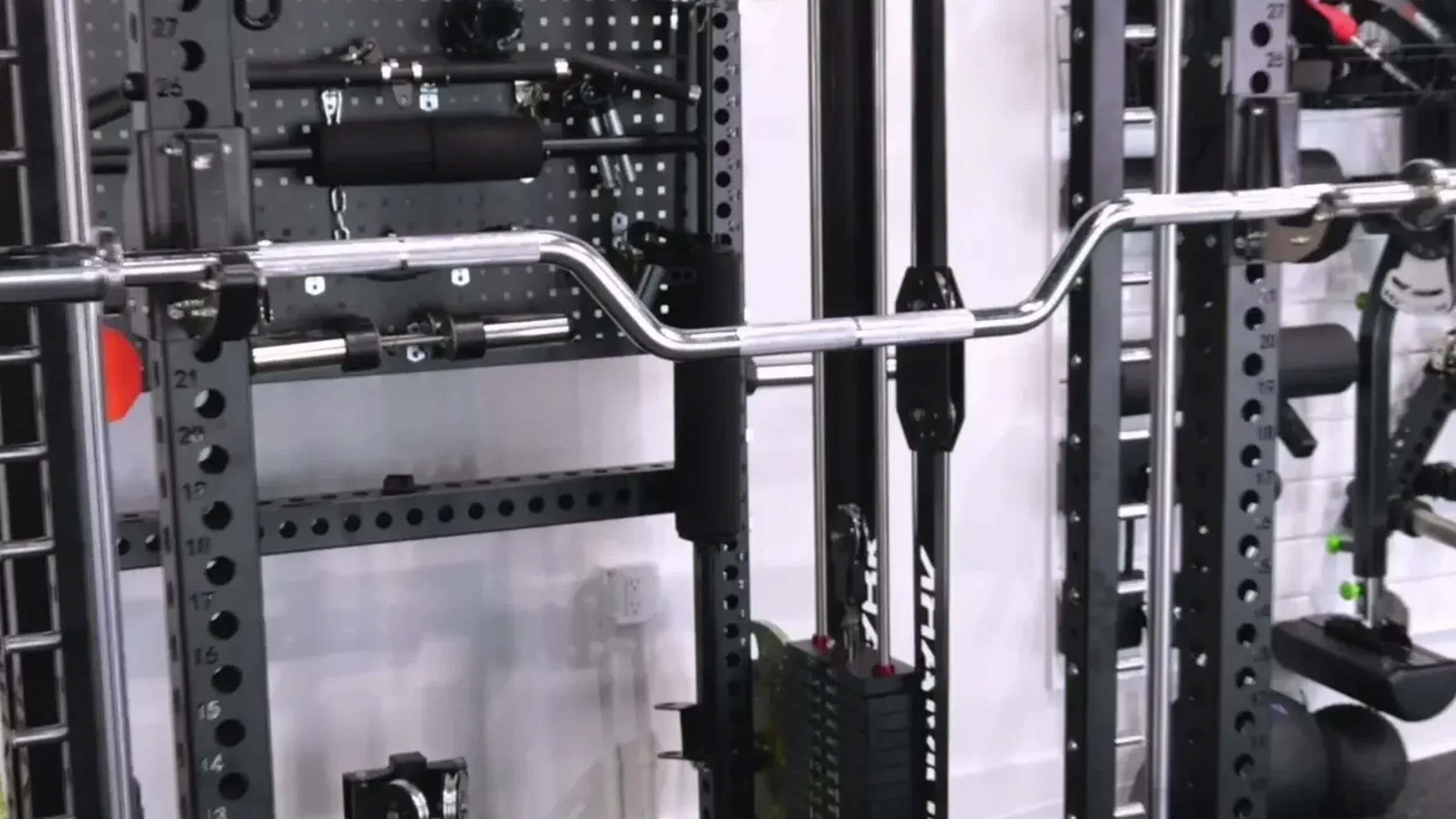
This product was tested by Eric at The Jungle Gym Reviews.
The Kensui Kobe Cambered Bar is a specialty Olympic bar I would consider for a home gym where a straight bar limits bench-press or rowing clearance, rather than as a replacement for a regular barbell. Its four-inch camber is the main reason to buy it: the offset shape changes where the bar sits relative to your hands, giving certain movements more room than a straight shaft allows.
That is a useful feature when it solves a specific problem. It is less useful if your current benching and rowing setup already gives you the range you want. I would start with the exercise you are trying to improve, then decide whether this shape fits that job.
Quick Takeaway
The strongest case for the Kobe is bench pressing and rowing when contact with your chest, torso, or bench ends the rep before the range you want. Kensui positions the camber as a way to create clearance in those situations. The bar also supports squats, good mornings, and overhead pressing, but extra exercise options are not the same as a reason for every lifter to buy it.
I would treat it as an accessory bar alongside a straight bar. The altered shape, shorter sleeves, and different starting weight all need to fit your setup and training rather than simply adding another bar to the rack.
Quick Specs
Type: Cambered specialty Olympic barbell
Camber: 4 inches
Bar weight: 30 lb
Shaft: 30 mm, chrome
Sleeves: Rotating 9-inch Olympic sleeves
Knurling: Center knurl
Rated capacity: 600 lb
Listed uses: Bench press, seal rows, bent-over rows, squats, good mornings, and overhead press
Specifications and capacity above are Kensui’s published figures, not independent load-test results.
Where to Buy
Check price from Kensui directly here:
What the Four-Inch Camber Changes
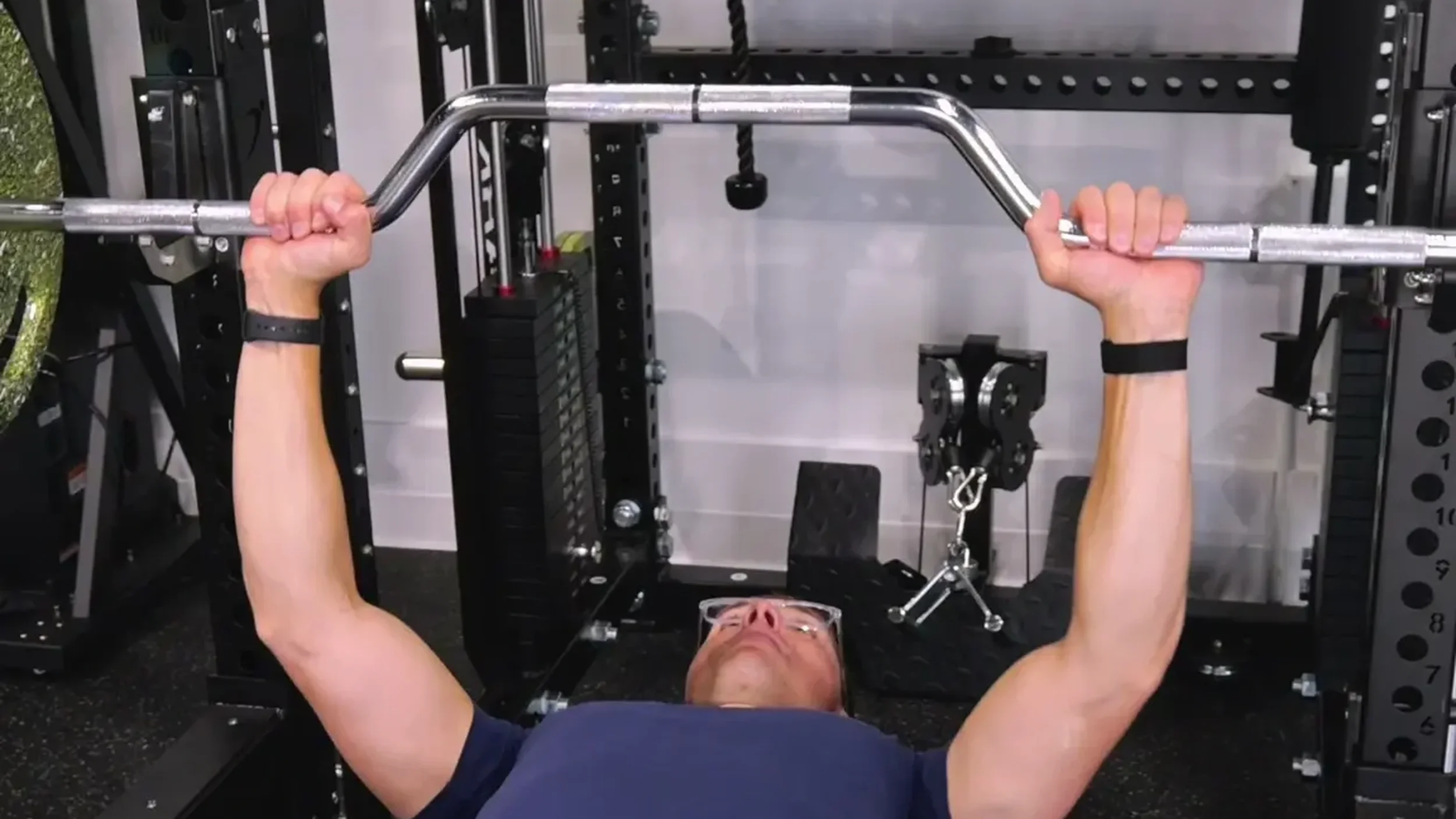
A straight bar puts your hands and the shaft along the same line. On a bench press, contact with your chest can limit how far the bar descends. On a row, the shaft may hit your torso or the underside of a bench. A cambered shape changes that relationship, creating clearance that a straight bar does not provide.
Kensui describes the Kobe’s four-inch camber as allowing additional bench-press depth and a longer finish on rows. The important point is not that every rep should be deeper. It is that the bar gives you another way to arrange the movement when equipment contact is the limiting factor.
I would separate available range from usable range. Your control, shoulder comfort, grip, and setup determine how much of that clearance makes sense. Extra depth is not automatically better, and I would not buy this expecting the geometry alone to fix technique or produce better results.
Why Rows Are a Clear Use Case
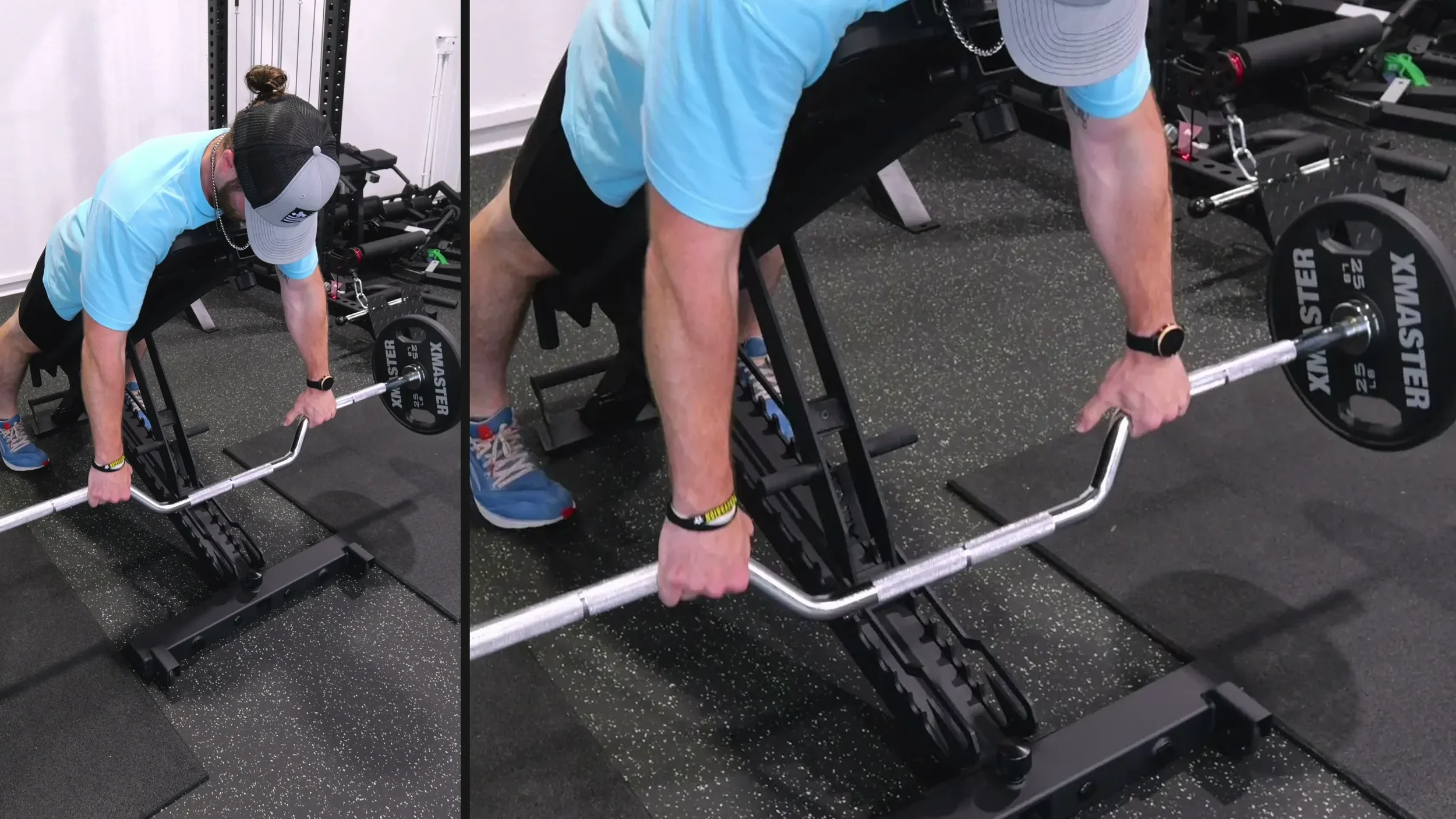
Seal rows are a good example of an equipment constraint that a cambered bar can address. With your torso supported on a bench, a straight shaft may reach the bench before your hands finish the pull. Kensui’s stated purpose for the Kobe is to give that movement more clearance.
The same buying logic applies to bent-over rows if contact with your torso is what cuts the movement short. If your current setup already gives you a controlled, comfortable finish, however, the specialty bar becomes less necessary.
Check the complete rowing setup, not just the camber measurement. Bench height, pad width, plates, and floor clearance all affect whether the arrangement works. The bar cannot compensate for a bench that is too low for the loaded plates or an awkward support position.
Squats, Good Mornings, and Overhead Pressing
The Kobe’s movement list extends beyond bench presses and rows. Squats, good mornings, and overhead presses are also listed uses, and the center knurl gives the shaft a textured contact area for back-supported movements.
Those exercises involve a different consideration: the offset load changes the bar’s balance. Kensui describes a greater stability demand with the camber. I would not translate that into a claim that it makes squatting more stable or automatically better than a straight bar.
Introduce an unfamiliar bar conservatively and make sure the intended exercise, rack height, and available space suit the shape. For most buyers, I would view these as additional uses rather than the strongest purchase argument.
Sleeves, Loading, and Rack Fit
Kensui lists the Kobe at 30 pounds with a 30 mm shaft and rotating nine-inch Olympic sleeves. The 30-pound starting weight is worth noting when you track lifts: the same plates do not produce the same total as they would on a 45-pound bar.
Nine-inch sleeves also make plate thickness relevant. A collection of thick bumper plates can fill a sleeve before you approach the stated 600-pound capacity. That capacity is a manufacturer rating, not a promise that every plate combination will fit. Allow room for collars when planning your loading.
Kensui says the bar racks in standard racks and stands, but I would still check your specific arrangement. J-cups, safeties, bench position, and the offset portions of the shaft need to work together. Standard Olympic plate compatibility does not, by itself, establish compatibility with every rack or bar-storage holder.
Comparisons / Alternatives
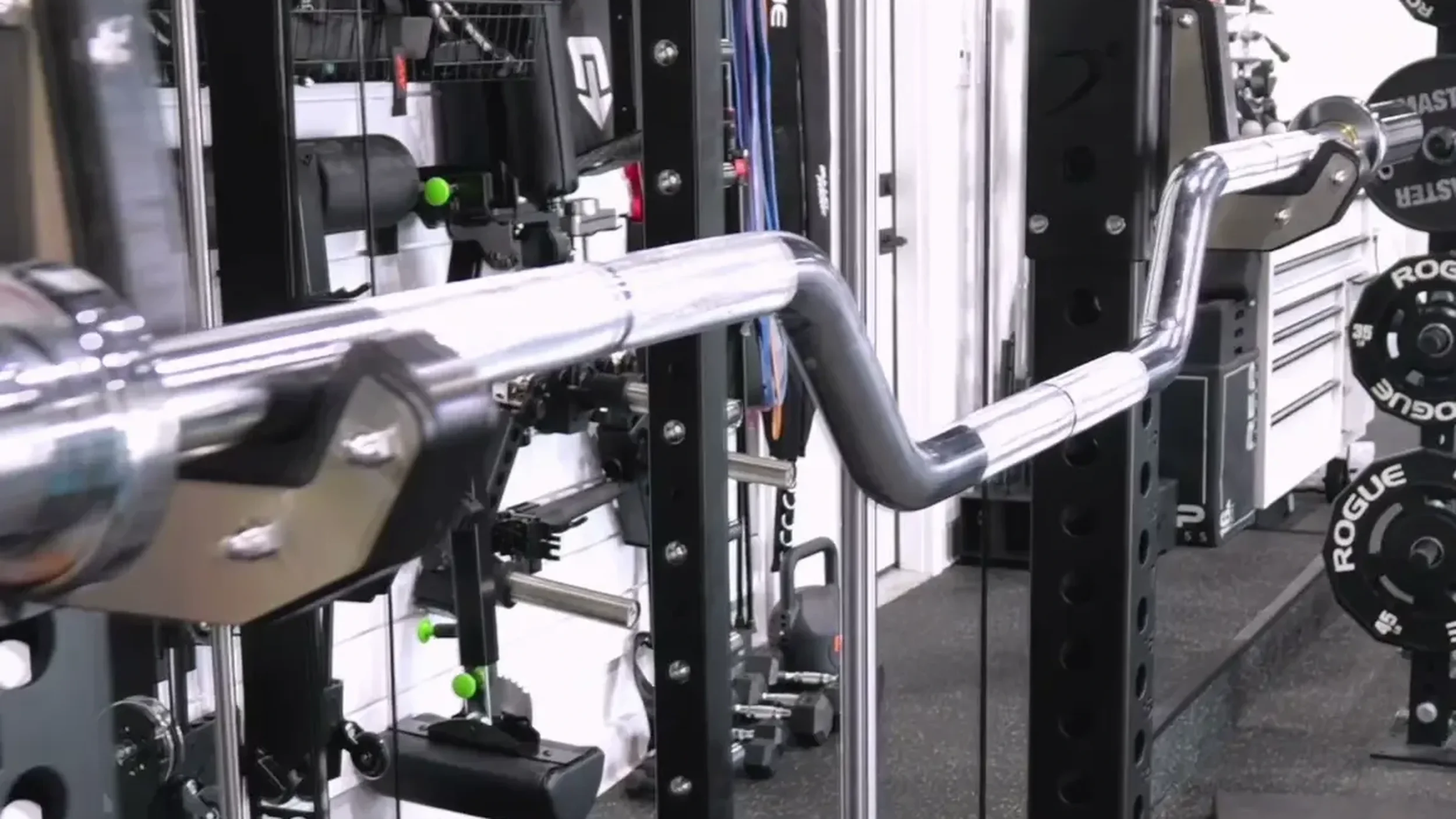
A straight bar remains the simpler choice for general-purpose lifting and conventional-bar practice. The Kobe is most relevant when you have identified a clearance problem that a straight shaft creates. I would keep the regular bar and add the specialty shape for selected movements.
If you are comparing cambered bars, look at the actual geometry, grip area, bar weight, usable sleeve length, rack fit, and capacity. Two bars described as cambered may serve different purposes. The useful comparison is whether each one works with your bench, plates, and intended range, not simply which has the larger drop.
Tradeoffs
The camber changes balance and clearance, so straight-bar loading and setup do not transfer automatically.
Rotating nine-inch sleeves still leave a finite amount of room for plates and collars.
The 30-pound bar requires different total-weight calculations from a typical 45-pound bar.
Additional range only helps if it is controlled and appropriate for the movement.
This is another bar to store, not an all-purpose replacement that eliminates the need for a straight bar.
Who Should Buy This
The Kobe is worth considering if you already own a regular barbell and want additional clearance for bench pressing, seal rows, or bent-over rows. It makes the most sense when you can describe exactly where the straight bar interferes and have checked that the Kobe fits the rest of your equipment.
Who Should Skip It
I would skip it as a first or only barbell for a general-purpose home gym. It is also a less compelling purchase if your current movements already fit your preferred range, or if you need long sleeves for a large stack of thick plates. Lifters prioritizing straight-bar competition practice should keep that specificity central to their equipment choice.
Common Questions
Does the Kobe replace a standard barbell?
For most home gyms, no. It is a specialty option for movements that benefit from its clearance and altered shape. A straight bar remains the more general-purpose purchase.
Does the four-inch camber mean I should bench four inches deeper?
No. The geometry creates available clearance, not a required range of motion. Use the depth you can control comfortably with an appropriate bench and safety setup.
Will my plates and rack work with it?
Kensui lists Olympic sleeves and standard-rack compatibility. Check usable plate-and-collar space on the nine-inch sleeves, plus your J-cups, safeties, bench position, and storage clearance before buying.
Final Verdict
The Kensui Kobe Cambered Bar is a focused addition for benching and rowing when a straight bar’s contact points restrict the movement you want. I would buy it for that specific clearance advantage, not for the length of its exercise list. Keep your straight bar, confirm the Kobe’s fit and loading space, and use the extra range deliberately rather than treating more depth as an automatic upgrade.
CHECK PRICE — KENSUI KOBE CAMBERED BAR
This article contains affiliate links. If you buy through them, The Jungle Gym Reviews may earn a commission at no additional cost to you.