These products were reviewed and compared in-house by Michael at The Jungle Gym Reviews.
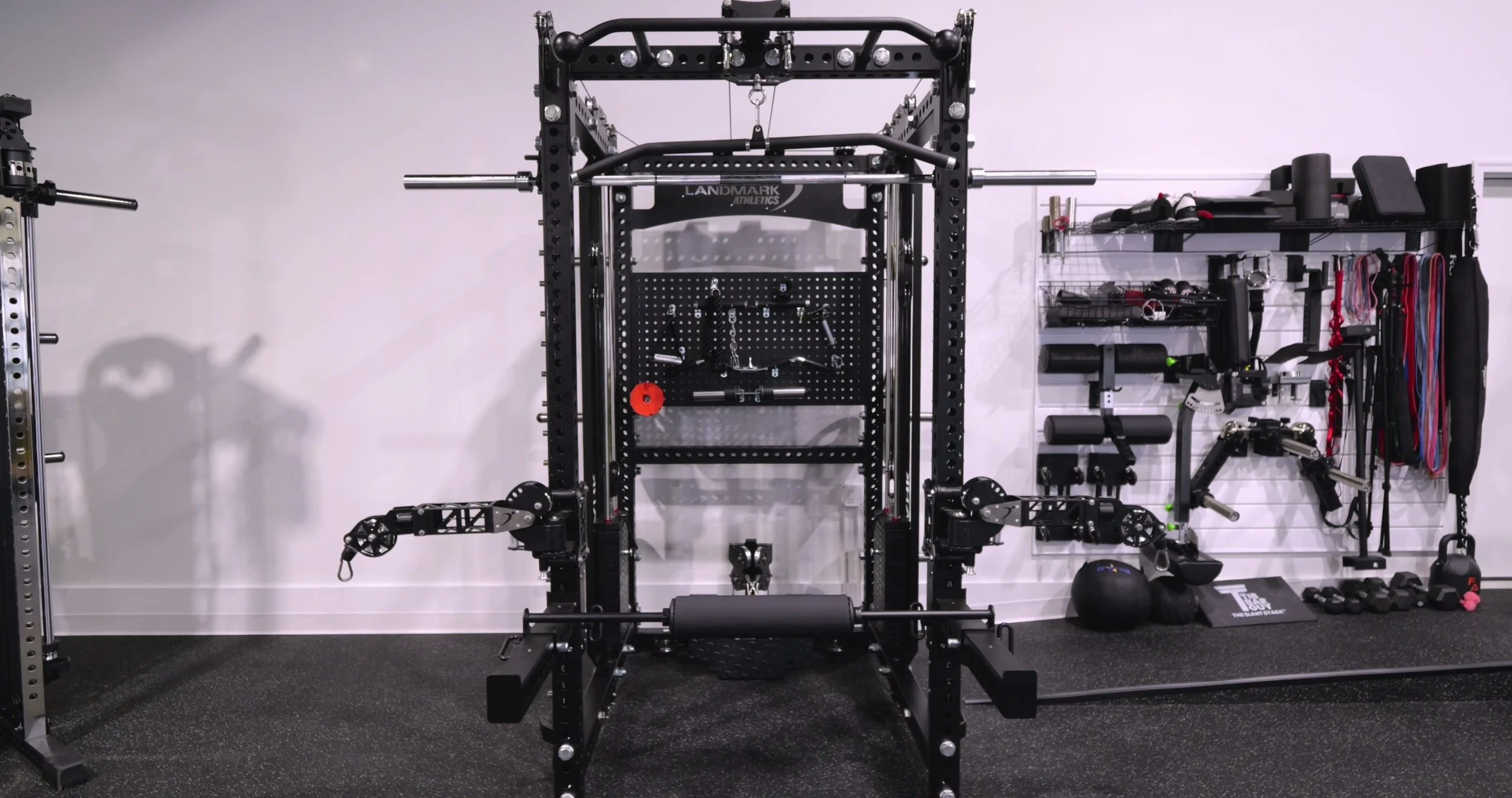
The Landmark K2S Stealth and Landmark Everest are articulating-arm all-in-one home gyms; in this hands-on comparison, I would steer a buyer who wants a more affordable, ready-to-use setup to the K2S and a buyer who values a more refined feel and a platform for adding rack attachments over time to the Everest. Both can serve as the centerpiece of a home gym: each combines a squat rack, Smith machine, functional trainer arms, weight storage, and dedicated center high/low pulleys. The real decision is not whether either rack is capable. It is whether the Everest’s smoother operation, more open ecosystem, taller frame, and quality-of-life details are worth the additional investment and ceiling clearance for you.
When I filmed this comparison, the base K2S with its 160-pound stacks was listed at $2,599; the 200-pound-stack version was about $3,200; and the Everest was $4,899. That put similarly stacked versions roughly $1,700 apart at that time. Treat those as review-time reference points, not current pricing: configurations, bundles, freight, and sales can change.
Quick Takeaway
The K2S delivers the core all-in-one experience without making you piece together a rack: articulating arms, a selectorized cable system, a Smith machine, center 1:1 pulleys, plate storage, and a substantial set of included attachments. I found it smooth enough for the price, particularly given how much function is packed in.
The Everest earns its premium with the details I noticed in use. Its cable action is smoother, its center pulley stations have more accommodating swivel and range-of-motion details, its attachment storage is better organized, and its metric 3x3, 1-inch-hole frame makes it easier to explore compatible accessories later. For someone who wants to set up a gym and stop thinking about rack upgrades, the K2S makes sense. For someone who knows they will tinker, expand, or simply values a nicer operating experience every session, I lean Everest.
Comparison at a Glance
| Category | Landmark K2S Stealth | Landmark Everest |
|---|---|---|
| Core cable layout | Articulating/pivot arms at 2:1, plus center high/low pulleys at 1:1 | Articulating/pivot arms at 2:1, plus center high/low pulleys at 1:1 |
| Weight stacks | 160 lb per side at the review-time base price. I tested the 200 lb steel-stack upgrade. | 200 lb per side |
| Frame | 12-gauge, proprietary 2.4 × 2.4-inch uprights | 11-gauge, metric 3×3 uprights with 1-inch holes |
| Height | About 87 inches | About 92 inches |
| Smith bar starting weight | About 45 lb | About 58 lb |
| Best fit | Buyers who want the major functions in one purchase at a lower entry cost | Buyers who prioritize smoother operation, accessory compatibility, storage, and premium details |
Specifications reflect the configurations covered in this comparison.
Where to Buy
Landmark Everest - Use code JUNGLEGYM for $150 off below:
Landmark K2S - Use code JUNGLEGYM for $150 off below:
My Real-World Experience With Both Racks
I approached this as a comparison between a lower-cost all-in-one rack and a more premium all-in-one rack, not a contest where one makes the other obsolete. Both give you the capability that makes these systems appealing in the first place: you can change the cable exit point by moving the arms inward or outward, rather than being locked into a fixed pair of pulleys. That makes narrow cable work, wider fly-style positions, and day-to-day cable adjustments more practical than on a fixed functional trainer.
On the K2S, the function is there. It has the articulating arms, weight-stack-and-plate-horn setup, plate storage, and dedicated center lat-pulldown and low-row stations. The K2S’s center low-row footplate sits a little higher than the Everest’s ground-level arrangement, but it serves the same general purpose. I also want to give the K2S credit for its pulley action: it surprised me and was very smooth for a more budget-oriented all-in-one rack.
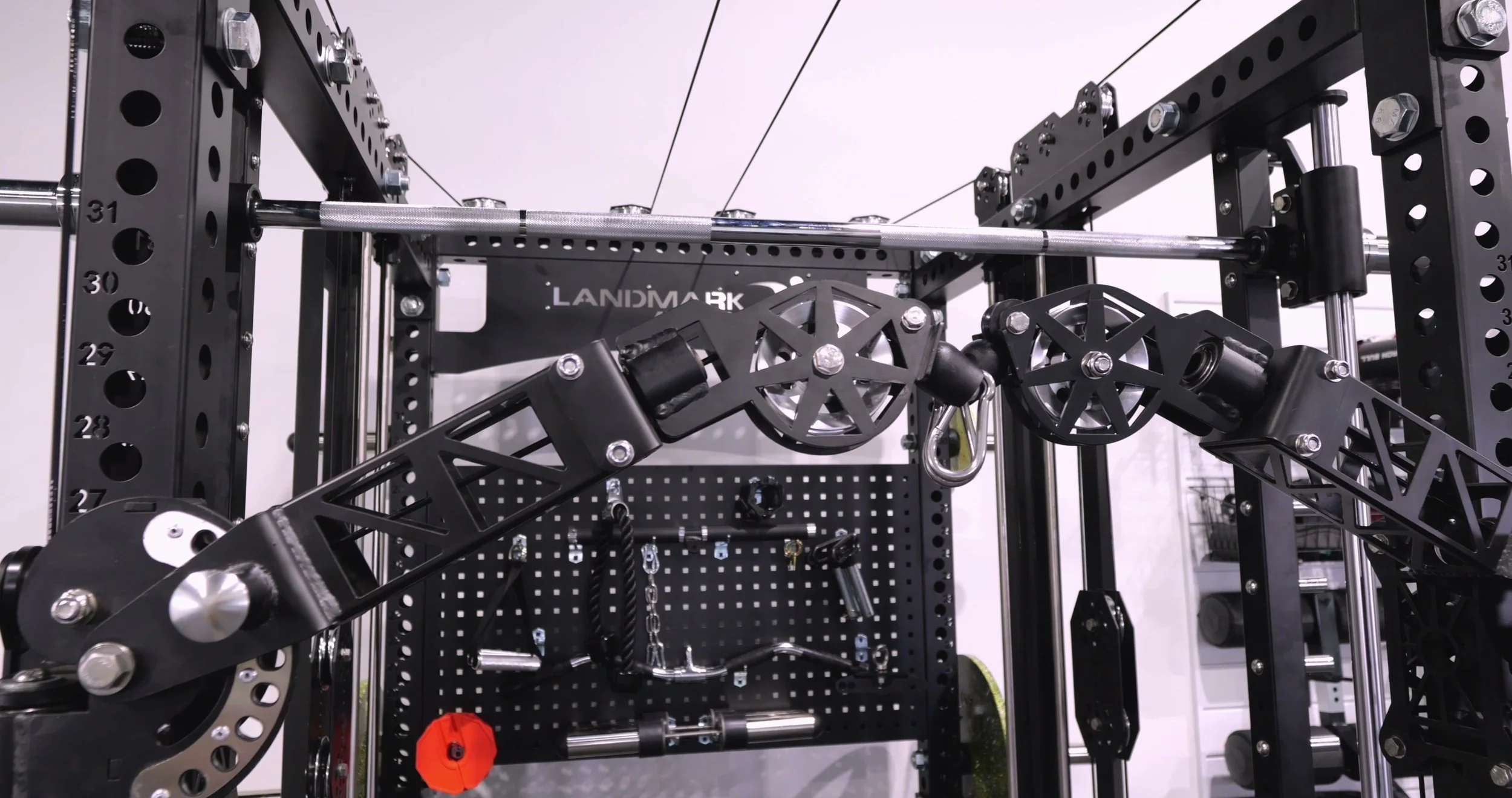
The Everest is the one that felt more finished in the details. Its pulleys were smoother still, which I could feel in the return or snapback of the cable. The K2S is not rough or unusable; the Everest just has the nicer cable feel. That distinction matters more to a buyer who spends a lot of training time on cable work than to someone who mainly wants a compact way to add cables and a Smith machine to barbell training.
Center Pulleys and Cable Training
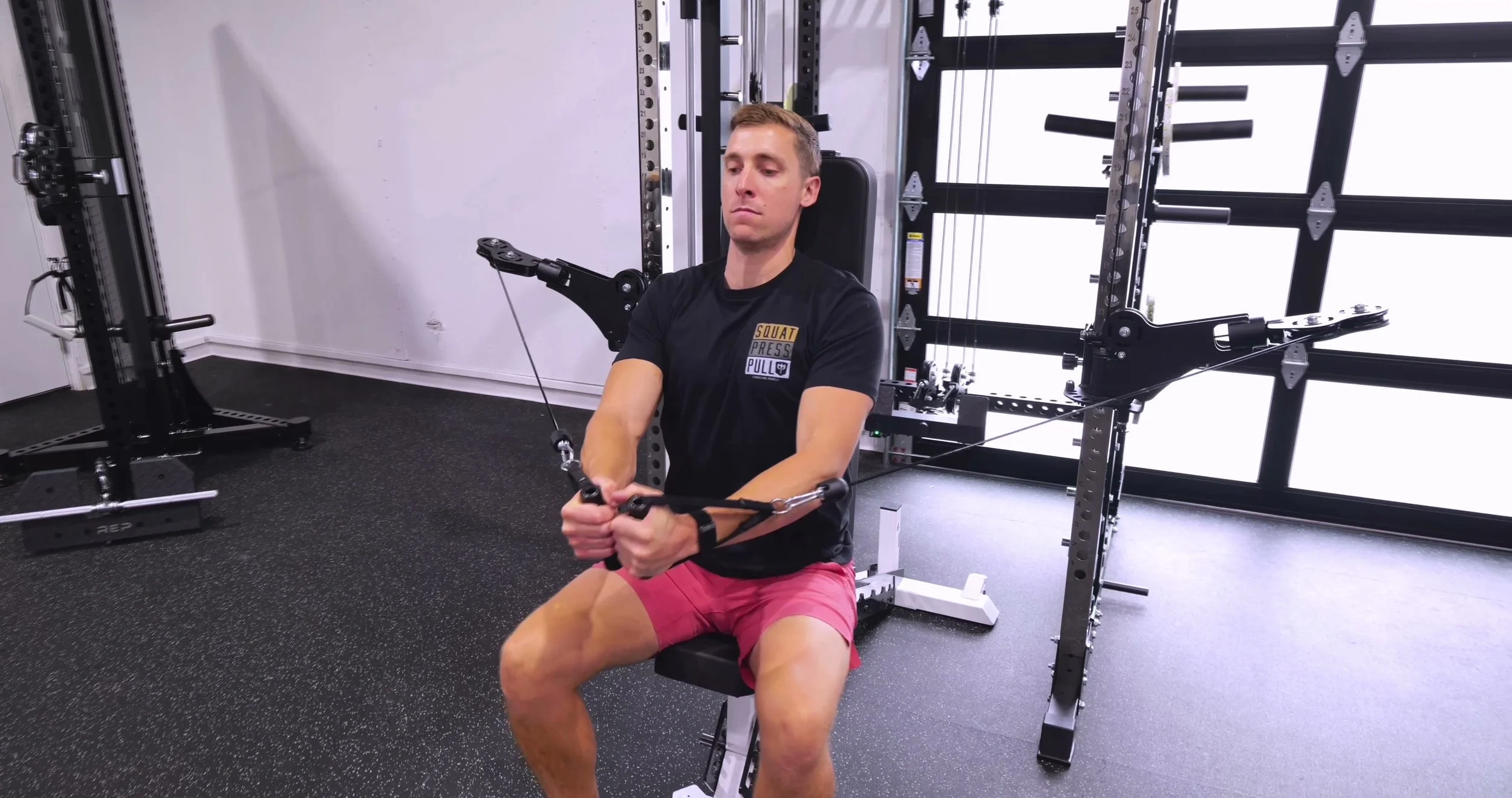
One of the strongest shared features is the dedicated center pulleys. Both racks use their center high and low stations for heavier 1:1 work, while the articulating arms use a 2:1 ratio. That gives you a direct option for lat pulldowns and rows instead of having to move the functional trainer arms inward, connect them, and build every heavy cable movement around the arm setup.
The Everest adds a few practical advantages at those stations. Its upper and lower pulleys are on swivel brackets, which I found more helpful for unilateral work. The arrangement also lets you move back into the rack while using the station, and it gives you a little more usable range of motion. The K2S can cover the same categories of exercise, but the Everest’s layout is the more accommodating one if rows and pulldowns are a central part of your program.
Stack selection is worth slowing down for. The unit I had in the video was the K2S upgrade with 200-pound steel stacks, while the review-time base K2S was 160 pounds. The Everest had 200-pound stacks and loadable horns. If you are comparing packages, match the stack size before deciding how large the price difference really is. Landmark currently lists K2S selections of 165 pounds (poly), 198 pounds (steel), and 264 pounds (steel) per side, so the available option names and loads have changed since the video.
Fit, Finish, and Smith Machine Details
The K2S’s cost savings show up in fit and finish rather than in the basic feature list. I described the finish as average by design: you see more plastic end caps and weight horns, a more basic pull-up-bar grip, and nylon pulleys. The K2S works as intended, and that tradeoff is part of how it reaches its lower price. It is a practical choice when function matters more than premium materials and touch points.
The Everest uses heavier 11-gauge steel versus the K2S’s 12-gauge frame in the video, but I would not make this choice solely on steel gauge. The stated ratings were already beyond what most home-gym users will lift, so the bigger difference in my view is the components, the attachment ecosystem, and the overall experience. Anyone who expects to challenge the published limits should independently confirm current ratings and choose accordingly.
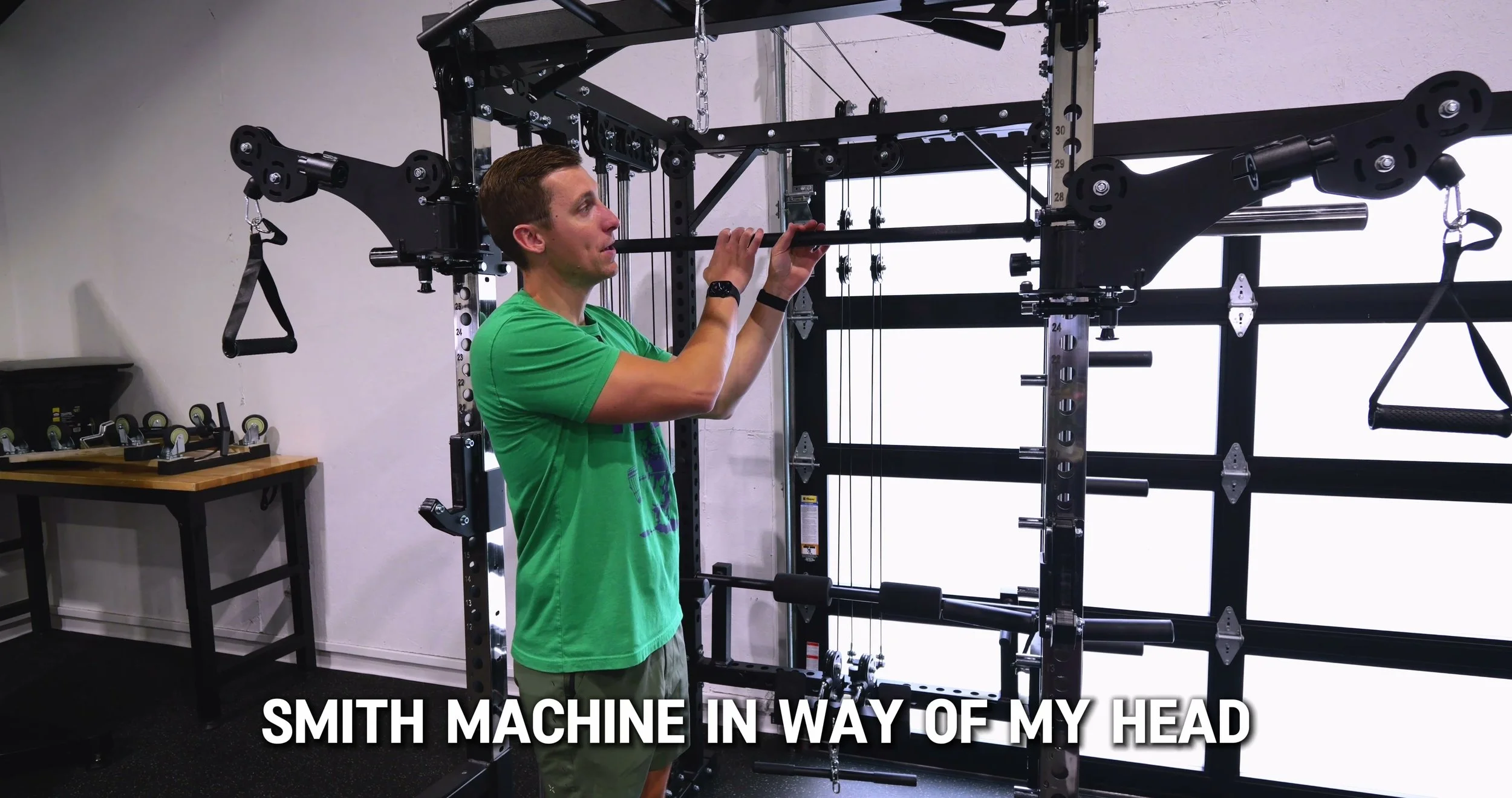
The Smith machine is a clean example of the difference. The Everest bar weighs about 58 pounds, which is a fairly heavy starting load; I would personally prefer a lighter or counterbalanced bar for some movements. But the Everest’s Smith machine has more travel below the main frame because its stoppers are positioned outside the rack. That was a meaningful quality-of-life advantage. The K2S uses a roughly 45-pound Smith bar, which will appeal to people who prefer less starting resistance.
Why the Everest Is Easier to Expand
The largest long-term difference is not a cable exercise; it is the frame standard. The K2S uses a 2.4 x 2.4-inch upright size that I consider more proprietary. The Everest uses the common metric 3x3 format with 1-inch holes. More brands build accessories around that 3x3 standard, so it gives a tinkerer a much broader pool of specialty J-cups, spotter arms, lat-pulldown rollers, lever arms, and other attachments to consider later.
That does not automatically make the K2S a poor buy. In fact, I would steer a buyer who wants less decision fatigue toward the K2S: it arrives with the main attachments and you can be done with the rack portion of the gym. Buy your bench, dumbbells, or other equipment next instead of spending years researching rack accessories. The Everest is the better fit for the buyer who knows they enjoy changing, adding, and optimizing those pieces over time.
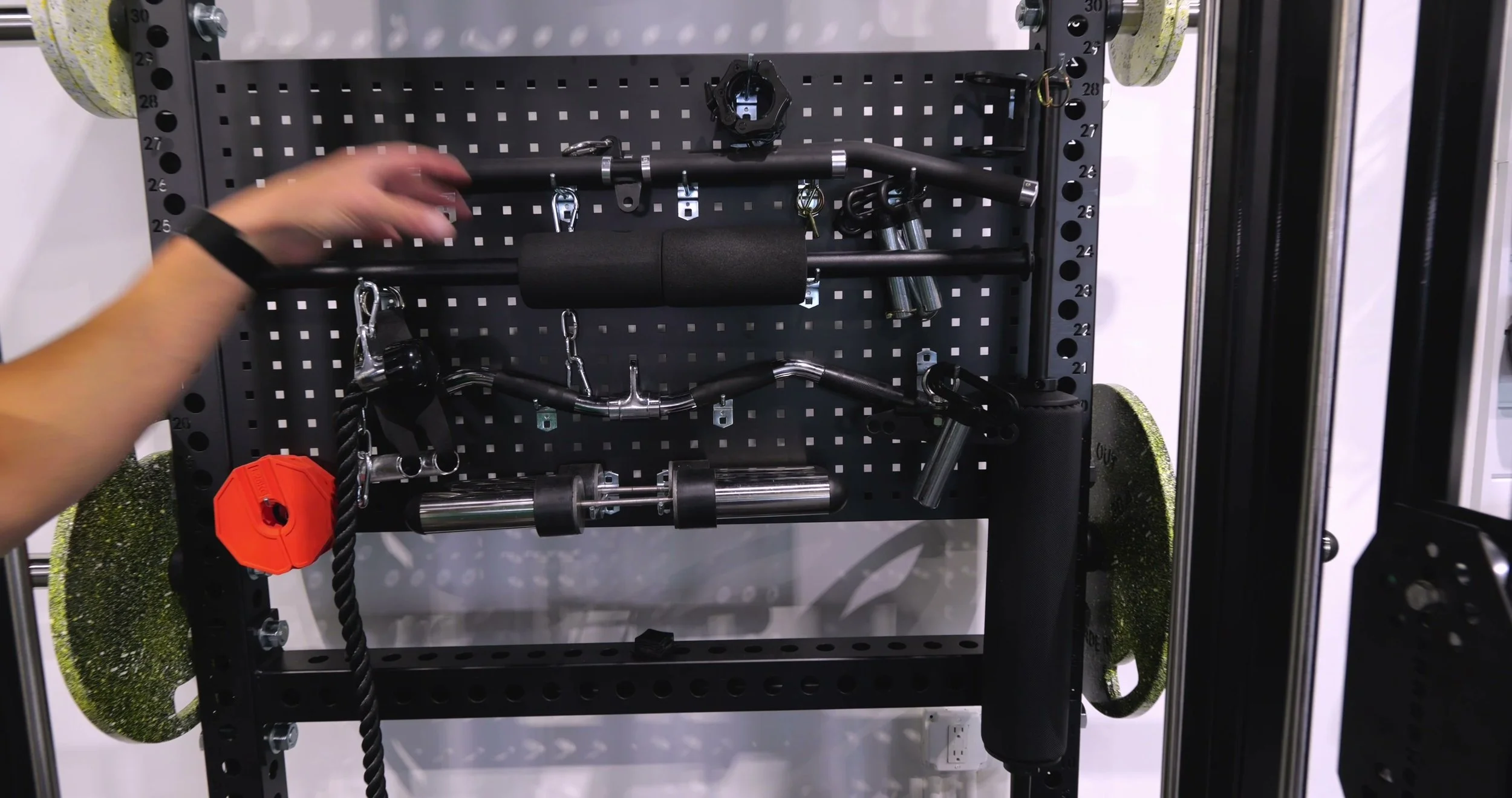
The Everest also has a rear integrated pegboard for organizing attachments. Both racks include a center crossmember that can take additional items, and both come with a substantial attachment package, but the Everest’s storage is a more polished way to keep those handles and bars in reach rather than scattered around the gym.
Ceiling Height, Footprint, and the Price Gap
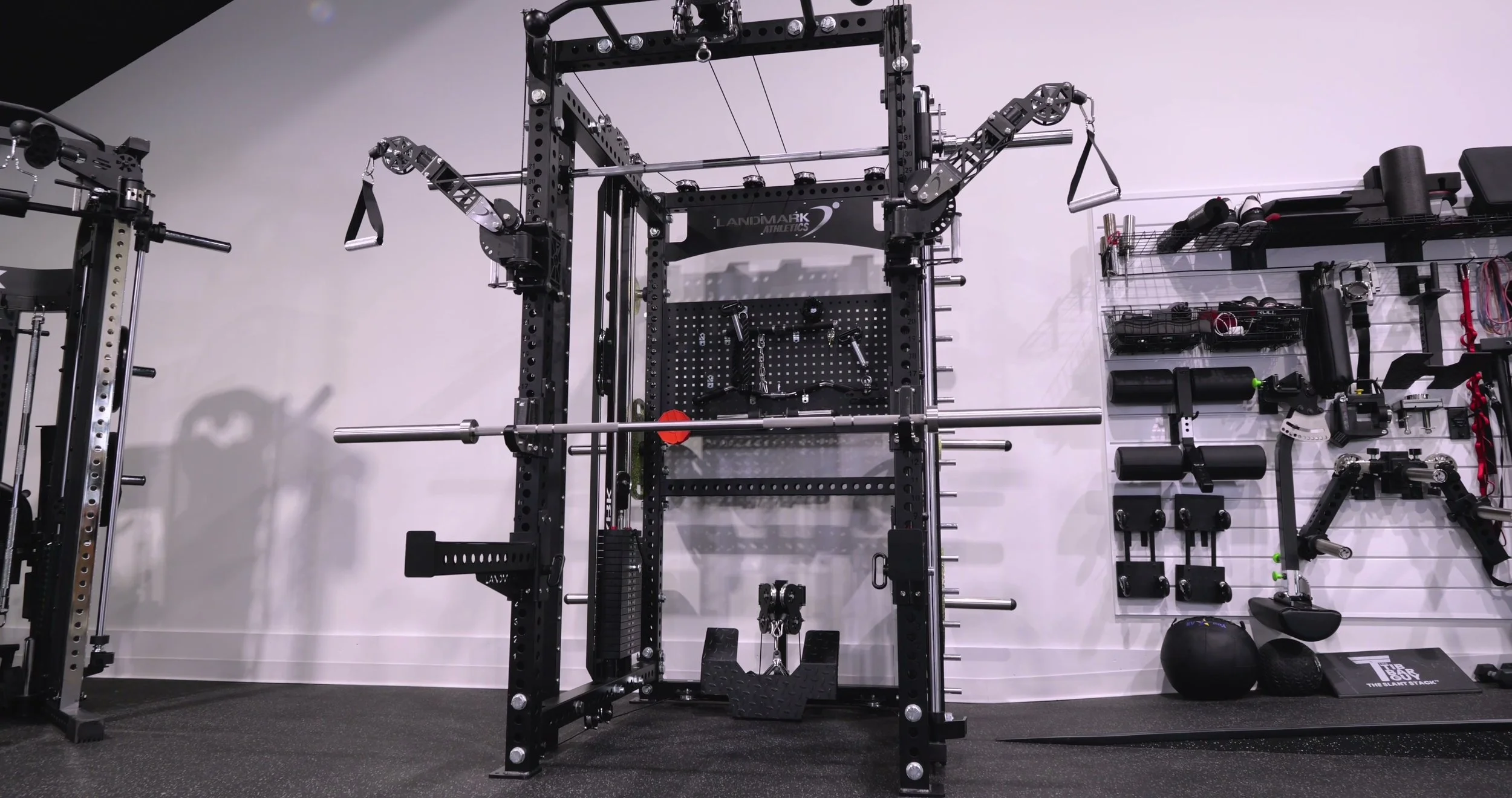
The K2S is the more practical choice when ceiling height is tight. In my comparison, I described the K2S as about 87 inches tall and the Everest as about 92 inches. The K2S can therefore be more realistic in a basement, even though you are not meaningfully saving width or depth; the working footprint is broadly similar. Landmark currently lists the K2S at 86.75 inches and the Everest at 92 inches, but measure your ceiling, flooring, and installation clearance against the current specification before purchase.
At 6'2", I also noticed the clearance implications of the shorter K2S. I had to be mindful of the Smith machine when moving in and out of the rack, and the K2S arms are shorter than the Everest’s. These were not dealbreakers, but they are real tradeoffs. If you are taller or do a lot of work inside the rack, the Everest’s added height and room are worth considering carefully.
At the review-time pricing, an equivalently stacked K2S was about $1,700 less than the Everest. That is substantial money, and it is why I do not dismiss the K2S as merely a compromised Everest. Spend more only if the improvements you will actually use—cable smoothness, attachment compatibility, storage, range-of-motion details, and the taller frame—matter more to you than keeping that budget for other gym equipment.
Comparisons / Alternatives
The direct alternative here is not necessarily a different brand; it is choosing the other Landmark rack based on your priorities. The K2S is the simpler all-in-one decision: it provides the major functions without asking you to build out a 3x3 ecosystem. The Everest is the more premium platform and the one I would direct toward a buyer who wants to keep upgrading rack-based training over time.
If neither profile fits, compare any all-in-one rack on the same practical points: ceiling height, effective cable ratio at the lat pulldown and low row, stack size, cable feel, clearance for a bench and your body inside the frame, Smith-bar travel and starting weight, what accessories are included, and whether the uprights accept attachments you may want later. Do not compare only the headline stack weight or a sale price.
Tradeoffs
K2S Stealth: The lower price comes with more basic finish details, proprietary uprights, a shorter frame, and a cable feel that I found good but not as refined as the Everest.
Everest: It costs more, needs about five more inches of ceiling height, and its heavier Smith bar may not suit every user or exercise.
Both: They are substantial all-in-one systems rather than small cable add-ons. Confirm delivery access, installation help, ceiling clearance, and the current included-attachment list before ordering.
Who Should Buy the K2S Stealth
Buy the K2S Stealth if you want an all-in-one rack with articulating arms, center pulleys, a Smith machine, and a useful attachment package while keeping the upfront spend lower than the Everest. It is especially sensible for a lower-ceiling gym or for the buyer who wants a completed setup instead of a rack platform to continually modify. The 200-pound stack option is the closer functional comparison to the Everest, so price that version before finalizing the decision.
Who Should Buy the Everest
Buy the Everest if you value a smoother cable system, better center-pulley versatility for unilateral work, a more refined construction and storage experience, and the flexibility of a metric 3x3 rack. It is the better match for a home gym owner who expects to add third-party-compatible attachments or who will use cable training heavily enough to appreciate the differences on every workout. Make sure your room can accommodate its height.
Common Questions
Does the K2S have the same key cable functions as the Everest?
Yes. In this comparison, both had articulating arms, 2:1 arm cable routing, and dedicated 1:1 center high and low pulleys. The Everest distinguished itself in how smoothly the system operated and in some range-of-motion and swivel details around the center stations.
Is the Everest worth roughly $1,700 more?
It can be, but only for the buyer who will use what that money buys. At the review-time matched-stack pricing, the premium covered smoother operation, better materials and finish, more organized storage, taller dimensions, and a far more open attachment ecosystem. If you want the main all-in-one functions and do not plan to expand the rack, the K2S makes a stronger case.
Will the K2S fit in a basement more easily?
Usually, yes. The K2S was about 87 inches tall in my video versus about 92 inches for the Everest. Landmark’s current listings show 86.75 inches and 92 inches respectively, but measure the exact current configuration and allow clearance for flooring, assembly, and pull-up movements.
Final Verdict
This is a practical choice between enough capability and a more complete experience. The K2S Stealth gives you a lot of the function that makes articulating-arm all-in-one racks appealing, at a lower entry point and in a shorter package. The Everest is the rack I would choose if the extra budget and ceiling height are available, because I noticed a better cable feel, more useful design details, and a 3x3 framework that leaves the door open for future changes. Neither choice is universal; match the rack to how much you want to spend now, how much room you have, and whether you want to keep evolving the setup later.
CHECK PRICE — Landmark Athletics K2S Stealth All-In-One Home Gym
Use code JUNGLEGYM for $150 off.
CHECK PRICE — Landmark Athletics Everest All-In-One Home Gym
Use code JUNGLEGYM for $150 off.
This article contains affiliate links. If you purchase through these links, we may earn a small commission at no extra cost to you. Discount eligibility and whether offers combine with other promotions must be confirmed at checkout.