GymPin Safety Squat Handles Review
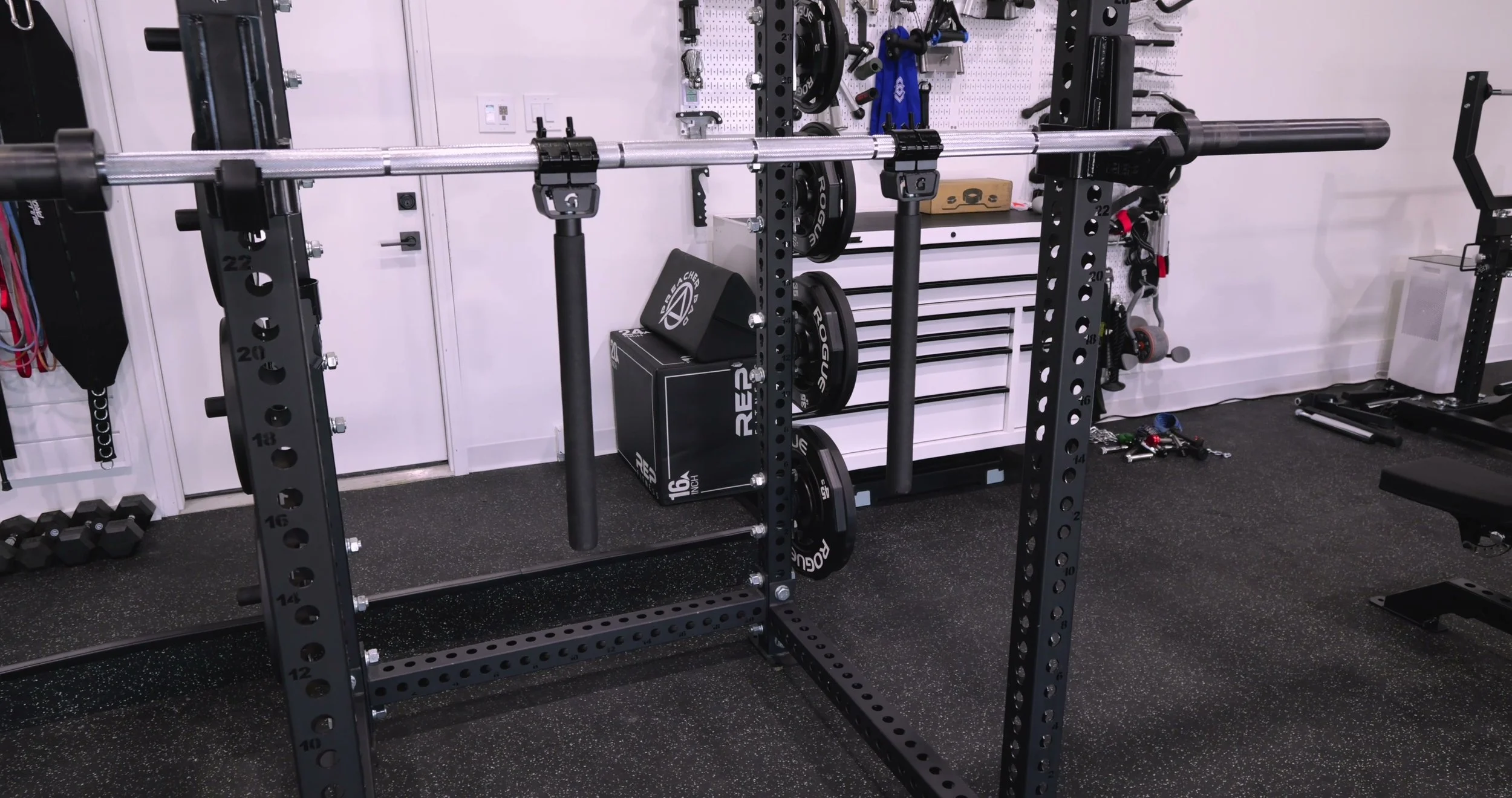
This product was reviewed in-house by Michael at The Jungle Gym Reviews
The GymPin Safety Squat Handles are a removable attachment that turns a standard barbell or Smith machine bar into a neutral-grip, safety-squat-style setup. At $228 for the rubber-coated pair (about 5 lbs each, 18 inches long, 32 mm diameter grips), they don’t replace a padded, cambered safety squat bar, but they give you a quick, lower-cost way to get the neutral hand position and use safety-squat-style loading on equipment a dedicated SSB can’t, like Smith machines and some functional trainers.
Quick Takeaway
If you want the front-loaded, neutral grip that helps wrists, elbows, and shoulders without buying a dedicated safety squat bar, these work. They’re compact, simple, and versatile, especially useful if you use a Smith machine or a VTS-style functional trainer. The compromises are real: they add about 10 lbs to the bar, require time and care to install, don’t have the thick center padding or camber that changes balance the way an SSB does, and the metal brackets can press into your front delts unless you dial in the width carefully.
Quick Specs
Price: $228 for the pair
Grip diameter: 32 mm (rubber-coated version)
Length: About 18 inches
Weight: ~5 lbs each (total ~10 lbs added to the bar)
Compatibility: Designed for barbells and Smith machine bars
Where to Buy
You can purchase the GymPin Safety Squat Handles below. Use code “THEJUNGLEGYMREVIEWS” for 10% off:
My Real-World Experience
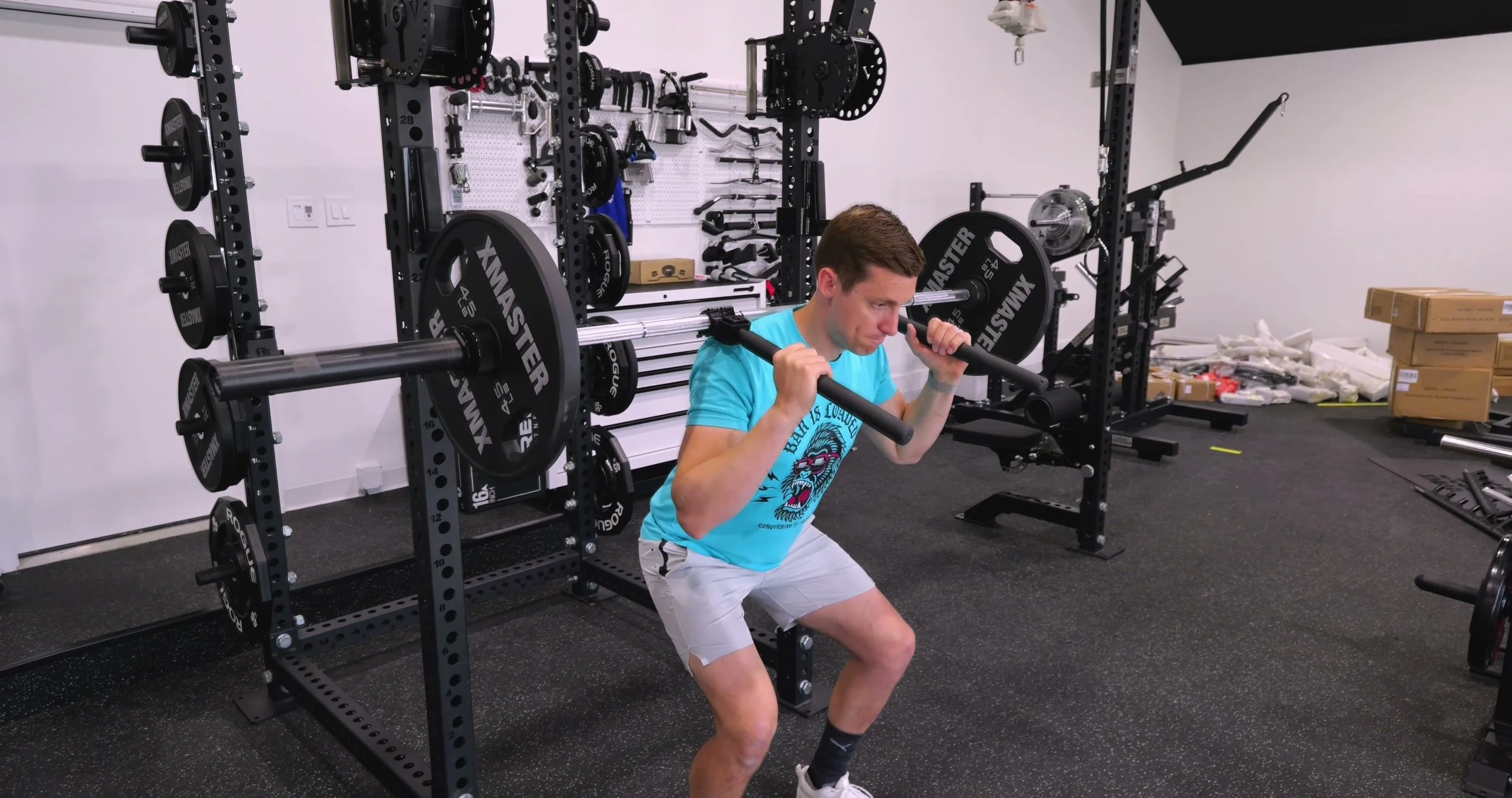
I bought these because I’ve had shoulder and elbow issues over the years and I prefer a neutral grip when I can. The promise of turning the bars I already have, particularly the Smith machine I often use, into a safety-squat-style setup was appealing. In practice, the handles do exactly that: they leave your hands out in front in a neutral position, which reduced the irritation I usually get around rep 8–10 with a straight bar on the Smith machine.
I tested them on a straight barbell in my rack and on the Smith machine I use for higher-rep sets. I also set them up on a VTS-style functional trainer in a demo to confirm the concept: you can convert a bar attached to those systems into a safety-squat variation where a bulky padded SSB wouldn’t fit. I used them for standard squats (high-bar and a little lower on the back), Smith-machine squats, and a few calf-raise sets where having a neutral hand position is convenient. Across those uses they behaved consistently, the grip is stable, the hardware feels thicker than a cheap clamp, and the body of the handle doesn’t flex under typical loading.
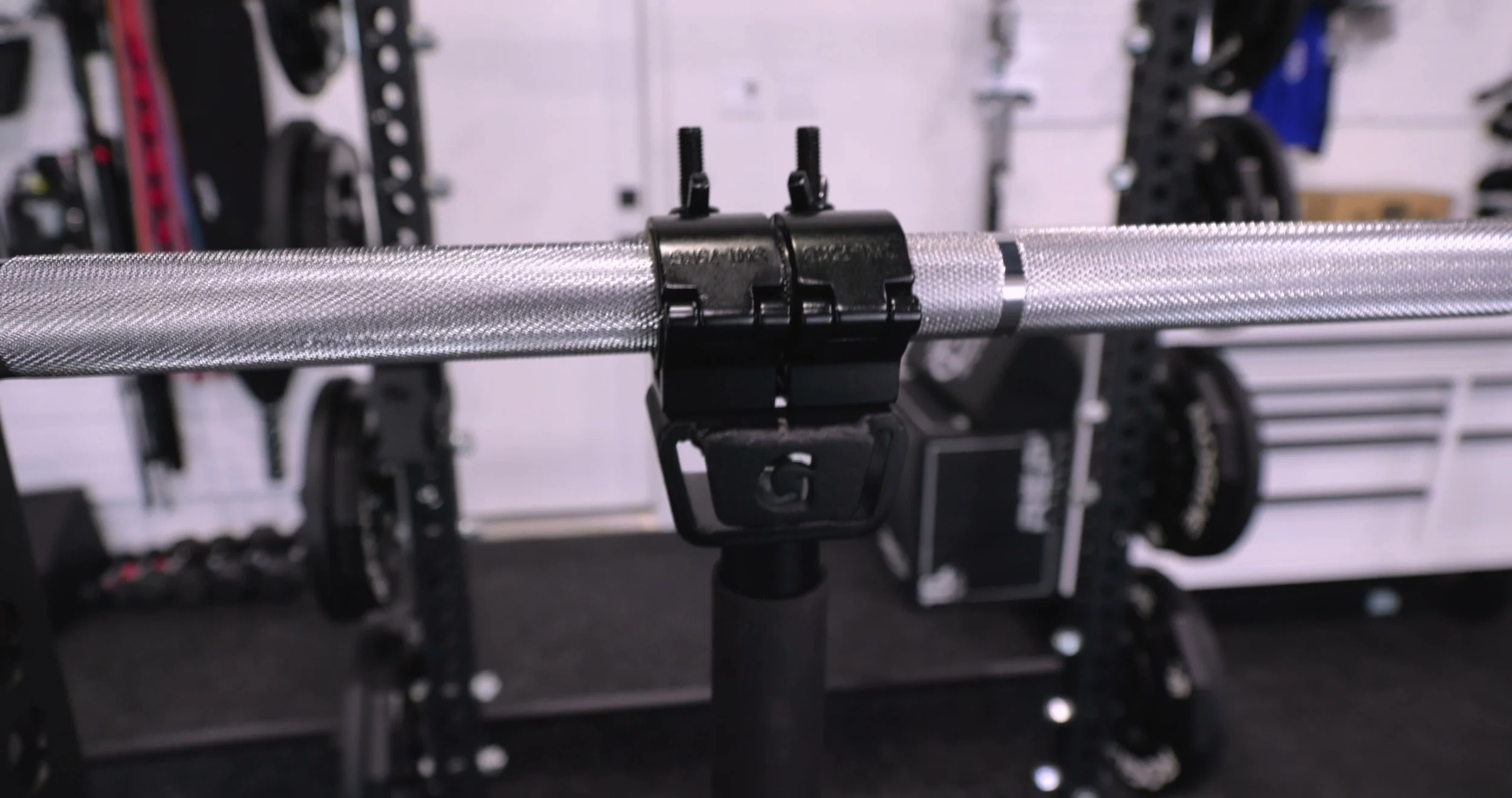
Small practical notes from repeated use: the pair adds about 10 lbs total, which I sometimes forget to subtract when I’m doing plates. The thumb nuts that secure the clamps are functional but small, you’ll loosen them far enough to slide the washer and nut on or off and then re-tighten. The first few times it took me about a minute per handle; now I can do it quicker, but it’s not a tool-free, instantaneous swap like some quick-release systems.
Setup and Installation
Installation is straightforward but fiddly. Each handle slides onto the bar, you seat the rubber pad into its slot, then thread on the washer and thumb nut. The rubber pads are intended to increase friction and prevent rotation or sliding, but in reality they flop out when you detach the handle and can be fiddly to re-seat. Kinzi from @KpexHomeGymLab suggested superglue as a practical fix and I tried it, gluing the pads into their slots made attaching and detaching one-handed much more predictable, though the glue on one pad eventually failed. Bottom line: they’re removable, but plan for a minute or two per side until you get a rhythm or semi-permanently secure the pads.
The thumb nuts work, but I’d prefer a larger knurled knob or a single-turn cam knob to speed swaps. The current arrangement is functional and gives you a secure clamp, but it exposes the tension between being an attachment (meant to be removable) and wanting the convenience of a permanent handle.
Ergonomics and Comfort
The handles give you the neutral grip you want from a safety-squat-style setup, but they don’t recreate the padded, cambered bar experience. A standard SSB’s thick center pad spreads load across your neck and traps; these handles leave the bare bar contacting your back. If you have neck or trap sensitivity, you may still feel concentrated pressure because the straight bar’s small diameter focuses load into a narrow area. Personally, I still had to experiment with how high or low I shelved the bar and how I braced to find a setup that minimized that sensation.
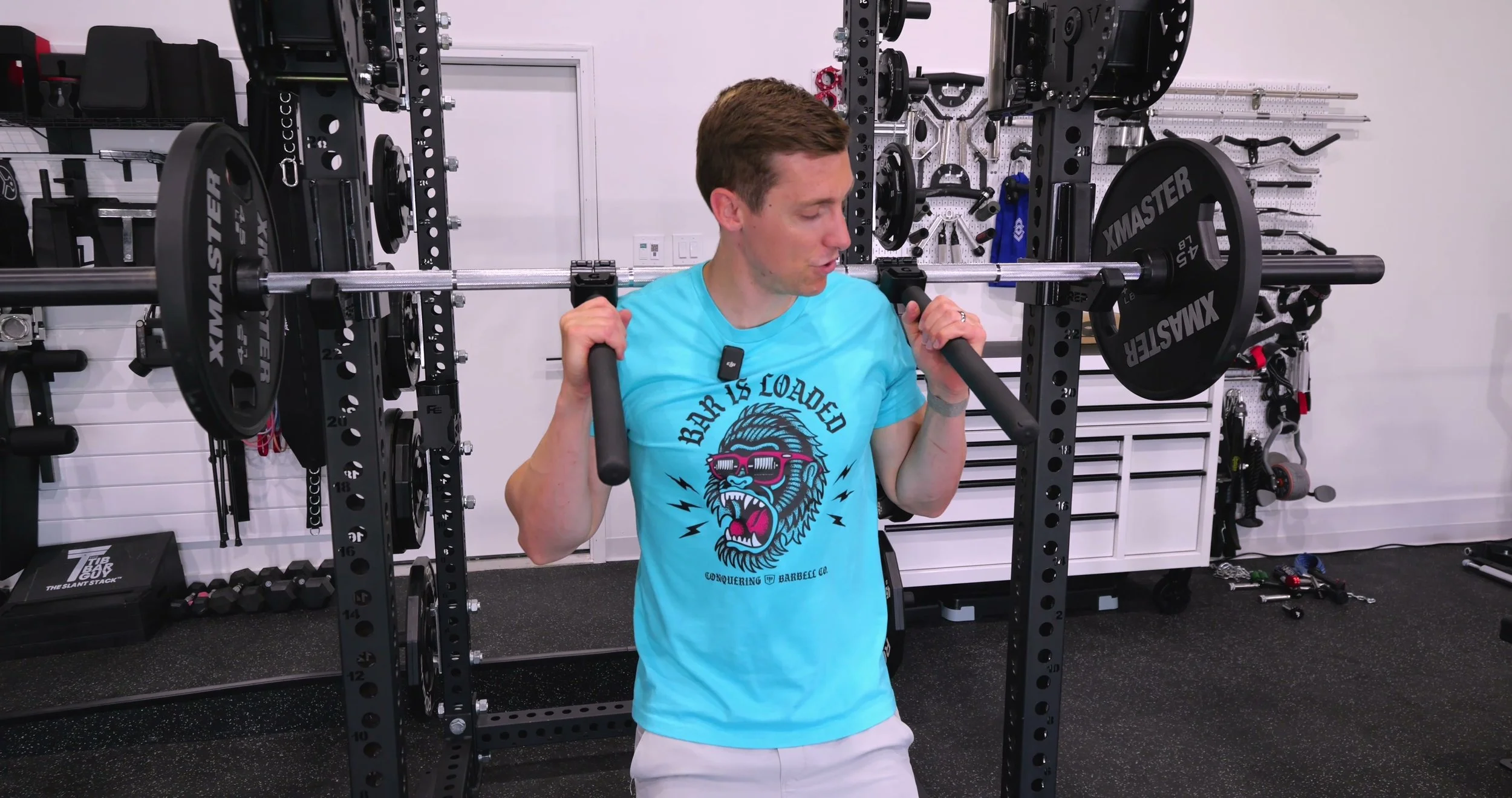
Another ergonomic detail: the metal brackets have visible edges where they meet your shoulders. If you set the handles too narrow they can dig into the front delts or feel uncomfortable when you unrack. I found the most consistent setup was to set the handles slightly wider than shoulder-width so the brackets sit just outside the shoulder rather than pressing into the front delt. That meant a slightly wider grip than I’d use with a dedicated SSB, but it avoided the digging-in sensation that spoils heavier sets.
I tried a cheap bar pad (a “bro” bar bra) between the bar and my traps and it reduced the pressure, but it also made the whole setup feel less stable and changed how tight I could brace. That’s workable for lighter, higher-rep work, but it defeats part of why you want a safety-squat style in the first place: a stable, compact shelf on your upper back.
Movement Feel and Resistance Behavior
Because these are simply clamps and handles on a normal bar, the bar’s center of gravity stays exactly where it would with a standard barbell. That’s different from a cambered SSB that shifts plates forward and slightly changes the movement cue, you don’t get that forward pull or the anterior-chain emphasis a cambered SSB provides. What you do get is the neutral grip that reduces rotational torque on the wrists, elbows, and shoulders. In practice that meant I could push through higher reps on the Smith machine without my elbows locking up the way they often do with a straight bar.
The handles themselves don’t introduce unwanted movement. They feel rigid under load and the rubber grip is comfortable. If you go heavy and push into the brackets, you’ll feel the pressure points I described earlier; the handles won’t absorb the load in the same way a padded bar does.
Footprint, Storage, and Practical Use
These are compact. When not in use they’re easy to store on a shelf or in a drawer; the manufacturer advertises that convenience and it matches my experience. They’re clearly designed to be stashed and used when needed rather than permanently attached. That versatility is the main ownership argument: you don’t dedicate floor or rack space to a specialty bar if you don’t want to.
Comparisons / Alternatives
If you’re comparing this to a budget dedicated safety squat bar, the conventional price band for those bars is roughly $270–$300 from brands like Titan or Bells of Steel. Those bars give you the padded center, the camber, and the fixed handle spacing designed to be comfortable and stable for frequent heavy squatting. The GymPin handles sit below those bars in cash outlay and above them on portability and multi-equipment compatibility.
On the higher end, I mentioned my Rogue Kabuki Transformer, it's a padded, well-balanced specialty bar that I like for dedicated SSB work, but it’s roughly in the $800 range so it’s a different class altogether. The practical question is: do you want a permanent, optimized tool for squats, or do you want a lower-cost, versatile attachment that lets you use the gear you already own? For me, if my primary goal was dedicated SSB squatting I’d take a padded SSB or the Kabuki when the budget allows. If I want to add neutral-grip variations on a Smith machine, a VTS, or my regular bar on occasion, the GymPin handles are the smarter, more cost-effective choice.
GymPin also offers a knurled/knurled-grip version for roughly $100 more. The transcript and product materials suggest the rubber-coated standard version is sufficient for most lifters, and the knurled option only makes sense if you really prefer the different texture and are willing to push the price toward, if not past, some dedicated SSBs.
Tradeoffs
Comfort vs. versatility: you don’t get the padded relief of a true SSB, but you can use the handles on equipment the SSB won’t fit.
Setup time vs. storage: the handles are removable and compact, but expect a minute or two per side unless you glue the pads or otherwise semi-permanently modify them.
Balance vs. feel: the bar’s CG doesn’t change, so you won’t get the anterior-chain emphasis of a cambered SSB; you will get the neutral grip benefits for elbows/wrists/shoulders.
Fit variability: you must find the right handle width for your shoulders; the brackets have edges that can dig in if you set them too narrow.
Who Should Buy This
Buy these if you want neutral-grip safety-squat-style loading without buying and storing a dedicated SSB. They’re especially useful if you train on a Smith machine or a functional trainer (VTS) and want a neutral grip option there, or if you want a lower-cost, portable way to get safety-squat movement variations.
Who Should Skip It
Skip these if your main goal is to avoid neck/trap pressure entirely and you need the pad and cambered balance of a dedicated SSB. Also skip if you want a permanent, tool-free solution for fast swaps—these are removable attachments that require thumb-nutting and occasional fiddling with the rubber pads.
Common Questions
Can I use these on any barbell?
They’re designed to clamp onto standard bars, but the transcript lists both 35 mm and 32 mm as fit limits at different points. That inconsistency means you should verify the exact max diameter for your bar before ordering.
Do they change the weight of the bar?
Yes. Each handle weighs about 5 lbs, so plan for ~10 lbs total added to the bar.
Are there other finish options?
Yes. The standard pair is rubber-coated. GymPin sells a knurled-grip version that’s roughly $100 more if you prefer that texture, but most lifters will find the rubber version adequate.
Final Verdict
The GymPin Safety Squat Handles do what they’re supposed to do: convert a compatible bar into a neutral-grip, safety-squat-style tool quickly and affordably. They’re not a drop-in substitute for a padded, cambered safety squat bar—the feel, padding, and center-of-gravity differences matter—but they shine when versatility and space savings are priorities. If you want neutral-grip squats on a Smith machine or functional trainer, or you don’t want to dedicate money and storage to a full SSB, these are a practical option. Use code “THEJUNGLEGYMREVIEWS” for 10% off and you can buy them here: GymPin Safety Squat Handles.
Disclaimer: The Jungle Gym Reviews may earn a small commission from purchases made through our affiliate links, which helps support the channel and allows us to keep testing equipment.