Landmark Everest All-in-One Home Gym Review
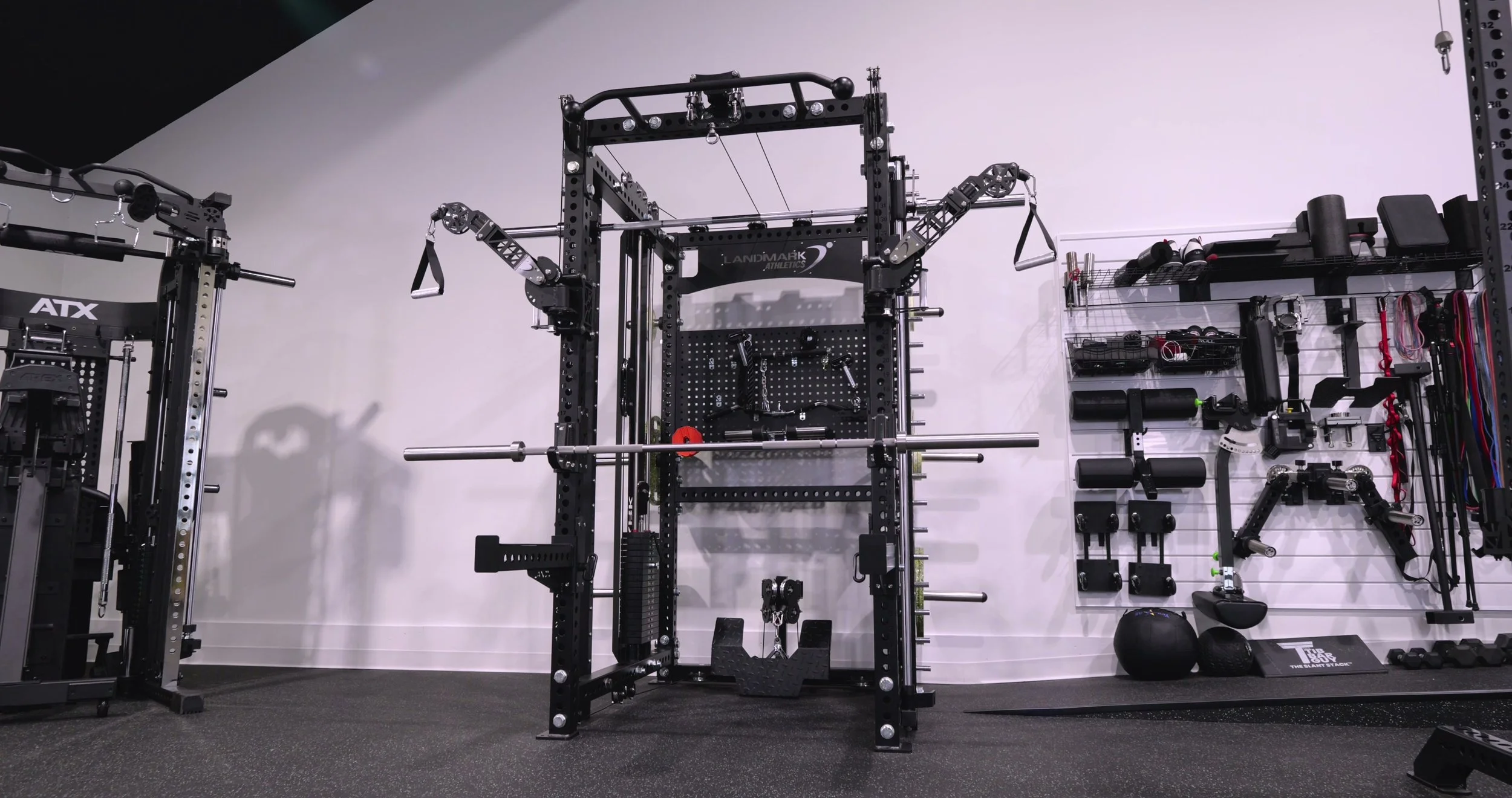
This product was tested in-house by Michael at The Jungle Gym Reviews.
The Landmark Everest is a highly requested articulating arm all-in-one 3x3 functional trainer rack that combines a fully loaded power rack, dual 200-pound weight stacks, and dedicated center lat pulldown and low row stations into one versatile footprint. This one has been getting a lot of attention recently because it offers everything you need in one rack, in one price, in one footprint. It's an excellent choice for home gym owners who want a comprehensive setup without compromising on cable smoothness or weight capacity.
Quick Takeaway
The Landmark Everest delivers incredible value for a loaded functional trainer rack. Its standout features are the dedicated center pulldown and low row stations that give you a true 1:1 weight ratio, and some of the smoothest cables I've tested. If you have the budget and the space, this rack offers features normally found on units costing thousands more. It combines all the best features from all the current power racks on the market for about $4,500 to $4,700 depending on sales and time of year.
Quick Specs
Price: $4,899 (base configuration with attachments)
Footprint: Metric 3x3 (75mm x 75mm) uprights, 92 inches tall, deep front-to-back
Weight Stacks: Dual 200 lb stacks (10 lb increments, starting at 11 lbs)
Cable System: 2:1 ratio on articulating arms, 1:1 ratio on center lat pulldown/low row
Articulating Arms: 7 left-to-right positions (180 degrees), 9 up-and-down trolley positions
Included Attachments: Weight plate storage, shrouds, articulating arms, pull-up bar, low row footplate, Smith Machine, spotter arms, lat pulldown pad, weight horn adders, center storage, various handles (varies by promo)
Where to Buy
You can check latest pricing from Landmark Athletics below. Use code “JUNGLEGYM” for $150 off:
My Real-World Experience
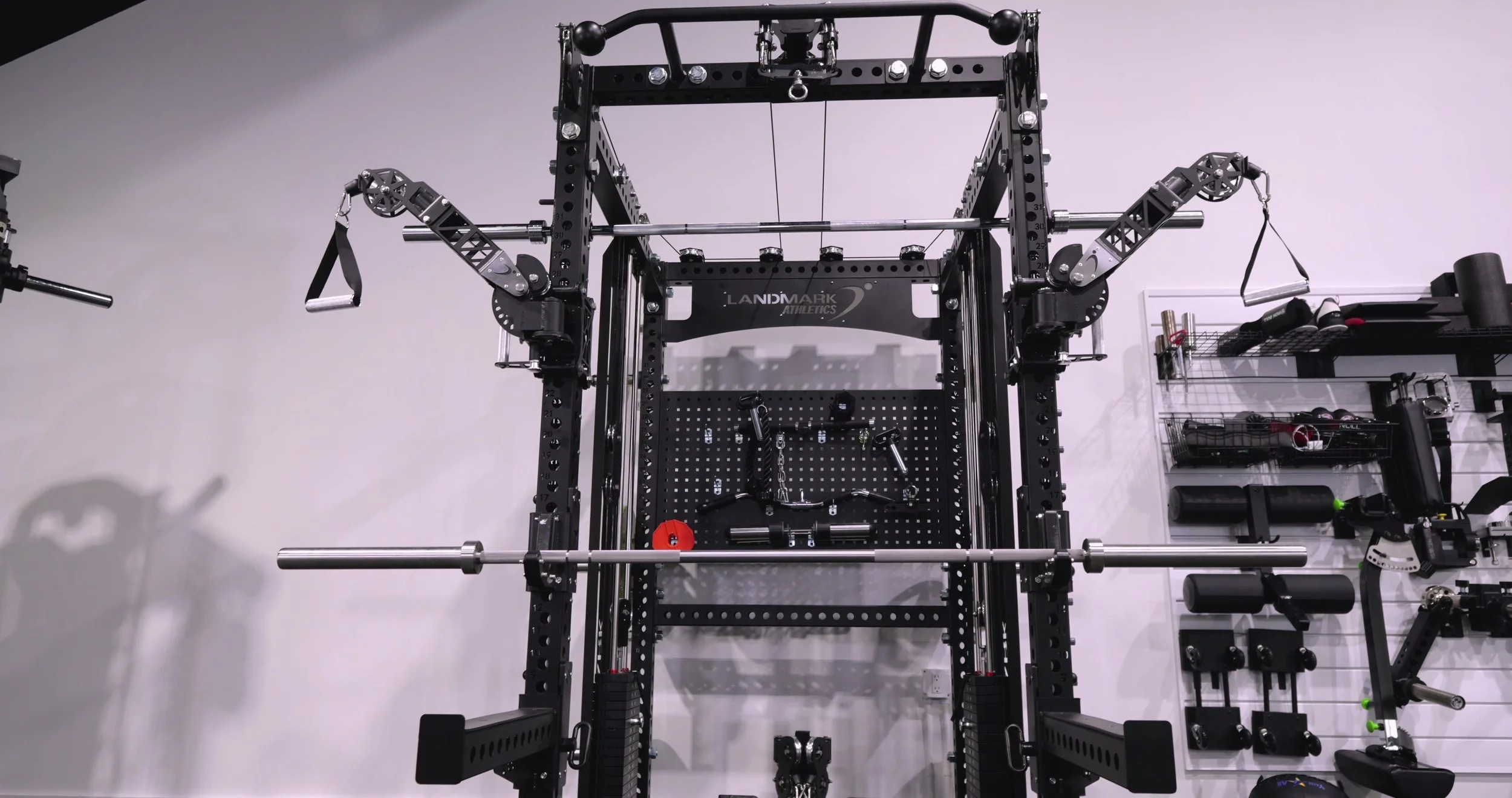
After testing numerous all-in-one racks, the articulating arms on the Everest really stand out. These are all the rage in 3x3 power racks recently. Unlike standard functional trainers with a dedicated center cable exit and a fixed center trolley that just swivels left and right, these articulating arms vastly improve the experience. I am a huge advocate after now trying numerous racks; I will only really be recommending racks like this unless price is of utmost consideration. These arms move 180 degrees left to right in seven different positions. You just use a pop pin to adjust the angle. You can move both arms inside for something super, super narrow.
They also adjust up and down independently of the trolley, with nine different vertical positions. The trolley itself has four rollers in each corner to help it move up and down really easily. This means you don't actually have to move the main trolley up and down to make quick height adjustments. You can just quickly, with the pop pin, slide this in and out. It's super smooth with bearings.
These are very long articulating arms compared to some other versions. Because they are longer, when you move them down to the straight position, you get incredible width. The arms extend about 23 inches from the center of the rack. When you measure all the way across from arm to arm, you get about a 90-inch span. This is fantastic because you've basically simulated a wide cable crossover station at a commercial gym. I love doing wide chest flyes on here. It's also great if two people want to work out separately on each side, as they can have their own little space.
Cable Smoothness and Weight Capacity
The cable smoothness is easily a 9 out of 10. The eccentric phase, when the cable returns, is buttery smooth with what I call the “snap back”. That down motion is what makes a cable system feel really smooth. The arms themselves are incredibly smooth, probably an 8.5 out of 10, and the center pulleys are fantastic for lat pulldowns.
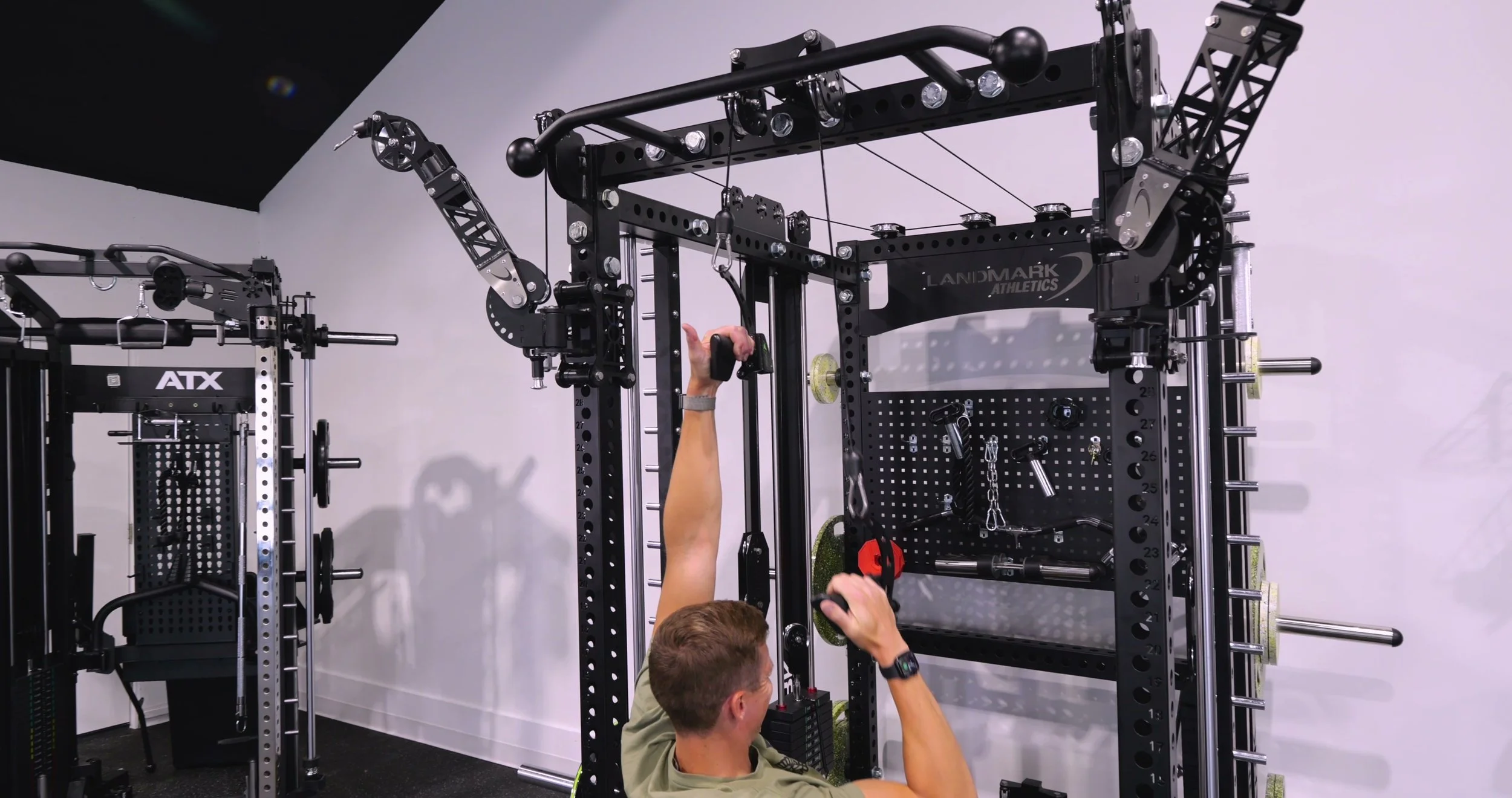
What really elevates this rack are the dedicated center lat pulldown and low row stations. Because each 200-pound weight stack powers its corresponding side, you can connect both to the center station for a 1:1 ratio. On standard functional trainers with a 2:1 ratio, a 100-pound stack only yields 50 pounds of effective resistance. If you put 200 pounds on a 2:1 ratio, you only get 100 pounds of effective resistance, which often isn't enough for heavy lat pulldowns. Sometimes that takes time and adds workout friction when you have to use both arms and connect them.
With the Everest's center station, you don't have to fiddle with moving the arms to the center to get enough weight. You literally just put the weight on each side, clamp into the center, and you're done. Landmark also includes weight horn adders that thread into the weight stack. You unthread one end, stick the long rod through the weight stack, and thread it on the other side. This allows you to load two to three 45-pound Olympic plates on each side, turning this rack into somewhere around 500 to 600 pounds of cable force if you really need it.
The rack also features six weight horns on the outside for storage. They have a normal chrome-coated plastic end. Mine actually cracked off on the end because my steel plates scuffed it a bit, but they have a limited lifetime warranty for residential use, and they are working on a commercial warranty. They are also creating a guide rod for the floating pulley in future production runs to prevent any cable twisting down the line, although I didn't experience any cable twisting whatsoever on this rack.
Smith Machine Integration
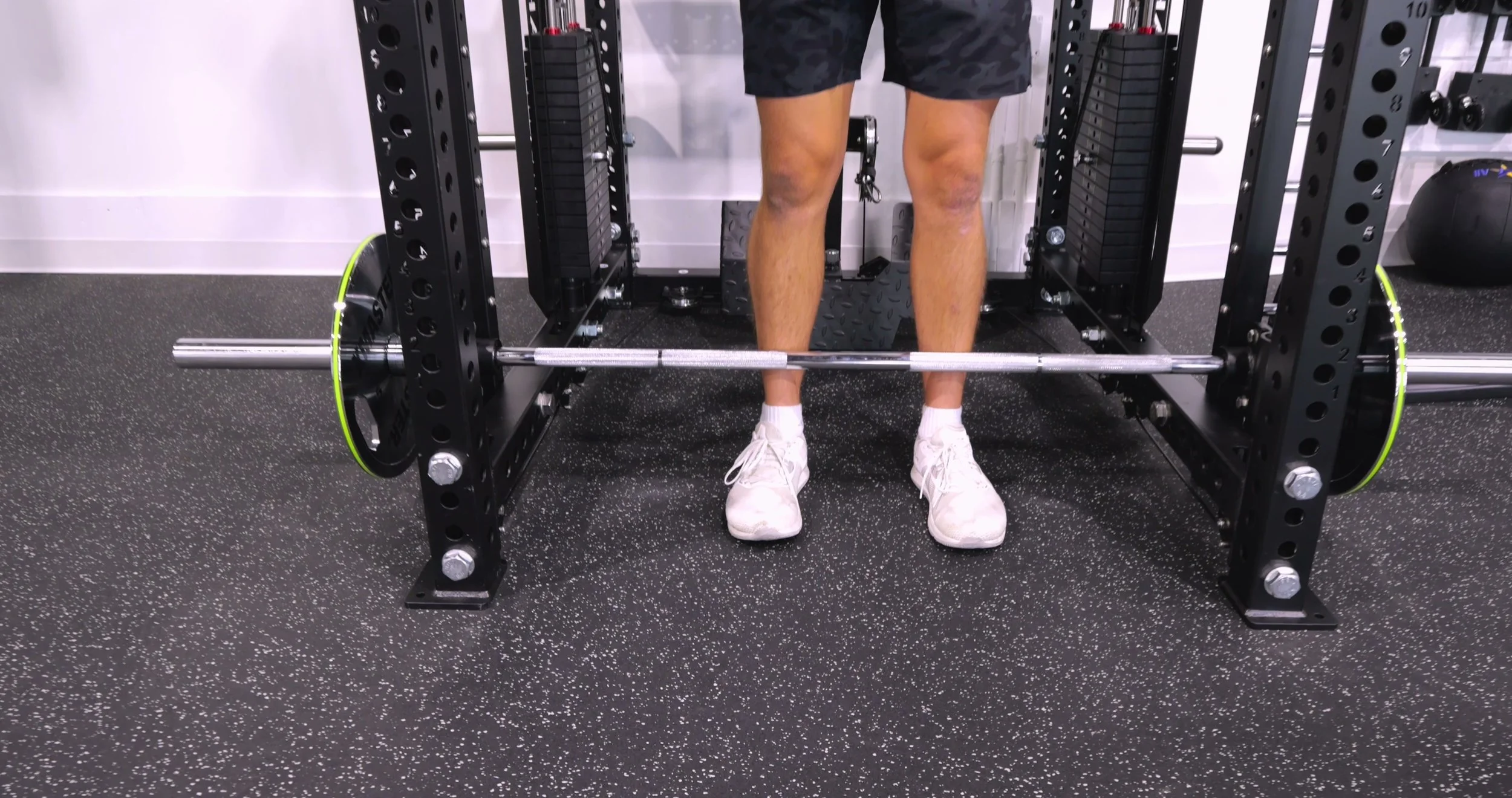
The integrated Smith Machine features a grippy, sandpaper-like knurling. I can hear my calluses grinding on here. It's not super deep or aggressive enough to indent your hands, but it feels secure, almost like you have a thick layer of chalk on your hands. The bar itself is heavy—nearly 60 pounds—likely because it's essentially a standard 45-pound barbell with added bearing shafts and latches. It's about 15 pounds heavier than a normal barbell, which I haven't found to be a problem, but it's something to note.
The tolerances are fantastic, with almost no side-to-side play. It is very smooth. One of the best design choices is that the Smith Machine is offset to the outside of the rack. This keeps the latching knobs on the outside, so they don't point inside and hit your elbows, which I've called out in prior rack reviews. It also allows the safety stoppers to be positioned lower than the bottom rack post, providing a range of motion that's very close to a standard free-weight barbell. They just have these minimal little safeties that hook on the outside, allowing the Smith bar to go way down there.
Lat Pulldown and Low Row Setup
The rack is 92 inches tall, and the center pulleys are mounted on a swivel bracket. The cable exit ends up being around 87 inches high. At 6'2", this gives me plenty of stretch on lat pulldowns. I usually have about three or four inches of extra clearance. You can also walk through the rack without hitting your head, as it's about 77 inches on center to the bar.
For the lat pulldown setup, Landmark includes a lat pulldown pad that attaches to the spotter arms. You need to put the spotter arms in, get the lat pulldown bar, attach it with a couple of hitch pins, and then pull up your center-mounted lat pulldown. They also include little banana clips to connect these, which you can opt not to use if you want a little more height by connecting carabiner to carabiner. I honestly don't really like this setup because it requires four hitch pins and the spotter arms. I think it's a lot easier to just use a single leg roller that sticks directly into the uprights. They do offer a faster, bare-bones solution that slides right into the uprights, which might be included depending on current promos. It doesn't really lock, so it has a little bit of room to play, but it stops you from going up.
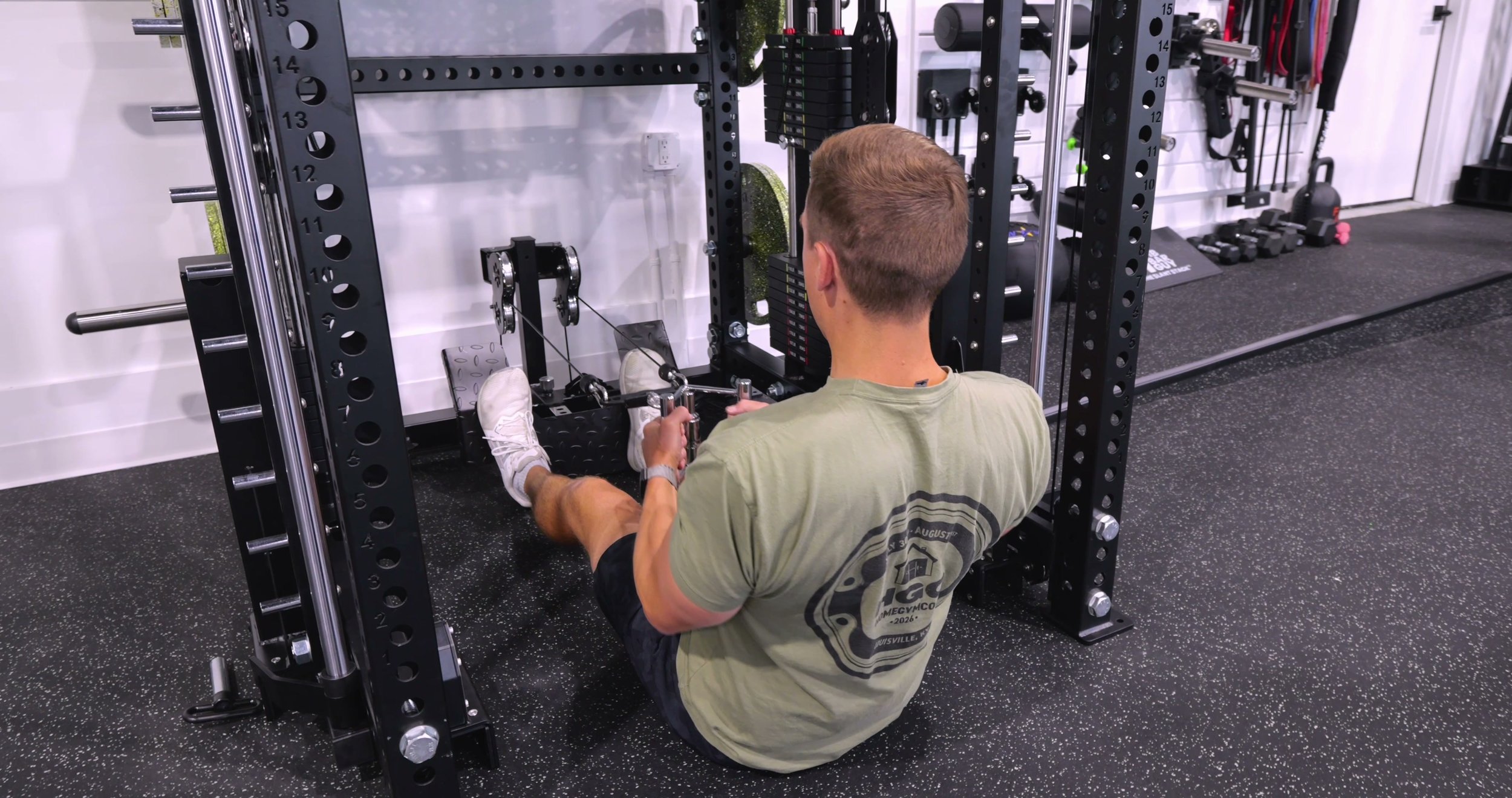
The low row footplate is well-designed, offering two angles for seated rows on the ground or bench-supported rows. It swivels for unilateral movements and adjusts front-to-back with a pop pin to maximize range of motion. I usually leave it in the furthest out setting for the best range of motion. The rack is deep enough that you can easily slide an incline bench inside for Smith Machine work without interfering with the low row setup. The wheels will just slide in the cutouts on each side. The height of the low row isn't super low; it comes out about 16 inches from the ground.
Comparisons / Alternatives
The most direct comparison is the Force USA C20. The C20 has historically been the standard for these loaded all-in-one racks and features a very similar setup with a center lat pulldown and low row. The main difference is that the C20 has a dedicated station for a sliding leg press attachment. However, the C20 costs around $6,500, and the leg press bench is an additional $900, bringing the total to about $7,400. For the roughly $3,000 difference, you could buy the Landmark Everest and a separate, dedicated leg press machine, which is probably what I recommend you do if you're going to save that kind of money anyway.
Compared to racks like the GetRXd Tornado or Maxum X-Series, the Everest's dedicated center stations offer a significant advantage. Those other racks require you to move the arms to the center and rely on pulley magic to make the ratio heavier at the arm, which isn't as smooth as the Everest's 1:1 center setup when you combine them. It's also harder to do low rows on there because you extend further away from the rack. If someone wants to do a lat pulldown and wants that 1:1 ratio, I would recommend the Everest because it's quick, fast, and the pulley smoothness is just so good.
Tradeoffs
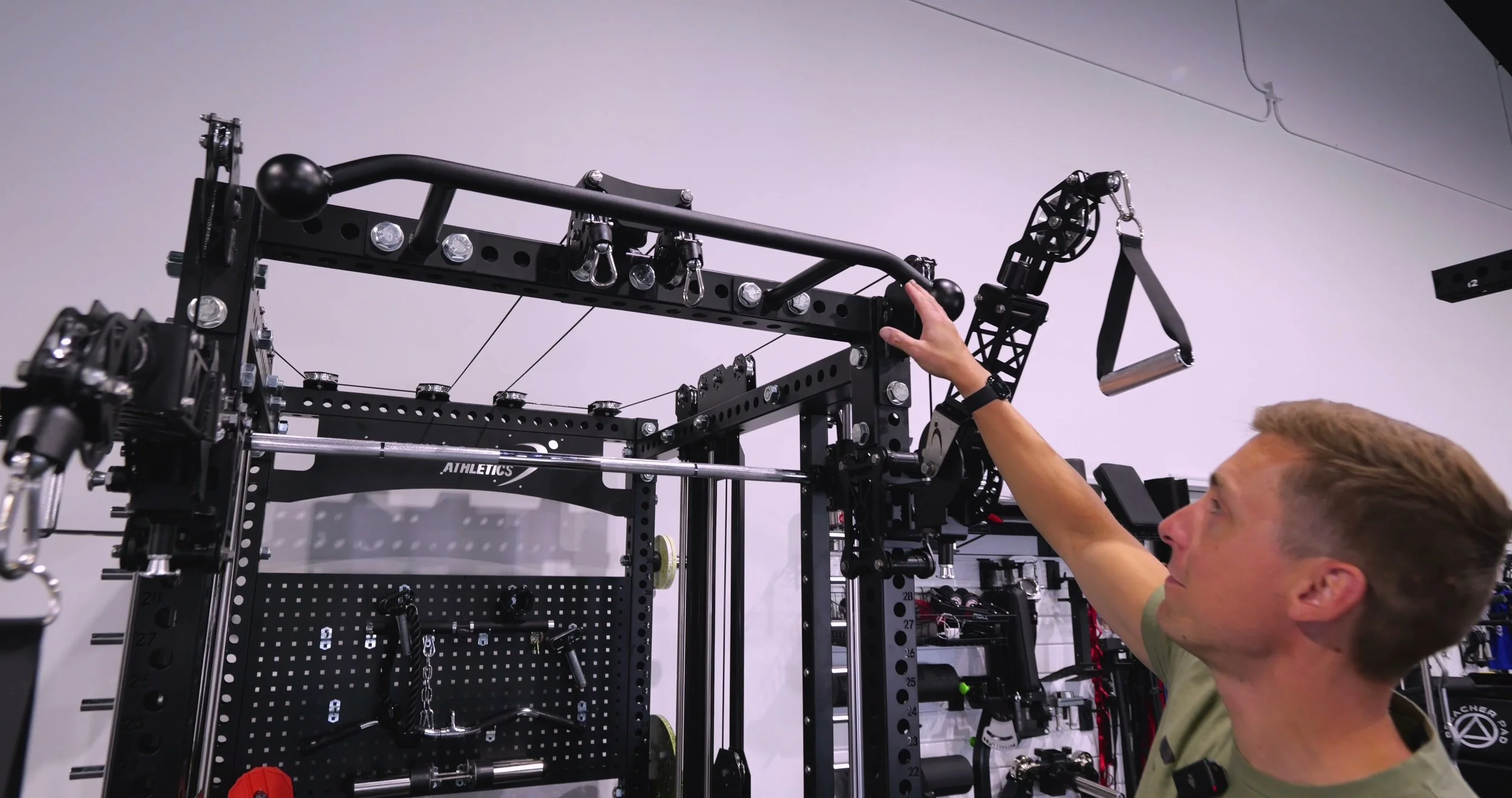
The Everest is a large, deep rack that requires significant floor space. My main piece of constructive feedback is regarding the pull-up bar. While the passive knurling is fine, the wide, curved grip angle is awkward. It's not really even enough. The straight portion is too narrow, forcing my hands into the curved sections where my pinkies get smashed against the globo grips. It doesn't feel comfortable. It's not a dealbreaker since the bar is removable and you could put your own on, but it's an area for improvement. I wish they could just move it in or change the angle a little bit.
Also, the six weight horns on the outside have a chrome-coated plastic end that can get scuffed or cracked by steel plates, though the company has a good warranty and is working on upgrades for future production runs, like a guide rod for the floating pulley to prevent cable twisting.
Who Should Buy This
This is for the home gym owner who wants maximum versatility in a single footprint and values heavy, smooth cable pulls. If you prioritize a 1:1 ratio for lat pulldowns and low rows without having to fiddle with functional trainer arms, this is one of my top recommendations. It's a very good, practical rack with distinct design decisions.
Who Should Skip It
Skip this if you are tight on space, as the deep footprint and wide articulating arms require a large dedicated area. Also, if you absolutely need an integrated leg press system within your rack, you might want to look at the Force USA C20 instead.
Common Questions
Does the Smith Machine bar weigh 45 pounds?
No, the integrated Smith Machine bar is heavier than a standard barbell, weighing in at nearly 60 pounds due to the added bearing shafts and latching mechanisms.
Can I get more than 200 pounds of resistance on the cables?
Yes. For the center lat pulldown and low row, you can connect both 200-pound stacks for a 1:1 ratio. Additionally, Landmark includes weight horn adders that thread into the weight stacks, allowing you to load extra Olympic plates.
Do I need to buy attachments separately?
The $4,899 base price includes a large suite of attachments, including the articulating arms, spotter arms, Smith Machine, lat pulldown pad, low row footplate, and various handles. However, promos change, so always check their website for the current inclusion list.
Final Verdict
The Landmark Everest combines the best features of modern all-in-one power racks into a highly capable and smooth-operating machine. At its price point, it undercuts the competition while delivering superior cable performance and weight capacity.
CHECK PRICE — Landmark Athletics Everest All-in-One Home Gym
Use code “JUNGLEGYM” for $150 off.
This article contains affiliate links. If you purchase through these links, we may earn a small commission at no extra cost to you.