GMWD LE11 Leg Extension and Prone Leg Curl Review
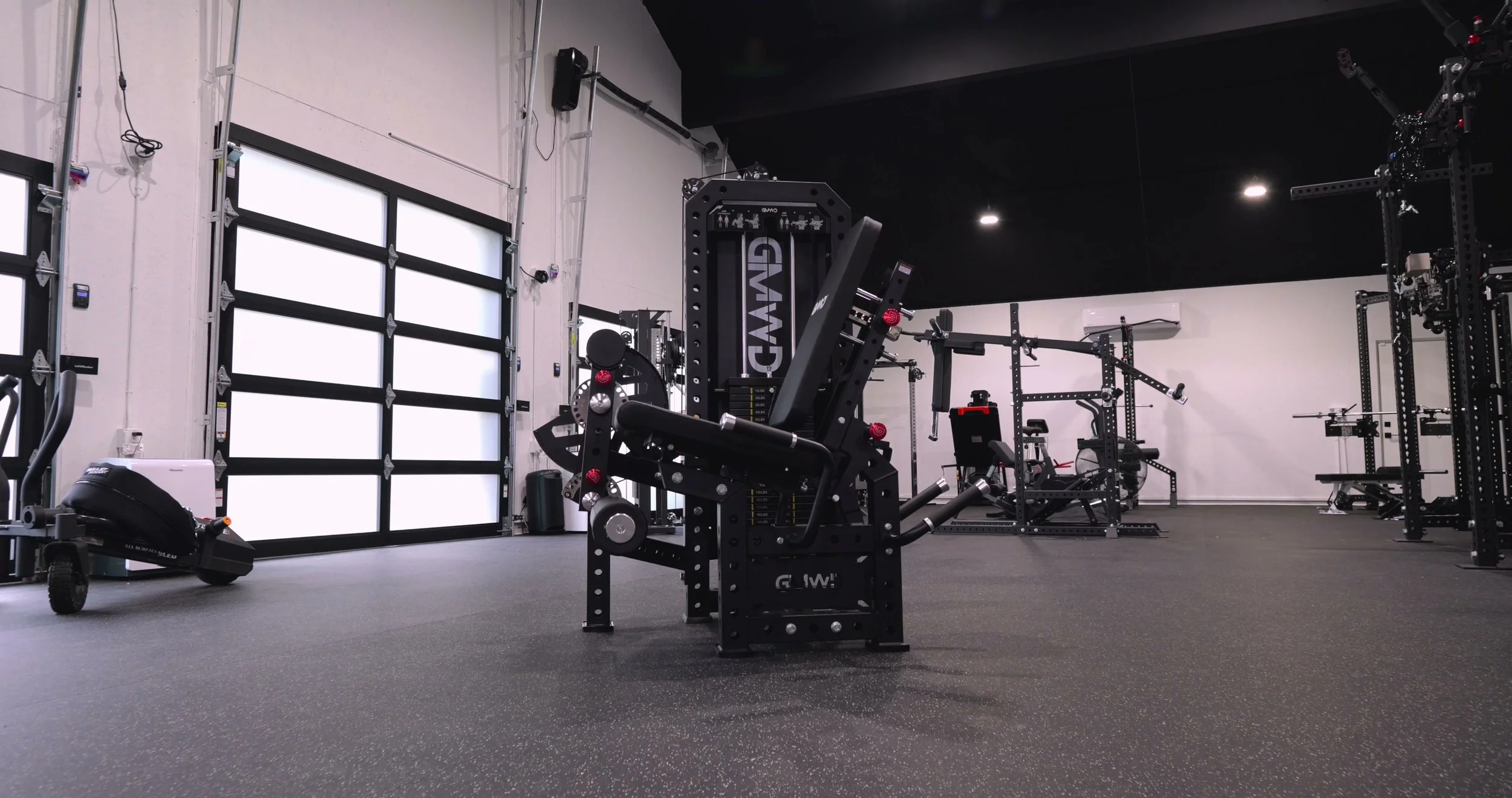
This product was tested in-house by Michael at The Jungle Gym Reviews
The GMWD LE11 delivers an unusually large 255 lb, true 1:1 weight stack and a wide range of adjustments at a very aggressive $1,699 price point. It gives you selectorized convenience and solid frame stability in a smaller footprint, but the linear resistance cam and budget pad/vinyl choices create meaningful tradeoffs for heavy users and anyone sensitive at full lockout.
Quick Takeaway
The LE11 is the value play in selectorized leg extension / prone curl combos. For the money you get a legitimately heavy, true 1:1 stack (255 lbs with a removable 5 lb top plate), an aggressive 3x3 frame, very granular range-of-motion setup thanks to a 360-degree dial, and useful height adjustments that fit taller users. In practice it’s a solid home-gym solution if you want a dedicated leg extension/curl without the hassle of plates, just be prepared to manage a fairly linear resistance curve and to trade a bit of padding durability for the lower price.
Quick Specs
Price: $1,699 (often less with discounts)
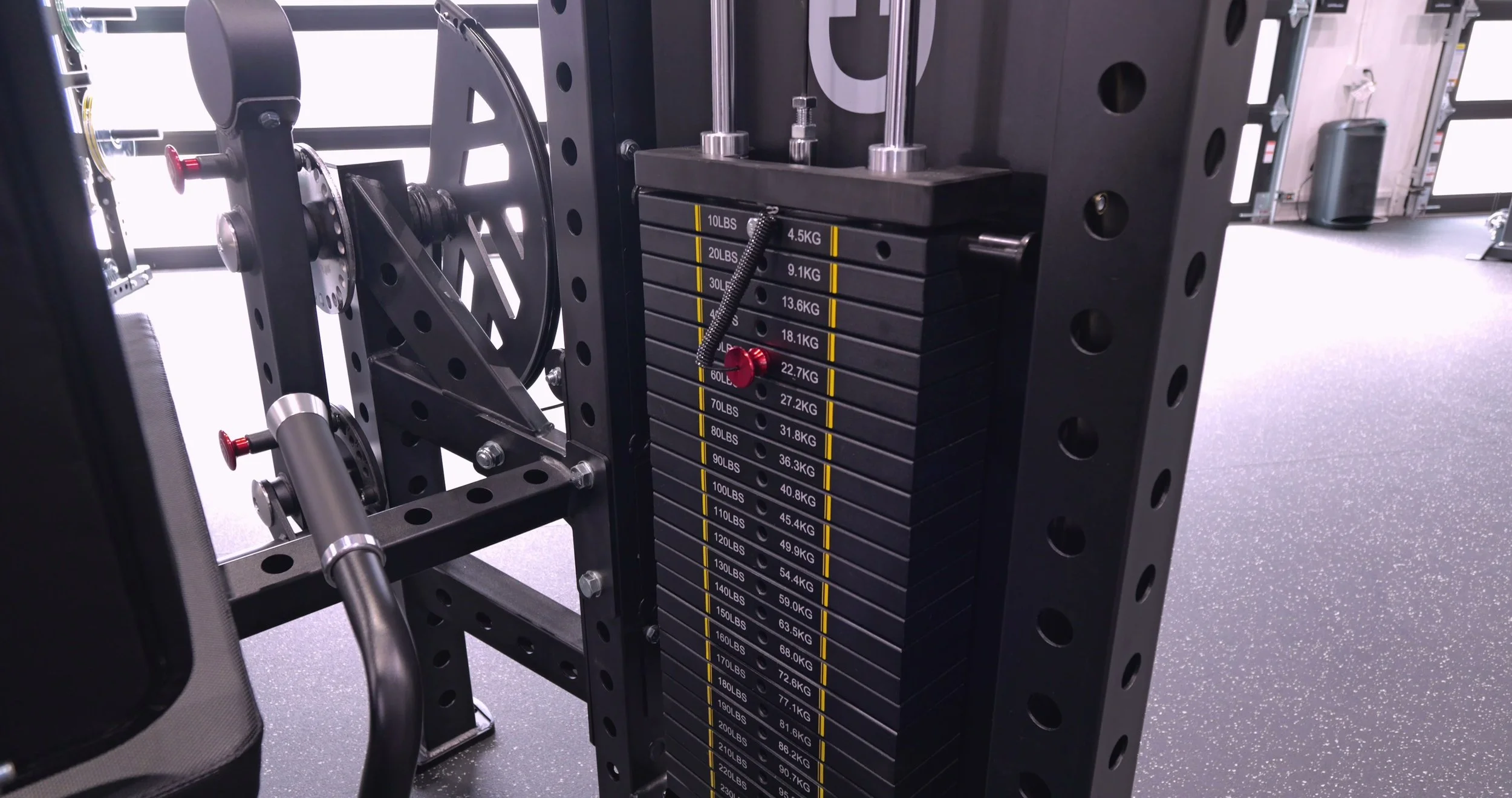
Weight Stack: 255 lbs (includes removable 5 lb adder plate)
Weight Ratio: 1:1 (true selectorized feel)
Frame: 12-gauge steel, 3x3 uprights with 1-inch holes
Movements: Seated leg extension, prone leg curl
Adjustments: 360-degree ROM dial, ankle roller height pop-pin, seat/handle adjustments
Where to Buy
You can purchase the GMWD LE11 using the link below. Use code “JUNGLEGYM” to save 5% off the full price.
My Real-World Experience
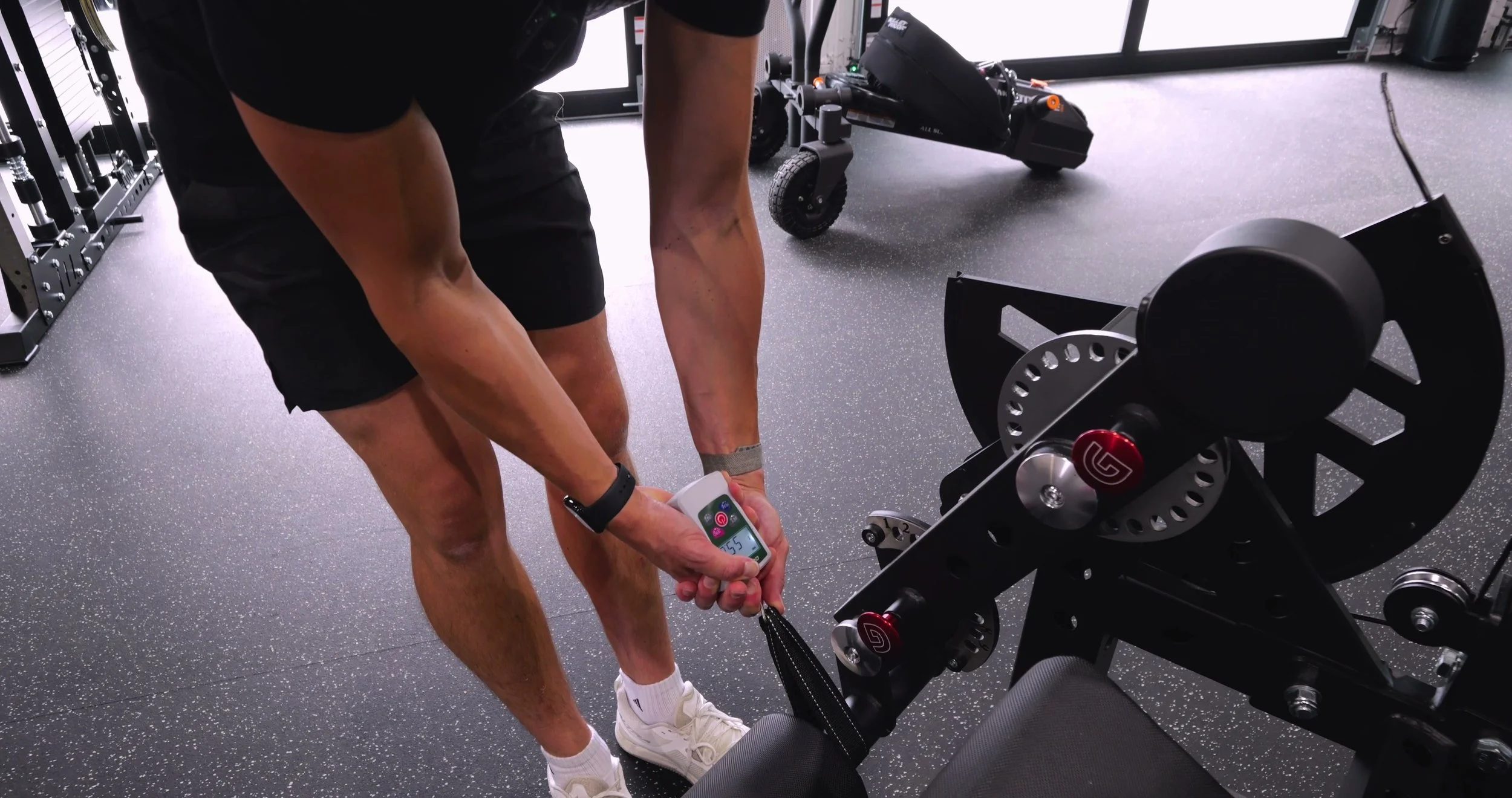
I've had the LE11 in my gym for a few months. I used it regularly for both seated leg extensions and prone leg curls, and I also brought a force gauge to the stack to confirm the manufacturer’s 1:1 claim. With 60 lb selected on the stack the gauge read consistently in the mid-50s, about 53–56 lb depending on how slowly I initiated the pull—so for practical purposes it behaves like a true one-to-one system. That consistency matters: selectorized combo machines sometimes advertise large stacks that don’t actually feel like the labelled weight, and this one does.
In daily use I appreciated how the integrated stack removes the constant plate swapping you see with plate-loaded combos. The LE11's 255 lb max (including the removable 5 lb top plate, which is rubber-coated and a nice little touch) gives you real headroom for progressive overload without rigging together plates and pins. The integrated band pegs on the top plate and bottom frame are present if you want to add band tension or push past the stack, but more on how those behave later.
On fit, I'm about 6'2" and ~195 lb; the machine accommodated my height with room to spare. The ankle roller pop-pin adjusts low enough that GMWD says the machine will fit users up to around 6'4–6'5". There’s a clear, practical benefit here if you've been frustrated by cramped travel on other home-focused leg machines.
Build and Adjustability
Structurally the LE11 is purposeful about cost-saving without feeling cheap in operation. The frame is 12-gauge steel rather than the heavier 11-gauge you see on higher-end racks, but in practice that thickness is more than adequate for this use case—the machine sat flat and didn’t wiggle or tip when I loaded the stack. A small front stabilization foot and the footprint design keep it planted even when I stacked plates via an adder pin in other tests. Expect some minor creaks and settling noises under load, but no structural flex.
Adjustability is one of the LE11’s best features. There’s a true 360-degree range-of-motion dial that lets you set the starting angle almost anywhere along the arc, not just a handful of detents like other machines. That degree of granularity made it easy to tailor the start point for my lever length and preferred ROM. The ankle roller height uses a pop-pin system that shifts the roller up or down to suit different lower-leg lengths; it’s straightforward but does take a few reps of dialing in to get it perfectly aligned throughout the arc. The machine also has a seat angle and several handle positions so you can lock your torso in and focus force where you want it.
There are aesthetic choices I liked, red anodized pop pins, a clean shroud with a logo, and an overall modern look, but the shroud does have a practical downside. The 3x3 uprights with 1" holes suggest accessory compatibility, but the interior shroud blocks most attachments from passing through. You could remove the shroud to use the holes fully, but that sacrifices the finished look.
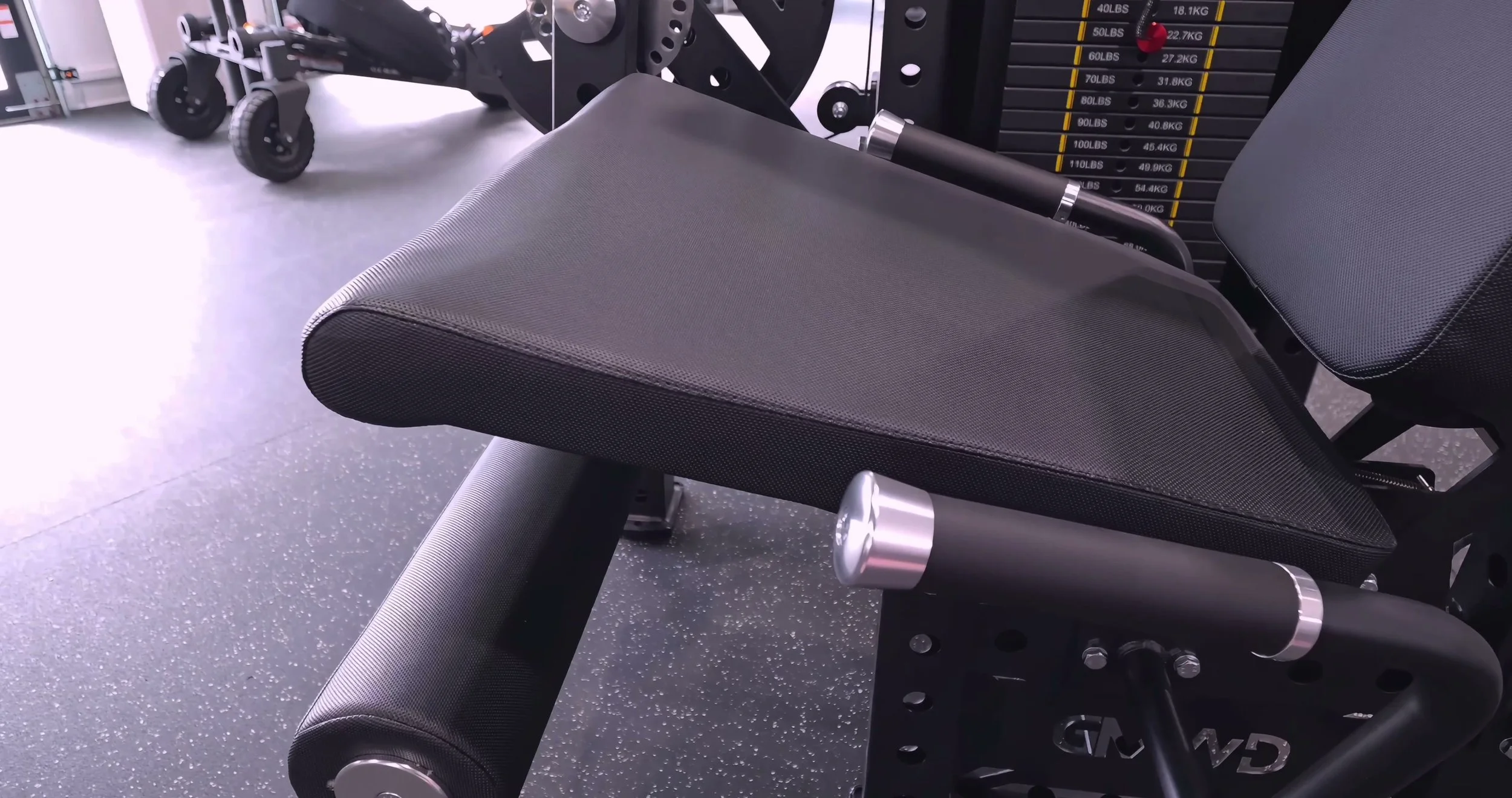
On contact surfaces the company chose a textured, “grippy” vinyl for the rollers and pads. It looks contemporary and holds you in position well, but the dimpled texture produced a noticeable amount of friction on my lower legs—enough to tug on leg hair during reps. After a few months of use by a ~195 lb user I could see creases and folding in the vinyl and padding; these aren’t catastrophic, but they’re evidence the pads are on the more budget end and could show wear faster under heavy, regular use.
The Resistance Curve
This is where the LE11 departs from higher-end combos. To achieve the straight 1:1 feel the machine uses a relatively linear cam profile—the cable wraps around a cam that keeps perceived load roughly equal to selected plates throughout the motion. That’s great for transparency and load tracking, but biomechanics matter: with leg extensions and prone curls you’re usually weakest at or near full extension, and many premium machines intentionally shape the cam so resistance tapers off around the lockout.
With the LE11, the resistance stays high the entire way. In practice I could feel the target muscles working, but when I pushed into heavier sets the end-range produced a sharp, joint-level load that made me back off weight or use higher reps to avoid discomfort. For me that meant dialing back a noticeable amount compared to what I might run on a cam that alleviates peak lockout torque. The same behavior applies on prone leg curls: you get a consistent 1:1 load, but the final few inches of the range can feel mechanically unfriendly and limit how much you can actually load without another structure or spot failing first.
GMWD includes band pegs at the top and bottom of the stack, which is a logical add if you want to increase peak resistance beyond 255 lb. I tested bands and, predictably, they make the load even harder at the top of the movement because band tension increases with stretch. That’s the inverse of what I’d prefer for leg extension: bands exacerbate the joint-loading problem at lockout. So while the band pegs work for specialized uses, explosive training or pushing peak loads, they aren’t a solution to the cam/curve comfort issue; in many cases they make it worse.
Comparisons / Alternatives
In the selectorized home-combo market the LE11 is priced below most rivals. At $1,699 it undercuts other home-focused selectorized combos that typically run around $1,900 on sale and generally sit in the low-$2k range up to $3k. If you step down to a plate-loaded combo you can shave cost, but you lose the integrated stack convenience and the clean, single-footprint solution that avoids constant plate swapping.
Compared to full commercial single-purpose machines that retail for multiple thousands, the LE11 is obviously not competing on premium cams, thicker gauge steel, or upholstery longevity. But for a home gym operator who wants selectorized loading and a compact two-in-one, there's a clear value argument here: you get a true 1:1 255 lb stack and good adjustability for a price most home users can stomach.
Tradeoffs
Linear resistance cam: one-to-one feel is accurate but creates uncomfortable joint loading at full extension; I had to reduce working weight for leg extensions to avoid joint strain.
Padding and vinyl: attractive grippy vinyl tugs leg hair and showed creasing after a few months at ~195 lb use; expect wear sooner than on higher-end foam/upholstery.
Band pegs are functional but often counterproductive for the leg-extension curve; they increase peak load at lockout rather than soften it.
Shroud aesthetic vs. accessory use: 3x3 uprights with 1" holes look like they accept attachments, but the internal shroud blocks full-through accessory mounting unless you remove it.
12-gauge frame: adequate and keeps cost and shipping down, but not as heavy as 11-gauge frames on some premium units.
Who Should Buy This
Buy the LE11 if you want a selectorized leg extension and prone leg curl that doesn’t eat your floor space, gives you a true 1:1 255 lb stack, and costs well under many of the other selectorized options on the market. It’s a strong pick for serious home-gym users who prioritize integrated stack convenience, granular ROM adjustment, and space savings over the last bit of cam-optimized comfort and upholstery longevity.
Who Should Skip It
Skip this machine if you have pre-existing knee or joint sensitivities that require a cam profile which eases lockout torque. Also look elsewhere if you’re planning commercial-level, high-volume abuse or you’re a very heavy user who expects upholstery and foam to look like-new for many years, this machine shows cosmetic wear faster than more expensive alternatives.
Common Questions
Does the 1:1 weight ratio really matter?
Yes, in practical testing I used a force gauge with 60 lb selected and consistently measured about 53–56 lb at the handle, which confirms the stack behaves like a true one-to-one system. That consistency means you’re not getting a misleading felt weight that’s significantly lower than the stack labeling.
Can I add more weight to the stack?
There are band pegs for adding bands, but bands increase top-end load (which can worsen joint strain at lockout). The better option if you need more than 255 lb is a weight stack adder pin that accepts Olympic plates—this is a common workaround and supported in the broader accessory ecosystem.
Final Verdict
The GMWD LE11 is a thoughtful value proposition: a heavy, true 1:1 weight stack and a high degree of adjustability for $1,699 is hard to beat if you want a compact selectorized leg extension and prone curl for a home gym. The tradeoffs are real—the linear cam makes full lockout tougher on the knees, the vinyl pads show wear faster than premium machines, and some accessory possibilities are limited by the shroud. If those compromises align with your priorities (price, integrated stack, room-saving dual-movement functionality), this is a very defensible buy.
Ready to grab one? Use code “JUNGLEGYM” to save 5% off the full price.
The Jungle Gym Reviews may earn a commission from purchases made through links on this page. This helps support the channel and allows us to keep testing equipment.