Rogue Kabuki Transformer Bar Review
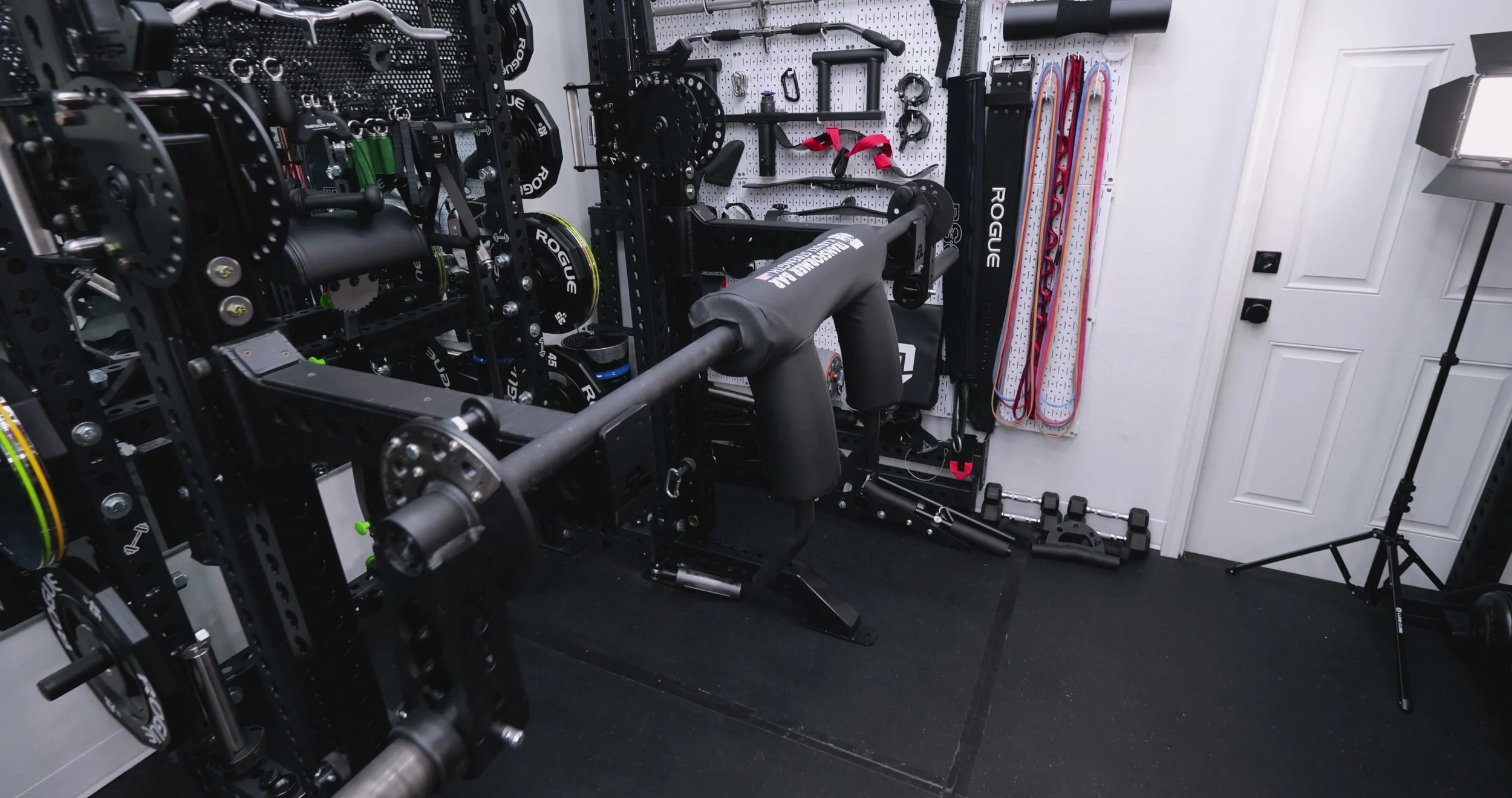
This product was tested in house by Michael at the Jungle Gym Reviews.
The Rogue Kabuki Transformer Bar is a multi-grip specialty barbell that can be configured into over a dozen different positions for squats, good mornings, lunges, and pressing variations. It is one of the most expensive specialty bars on the market at around $800, and it is also one of the most versatile. The adjustable handles rotate and lock into different angles, changing the center of gravity and your body position under the bar. If you are someone who deals with shoulder mobility issues during back squats, or you want one bar that replaces a safety squat bar, a cambered bar, and a front squat setup, the Transformer Bar is designed to do all of that.
Quick Takeaway
The Transformer Bar gives you roughly 12+ different bar positions from one piece of equipment. The build quality is outstanding — this is a Kabuki product and it shows. The adjustable handles change the feel of the squat dramatically depending on position, from a very upright safety squat bar feel to a more forward-leaning good morning position. At $800 it is expensive for a specialty bar, but if you would otherwise buy a safety squat bar ($300-400), a cambered bar ($200-300), and still want front squat capability, the math starts to make sense. The main tradeoff is that it takes time to learn all the positions and figure out which ones work for your body.
Quick Specs
Price: ~$800
Weight: 55 lbs
Loadable Sleeve Length: Standard Olympic (16+ inches per side)
Handle Positions: 12+ configurations
Handle Adjustment: Rotating brackets with locking pin
Pad: Removable rear pad
Compatibility: Standard power rack (Olympic sleeve spacing)
Made by: Rogue Fitness - Made in USA
Where to Buy
You can check the current price directly through Rogue Fitness below:
My Real-World Experience
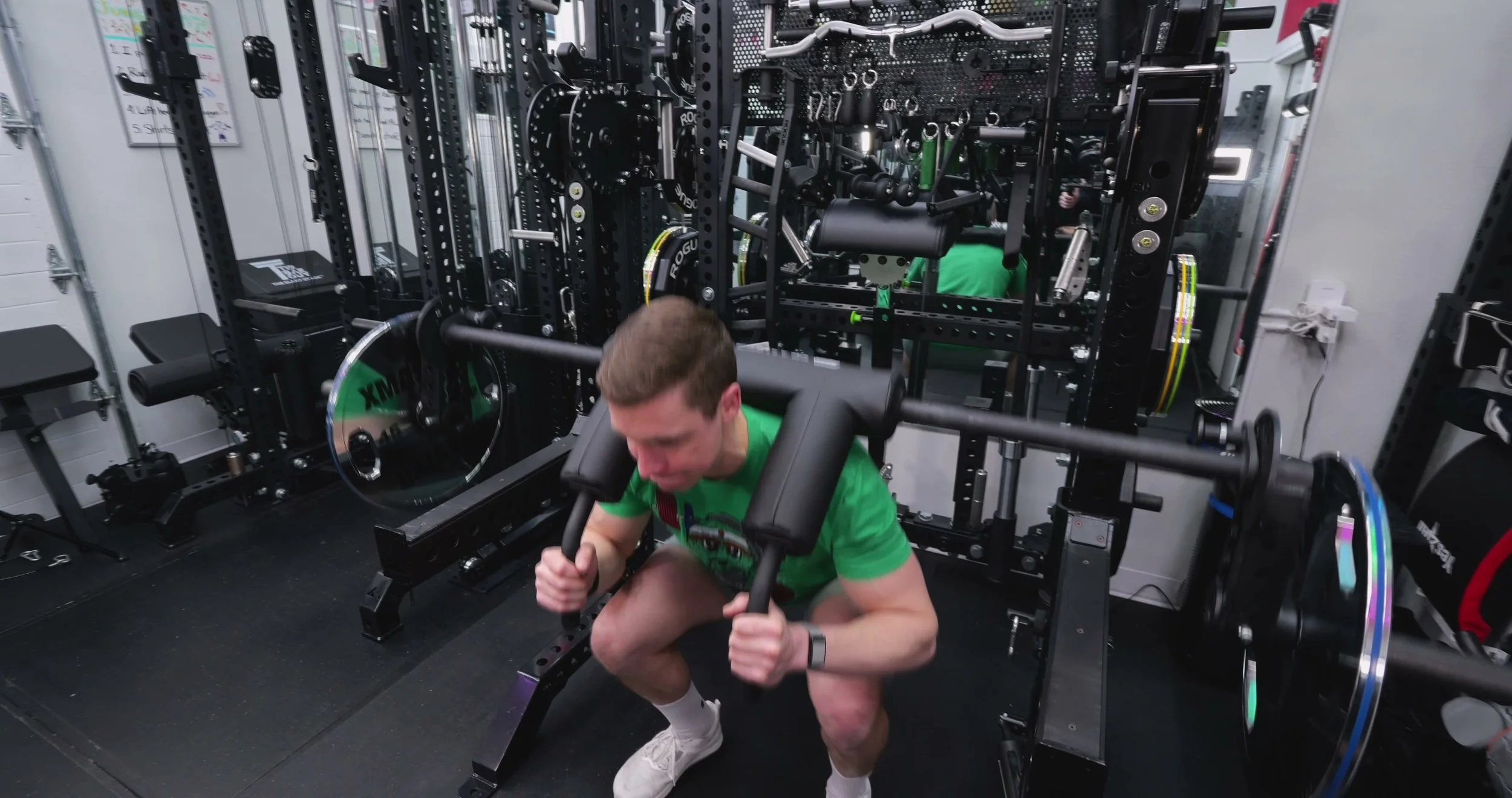
I have had the Transformer Bar for a while now and it has become one of my most-used specialty bars. The main reason is that it solves my shoulder mobility issue during back squats. I cannot comfortably get into a low-bar position anymore without shoulder pain, and the Transformer Bar lets me load my legs heavy without any shoulder stress. The handles sit in front of you and you just grip them — no reaching back, no wrist extension, no shoulder external rotation required.
Beyond the shoulder relief, the different handle positions genuinely change the stimulus. Position 1 (handles straight up) feels like a very upright safety squat bar. Position 3-4 (handles angled forward) shifts the center of gravity forward and makes it feel more like a front squat or a good morning hybrid. I have found about 3-4 positions that I rotate between regularly, and each one hits my legs and back differently enough to justify the variety.
Handle System and Positions
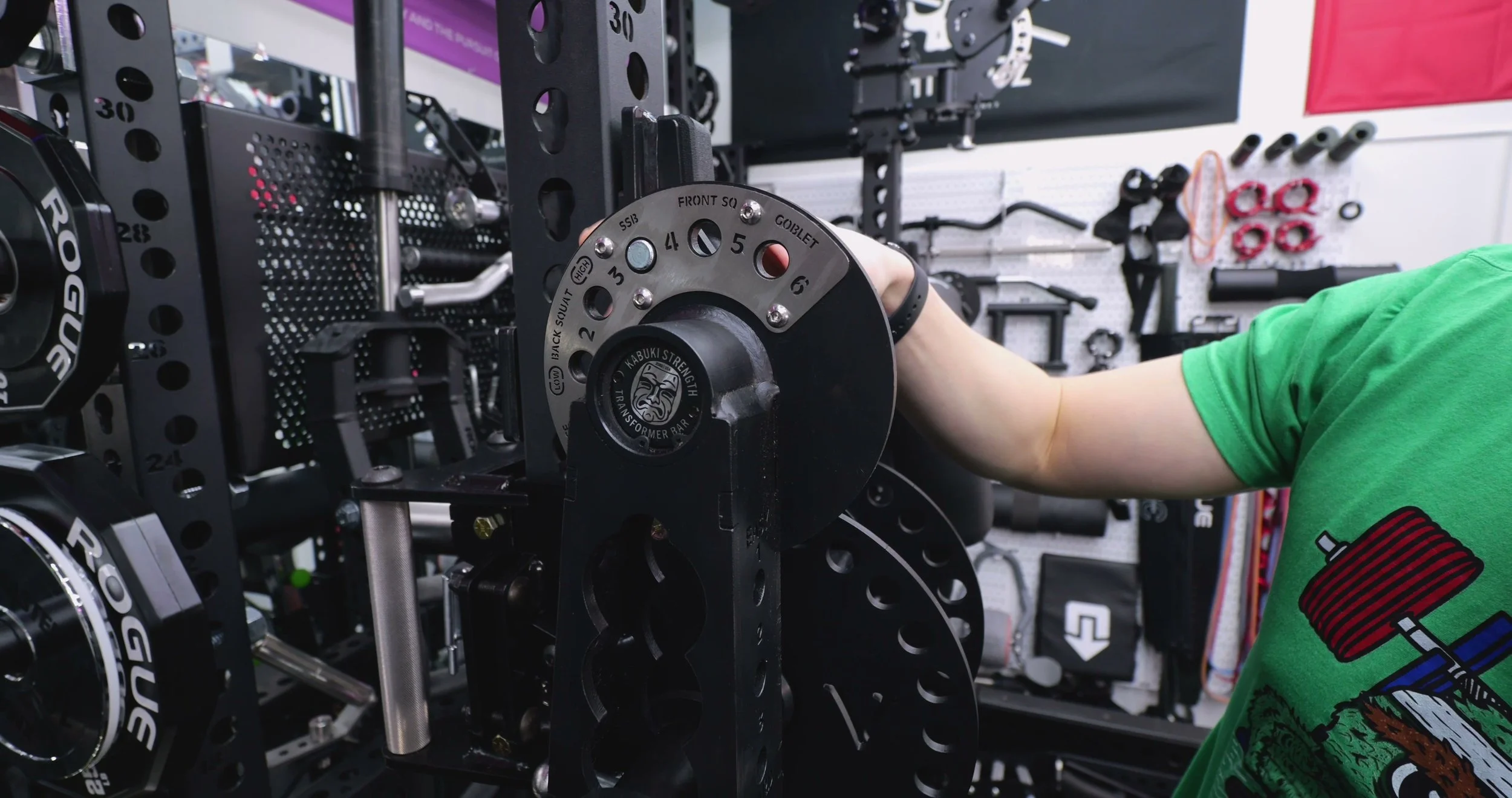
The core of the Transformer Bar is the adjustable handle bracket system. Each handle sits on a rotating bracket that locks into position with a pin. You pull the pin, rotate the handle to your desired angle, and re-insert the pin. It takes about 5 seconds per side to change positions.
The positions range from straight up (most upright squat position, closest to a safety squat bar) to fully forward (most forward lean, closest to a good morning). In between, you get incremental changes that shift the center of gravity and your torso angle. Some positions work better for squats, some for good mornings, some for lunges, and some for pressing movements like overhead press or JM press variations.
The handles themselves are knurled and comfortable. They are long enough that you can grip them at different widths depending on the movement. The locking pins feel solid and have never slipped on me during a set.
Build Quality
This is a Kabuki product, and the build quality reflects that. The bar itself is heavy-duty steel with a quality powder coat finish. The rotating brackets are machined precisely — there is zero slop or play when locked in position. The sleeves spin smoothly and accept standard Olympic plates. The rear pad is removable and dense enough to distribute weight comfortably across your upper back.
At 55 lbs, the bar is heavier than a standard barbell but lighter than most safety squat bars. It racks and unracks normally in any standard power rack. The overall fit and finish is what you would expect from a $700 specialty bar — everything feels intentional and well-made.
Comparisons / Alternatives
Safety Squat Bar (SSB): A standard SSB gives you one position — the fixed camber pushes you forward and loads your upper back. The Transformer Bar can replicate this feel in one of its positions, plus give you 11+ other options. An SSB costs $300-400 and does one thing. The Transformer does many things for $800.
Cambered Bar: A cambered bar shifts the center of gravity below the rack hooks for a different squat feel. The Transformer Bar can approximate this in certain positions. A cambered bar costs $200-300.
Duffalo Bar / Buffalo Bar: These are for people who want a straight bar feel with a slight curve for shoulder comfort. Different purpose than the Transformer — the Duffalo is for people who still want to back squat traditionally but need slight relief.
Front Squat Harness / SSB for Front Squats: Some people use an SSB flipped around for front squat simulation. The Transformer Bar does this more naturally in its forward-leaning positions.
Tradeoffs
$800 is expensive for a specialty bar. You could buy an SSB and a cambered bar for the same money and have two dedicated tools instead of one adjustable one.
Learning curve. It takes time to figure out which positions work for your body and your goals. The first few sessions will be experimentation.
55 lbs starting weight. Heavier than a standard bar, which matters if you are working with lighter loads.
Not a straight bar replacement. If you want to compete in powerlifting with a standard barbell, this does not replace that training. It is a supplemental tool.
Only available through Rogue. Limited retail availability means you cannot easily compare in person before buying.
Who Should Buy
Buy the Transformer Bar if you have shoulder mobility issues that make back squatting painful, if you want one specialty bar that replaces multiple bars, or if you value training variety and want to hit your legs and back from different angles without buying 3-4 separate bars. It is also a great choice for someone who does a lot of good morning variations and wants precise control over torso angle and loading position.
Who Should Skip
Skip the Transformer Bar if you are happy with a standard barbell and have no shoulder issues, if you would rather buy dedicated bars for each purpose (SSB + cambered bar for less total money), or if you are on a tight budget and $700 for a specialty bar is not justifiable. If you only want safety squat bar functionality, a dedicated SSB at $300-400 does that one job and costs half as much.
Final Verdict
The Kabuki Transformer Bar is the most versatile specialty bar I have used. It genuinely replaces multiple bars if you take the time to learn the positions, and the build quality is outstanding. At $800 it is a significant investment, but the math works if you would otherwise buy 2-3 separate specialty bars. For anyone with shoulder issues who still wants to squat heavy, this is one of the best solutions available. It is not for everyone — but for the right person, it is one of those pieces you will use every single training session.
CHECK PRICE — KABUKI TRANSFORMER BAR
Affiliate Disclosure: Some links may be affiliate links, which help support The Jungle Gym Reviews at no extra cost to you.