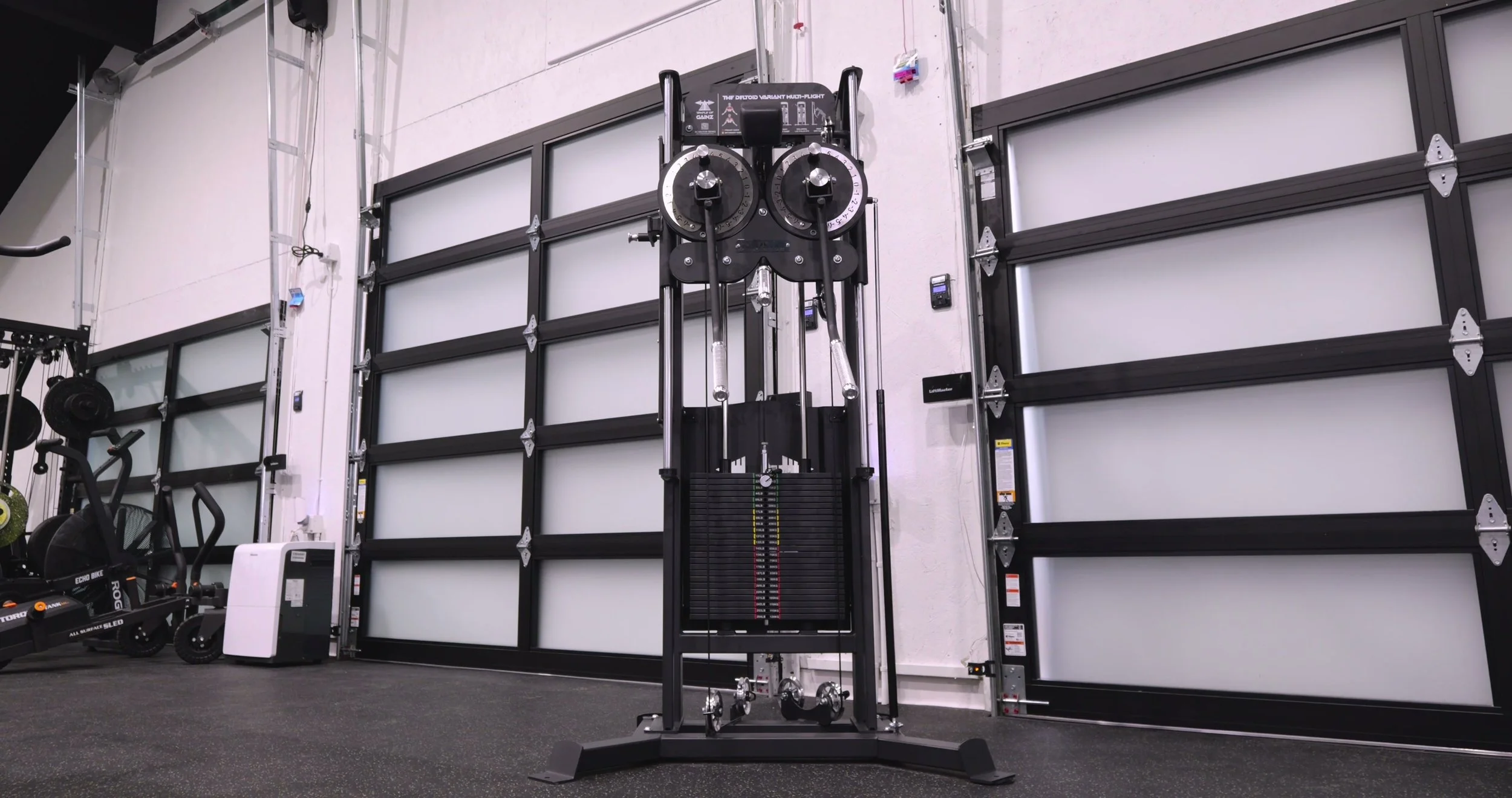
This product was reviewed in house by Michael at the Jungle Gym Reviews.
The Temple of Gainz Selectorized Standing Multi-Flight V3 is a selectorized standing shoulder-and-chest machine that I think is a compelling fit for home-gym lifters who want adjustable lateral raises and chest flies without loading plates. It is not a low-cost accessory, and it should not be bought merely because it can do a long list of exercises. Its real appeal is how quickly I could change the height, starting position, and amount of pre-stretch to make the primary movements feel right for me. For the lifter who has tried dumbbells, cables, or rack-mounted lateral-raise attachments and still wants a dedicated setup, that is meaningful.
Quick Takeaway
I came away most impressed by the lateral raise and standing chest fly. The cable-driven cams made resistance build through the range in a way that felt smooth and natural, while the height adjustment and nearly 360-degree starting positions gave me more control than I expected from a machine aimed first at lateral raises. Rear-delt work also felt very good. Pullovers and curls were useful secondary options, but they are not why I would buy it.
In other words, this is a premium specialty machine with broader capability, not a substitute for every cable station in a gym. If shoulder isolation and chest flies are already priorities, I see real utility here. If they are not, the versatility alone does not make the cost or dedicated footprint automatic.
Quick Specs
Model reviewed: Temple of Gainz Selectorized Standing Multi-Flight Machine Version 3, selectorized weight-stack configuration
Primary movements: Standing lateral raise, chest fly, and rear-delt variations
Weight stack: 120 kg / 264 lb, manufacturer-listed for the selectorized configuration
Starting positions: 30 positions on the sliding assembly, according to Temple of Gainz
Height adjustment: 15 hydraulic-assisted adjustments, manufacturer-listed
Movement arms: Swiveling arms with nearly 360-degree starting positions, according to Temple of Gainz
Head pad: Three-position adjustable pad; it can also be removed, according to Temple of Gainz
Finish currently listed: Black
Reviewed price: $2,299 base price discussed in my video
Where to Buy
Check price from Temple of Gainz below: Use code JUNGLEGYM for 5% off.
My Real-World Experience
In the review, I used the V3 as a standing lateral raise machine first, which is exactly where it makes its case. Rather than loading plates or re-rigging cables, I could select a weight, move the trolley, choose a starting angle, and train. The arms pivot freely, so I could let the path move with me or press them toward the rubber bump stops when I wanted a more fixed path. That combination gave me a lot of ways to fine-tune one basic exercise without turning every change into a setup project.
The resistance curve is the part I noticed most. With 55 pounds selected on the stack, my informal check in the video was roughly 12 pounds at the low point and around 19 pounds near 90 degrees of arm elevation. That is an on-machine observation rather than a manufacturer force specification, but it illustrates the feel: resistance increases through the arc instead of acting like a dumbbell, which has very little effective tension at the bottom. I could create pre-stretch at the start and keep tension on my delts before beginning the rep. The cable travel was smooth throughout my testing, with no grinding or obvious sticking point.
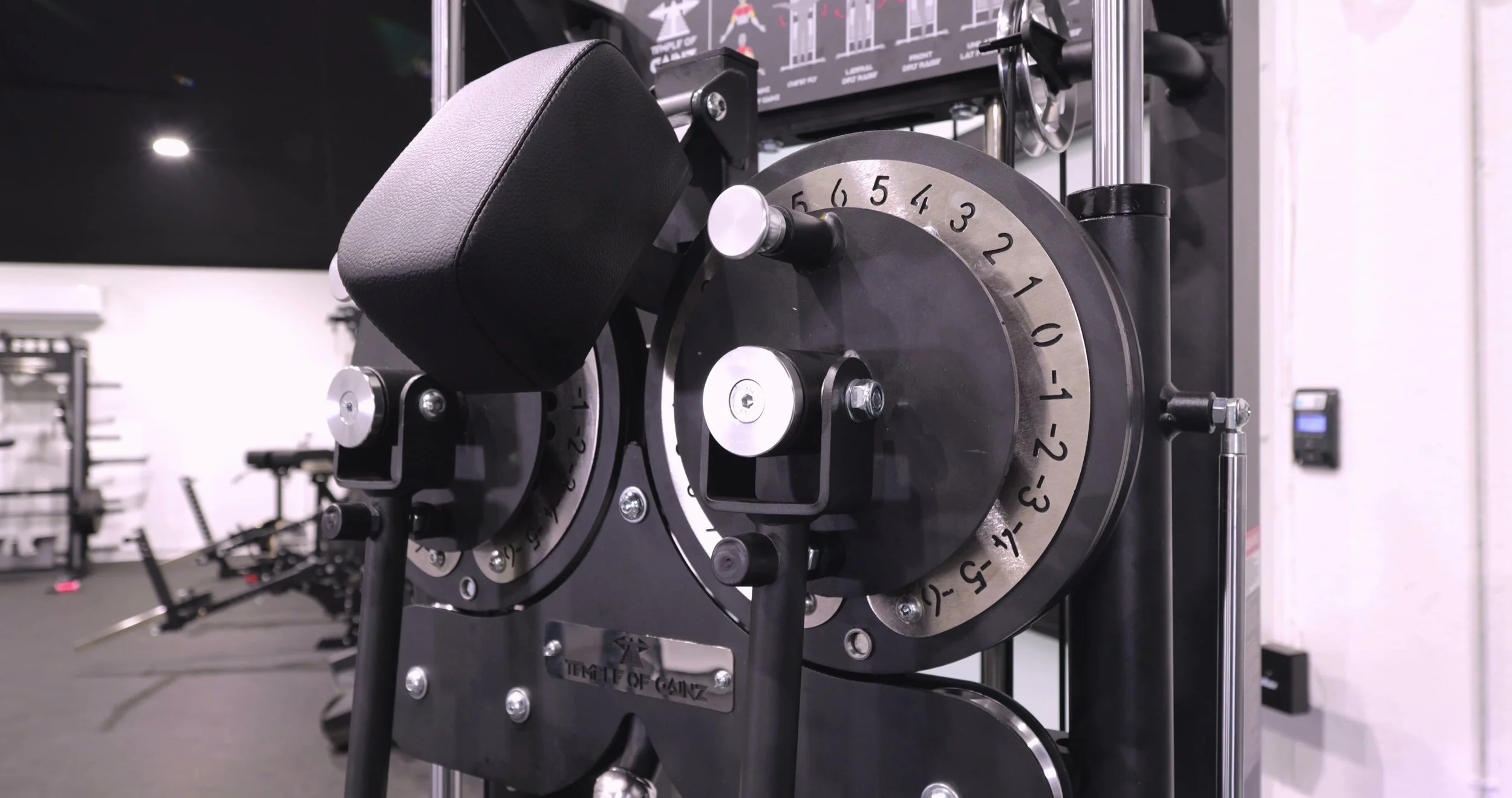
The V3’s height and start-position adjustments are not just feature-list material. For a normal lateral raise to roughly shoulder height, I might move the trolley higher. For a longer range and more upper-trap involvement, I could lower it. I was also able to alter how much tension was present at the bottom by changing the arm’s starting position. Temple of Gainz says Version 3 increased the sliding assembly to 30 starting positions, and that adjustability is the practical reason this machine felt much more adaptable than a fixed, plate-loaded attachment.
Lateral Raises Are the Main Event
The Multi-Flight is sold as a standing lateral raise machine, and that is not an understatement. Dumbbells, cables, and plate-loaded options can all work, but each asks for a compromise: dumbbells provide little tension at the bottom, cables require positioning and attachment choices, and rack-mounted or plate-loaded setups can be slower to adjust. This machine gives a dedicated lateral-raise setup with a selectorized stack and an adjustable path.
I preferred lighter loads for my lateral raises, and the selectorized version gave me plenty of room at both ends. In the review, I noted the machine can go as low as 11 pounds and as high as 264 pounds on the stack. The important point is not that every movement calls for the same loading; it is that I could use a light setting for raises and change it quickly for another movement. The manufacturer cautions that felt resistance varies with the cam, setup, user, range of motion, technique, and other factors, so stack numbers should not be compared directly with a dumbbell number.
The handles are deliberately fairly passive rather than aggressively grippy. I understand that choice: as the arm and wrist rotate, a handle that can shift is less likely to fight the wrist angle or scrape up a callus. Personally, I would lean toward rubber handles for their feel, even though the reviewed aluminum handles look good. I also would like to see an optional back-of-hand pad or cuff-style support in a future version, because that could reduce how much grip matters at certain points in the arc.
Chest Flies and Secondary Movements
I expected the chest fly to be a lesser add-on. It was not. By changing the height and where the arms begin, I could choose the starting stretch and change the line of pull. I found the standing chest fly fantastic, and unilateral work let me use the trolley handle to brace my torso and reach farther across my body than I could bilaterally.
There is a small operational caveat. The handles are free-swinging and do not lock open. I learned to manage them deliberately when getting in and out or changing settings rather than letting an arm fall into tension on the stack. It was not a deal-breaker for me, in filming, I had not had a handle hit me in the head, but it is the sort of handling detail a buyer should understand before treating this as a frictionless fly station.
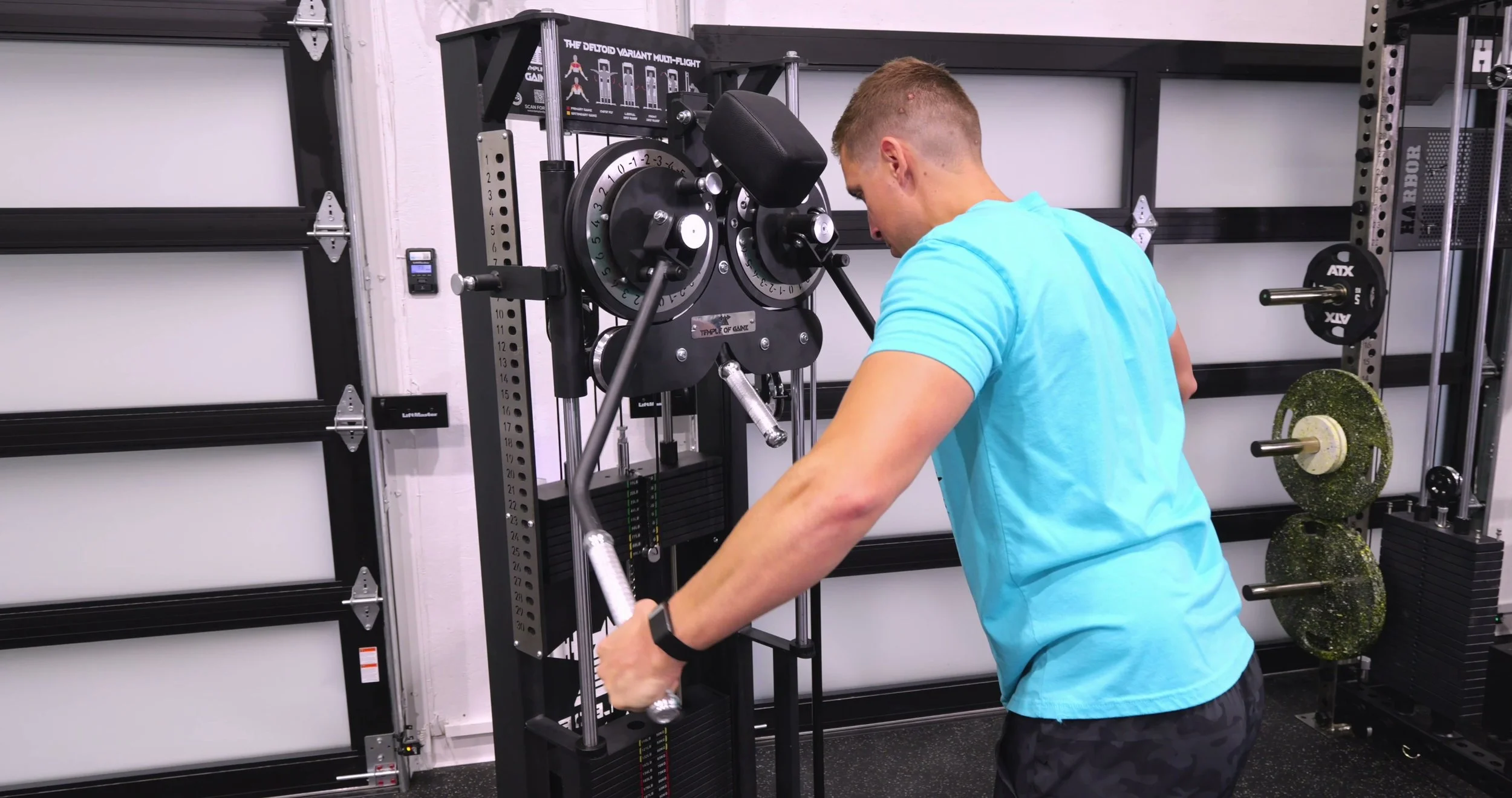
Rear-delt variations belonged with the primary movements in my experience, especially when I used the adjustable head pad for a more supported bent-over position. Temple of Gainz lists the three-position head pad as a V3 update, and I appreciated having the option even though I did not need to move it often. With attachments such as straps or wrist cuffs, I also experimented with unilateral pullovers, curls, and triceps extensions. Those movements worked and felt good enough to expand the training menu. My ranking would put chest fly, lateral raise, and rear-delt work in the top tier; pullovers and curls were more like useful B-tier additions.
Configuration and Upgrade Notes
The machine I reviewed used the selectorized stack. Temple of Gainz currently lists that configuration with a 264-pound stack and also offers a separate VOLTRA integration configuration; the VOLTRA device itself is not included. Do not assume the configuration options have the same parts, price, cable routing, or operating requirements. The manufacturer says the VOLTRA-only setup cannot be used without a connected VOLTRA, so buyers should read the product page and its digital-resistance guidance before choosing that version.
My review unit had the optional aluminum pulleys. They were smooth, but I would not tell most buyers to spend extra for them immediately. In the video, I estimated that option added about $200, and I do not think the material alone is what determines smoothness. Cable routing, bearings, cable condition, and pulley configuration matter. The standard nylon-pulley version was my recommendation for most people; use it first and consider an upgrade later only if it addresses a real need.
Comparisons / Alternatives
Dumbbells: Dumbbells are the simplest and least expensive way to train lateral raises, but their resistance profile does not provide much tension at the bottom. The Multi-Flight makes more sense when you want a guided, adjustable cable feel and will use it often enough to justify a dedicated machine.
Functional trainers and cable stations: Cables can deliver excellent lateral raises and flies, and an adjustable cable station covers many more categories of exercise. I would choose a cable station first if I still need broad full-body capability. The Multi-Flight is for the lifter who values a faster, more repeatable setup and the particular feel of its cams and arms for shoulder and chest isolation.
Rack-mounted or plate-loaded lateral-raise machines: These can save money and preserve a smaller equipment budget, but they generally require plate handling and can make height changes more involved. I see the selectorized Multi-Flight as the higher-cost, more dedicated option for someone who wants easier adjustments, a built-in stack, and stronger performance across more than one movement.
Tradeoffs
The selectorized convenience comes with a premium purchase price. The $2,299 base price cited in my review is historical; confirm today’s price and freight before buying.
This is still a dedicated machine. It is compact relative to many full-size machines, but it takes floor space that dumbbells or a cable attachment do not.
The handles do not lock in an open position for flies, so changing setup or weight calls for some care.
The many adjustments are a strength, but they reward a user willing to experiment with height, start position, and body angle rather than expect one fixed setting.
The optional aluminum pulleys and alternative VOLTRA configuration complicate the buying decision; neither should be selected on assumption alone.
Who Should Buy This
Home-gym lifters who prioritize lateral raises, rear delts, and chest flies and want a selectorized alternative to plate-loaded equipment.
People who value quick changes between movements, weights, heights, and starting positions.
Lifters who have not been satisfied with the bottom-range tension or setup compromises of their current lateral-raise options.
Buyers with a defined training space who will use the machine often enough to make a specialized upper-body station worthwhile.
Who Should Skip It
Anyone building a first home gym on a tight budget; dumbbells or a versatile cable station will usually cover more needs first.
Lifters who mainly want one low-cost lateral-raise movement and are comfortable loading plates or using cables.
Buyers who do not have a clear place for a freestanding machine or who prefer minimal equipment.
Anyone looking for a fully locked-in fly path; the free-swinging handles are intentional but not for every preference.
Common Questions
Is the Multi-Flight V3 only for lateral raises?
No. Lateral raises are its strongest use in my experience, but chest flies and rear-delt work also felt excellent. The adjustable start points can also support unilateral pullovers, curls, and triceps extensions, though I would treat those as bonus movements rather than the reason to purchase it.
Does the 264-pound stack feel like 264 pounds in the hands?
Not necessarily. The machine uses rotating cams and cable routing, and Temple of Gainz notes that felt resistance varies with setup, user, range, technique, and other factors. In my informal check, resistance increased across a lateral-raise rep, which is the behavior that matters more here than a direct stack-to-dumbbell comparison.
Should I pay for the aluminum pulley upgrade?
I would start with the standard nylon-pulley configuration in most cases. The reviewed machine was very smooth, but I do not think aluminum alone guarantees a meaningful improvement. Consider it only if you have a specific reason after confirming the current option price and availability.
Final Verdict
The Temple of Gainz Selectorized Standing Multi-Flight V3 is a highly capable specialty machine for lateral raises, and it earns its broader “multi-flight” name because the chest fly and rear-delt variations are genuinely good, not merely possible. Its value is in the adjustable start positions, height changes, selectorized stack, and resistance feel. It is expensive compared with basic alternatives, so I would recommend it to the shoulder-and-chest-focused home-gym owner who will use those strengths consistently, not to every buyer looking for more exercises.
CHECK PRICE — TEMPLE OF GAINZ SELECTORIZED STANDING MULTI-FLIGHT V3. Use code JUNGLEGYM for 5% off.
The product featured in the companion video was provided at no cost for review. This article contains affiliate links. If you buy through them, The Jungle Gym Reviews may earn a commission at no additional cost to you; opinions remain my own.