GetRXd Tornado Arms 2.0 Review (with Voltra Integration)
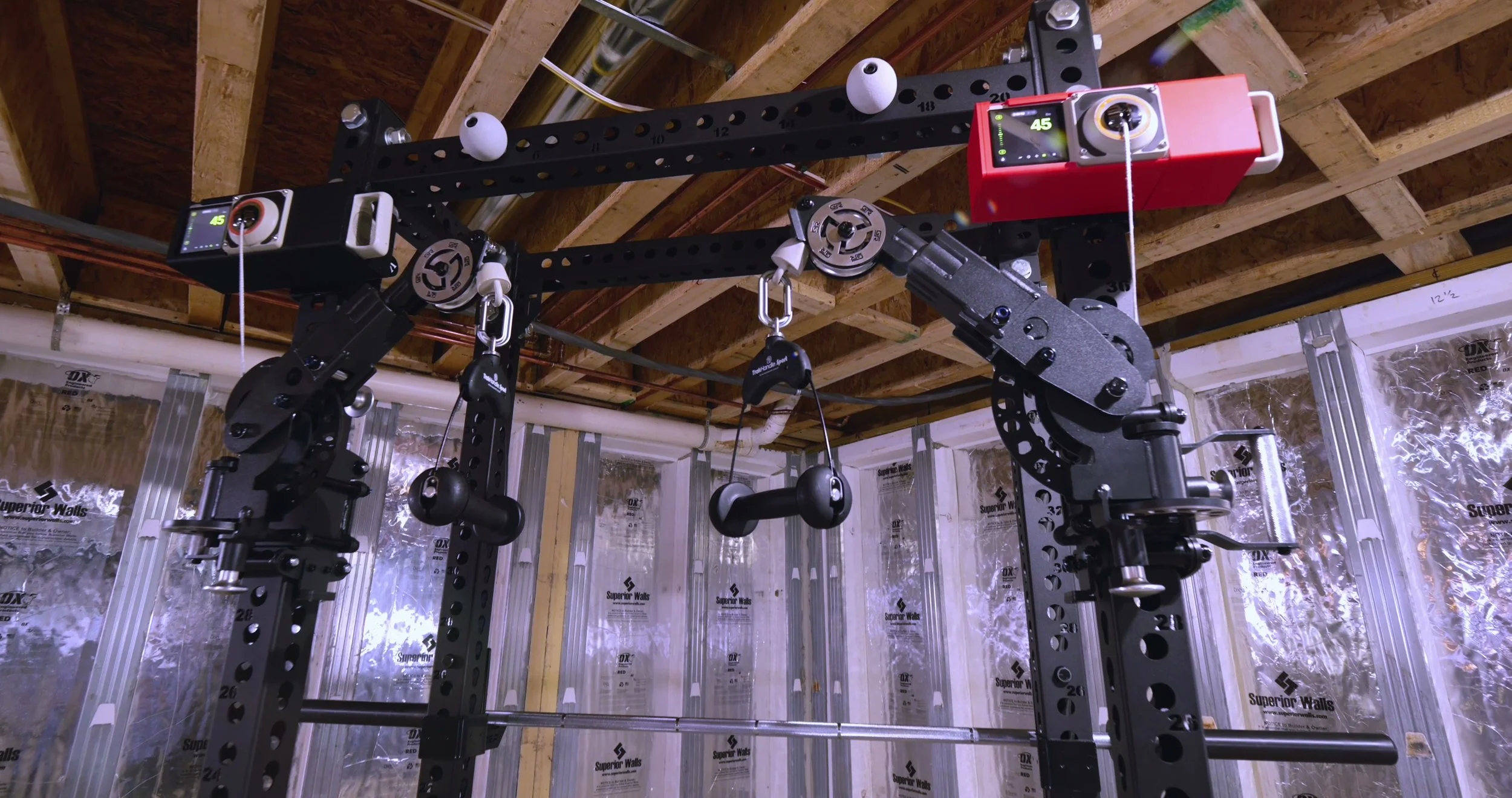
The GetRXd Tornado Arms 2.0 rack-mounted articulating arms are a functional-trainer attachment I recommend for home gym owners who want compact, adjustable cable angles and are comfortable with a bit of DIY when integrating electronic units like the Beyond Power Voltra. Now, GetRXd has released the Tornado Arms 2.0, an upgraded version that addresses the biggest complaint of the original: the friction-heavy trolley. In this review, I will break down the new 2.0 upgrades and show you how I have integrated these arms with dual Beyond Power Voltra units to create a compact, electronic functional trainer.
Quick Takeaway
In my testing, the GetRXd Tornado Arms 2.0 show a clear quality-of-life improvement over the original. The addition of four internal rollers makes sliding the trolleys up and down the uprights far easier, I routinely moved the trolley one-handed during setup. They’re designed around a mechanical weight stack but can be powered by electronic resistance units like the Beyond Power Voltra. That DIY Voltra setup is space-efficient and versatile, but it requires frequent micromanagement of cable length and creates conditions that can accelerate wear on the Voltra cable if not mounted perfectly. It’s a useful approach for certain home gyms, but expect tradeoffs.
Quick Specs
Price: ~$500 (for the arms alone)
Compatibility: Designed for GetRXd racks, but fits most 3x3 racks with 1" holes
Adjustability: Vertical trolley movement + 7 horizontal angle adjustments (180-degree range)
Key Upgrades (2.0): Four internal rollers, tighter tolerances, grooved front pulley, optional bump stop
Power Source: Requires a weight stack or electronic resistance unit (e.g., Voltra)
Where to Buy
You can check the current price directly through GetRXd below.
The 2.0 Upgrades: Are They Worth It?
If you are buying a new GetRXd rack or upgrading an existing one, the 2.0 arms are worth the extra cost over the 1.0 version if you value smoother trolley operation. The biggest improvement is the four internal rollers inside the trolley bracket. The original arms used UHMW plastic pads that created a lot of friction, requiring two hands and a lot of effort to move the heavy arms up and down the uprights. The new rollers make that a one-handed, much smoother operation in practice.
GetRXd also tightened the tolerances on the bracket, which lets you bolt it down to reduce side-to-side play. The grooved front pulley helps keep the cable centered when pulling from extreme angles, and the optional bump stop prevents the trolley from hitting the bottom bolts.
The Ultimate DIY Setup: Voltra Integration
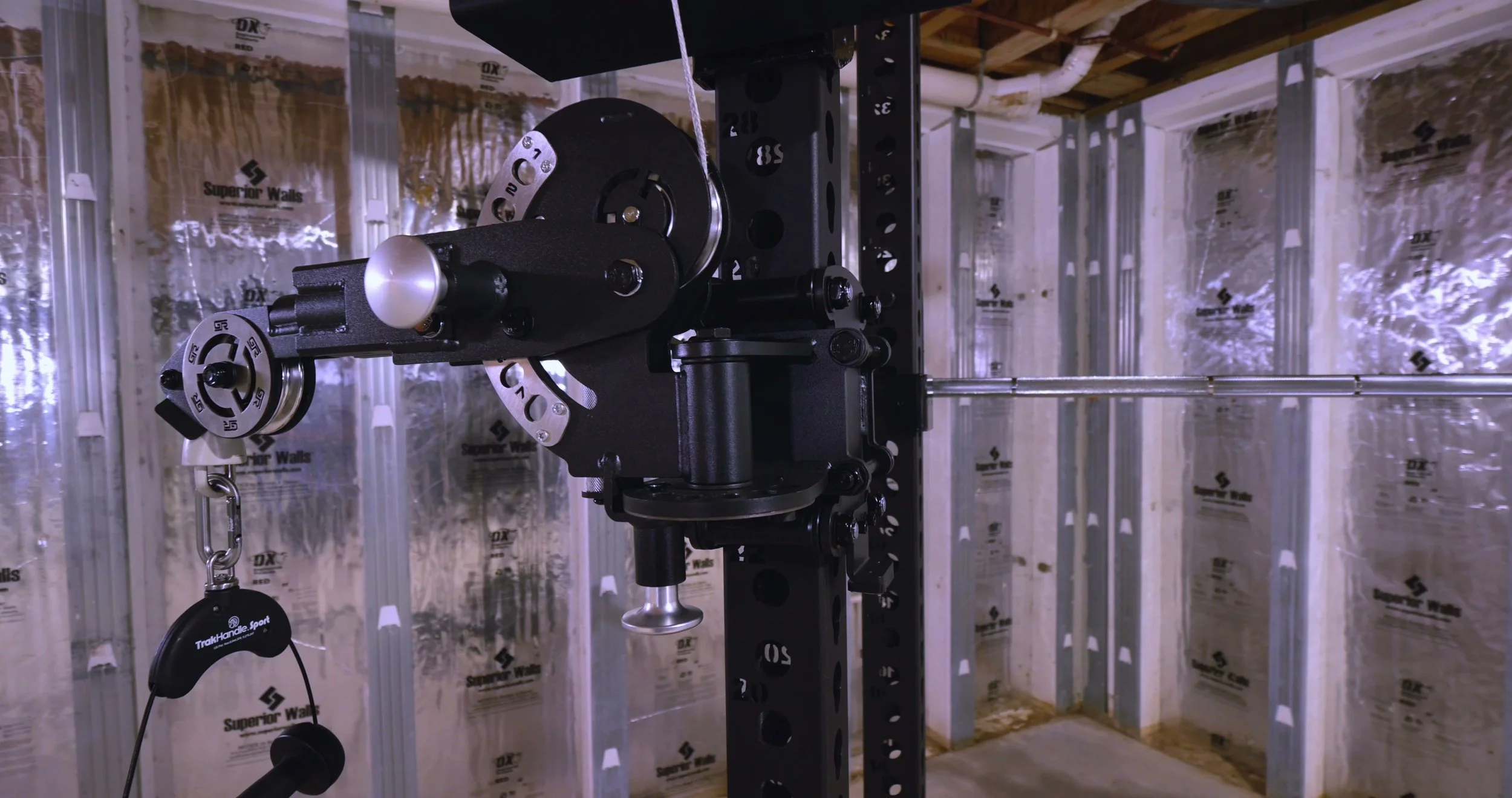
Because I’m building a new studio with limited floor space, I chose to power the Tornado Arms using two Beyond Power Voltra units instead of a mechanical weight stack. That created a fully articulating, 200-pound-per-side functional trainer while keeping the footprint minimal.
For the integration, I mounted the Voltras to the top crossmembers of my rack using Darko Lifting MagPin mounts. I unthreaded the Voltra cables, fed them through the Tornado Arms’ pulley system, and reattached the cable ends. The initial setup takes about five minutes per side, so the Voltras become semi-permanently attached to the arms in my configuration.
The Quirks of the Voltra + Tornado Combo
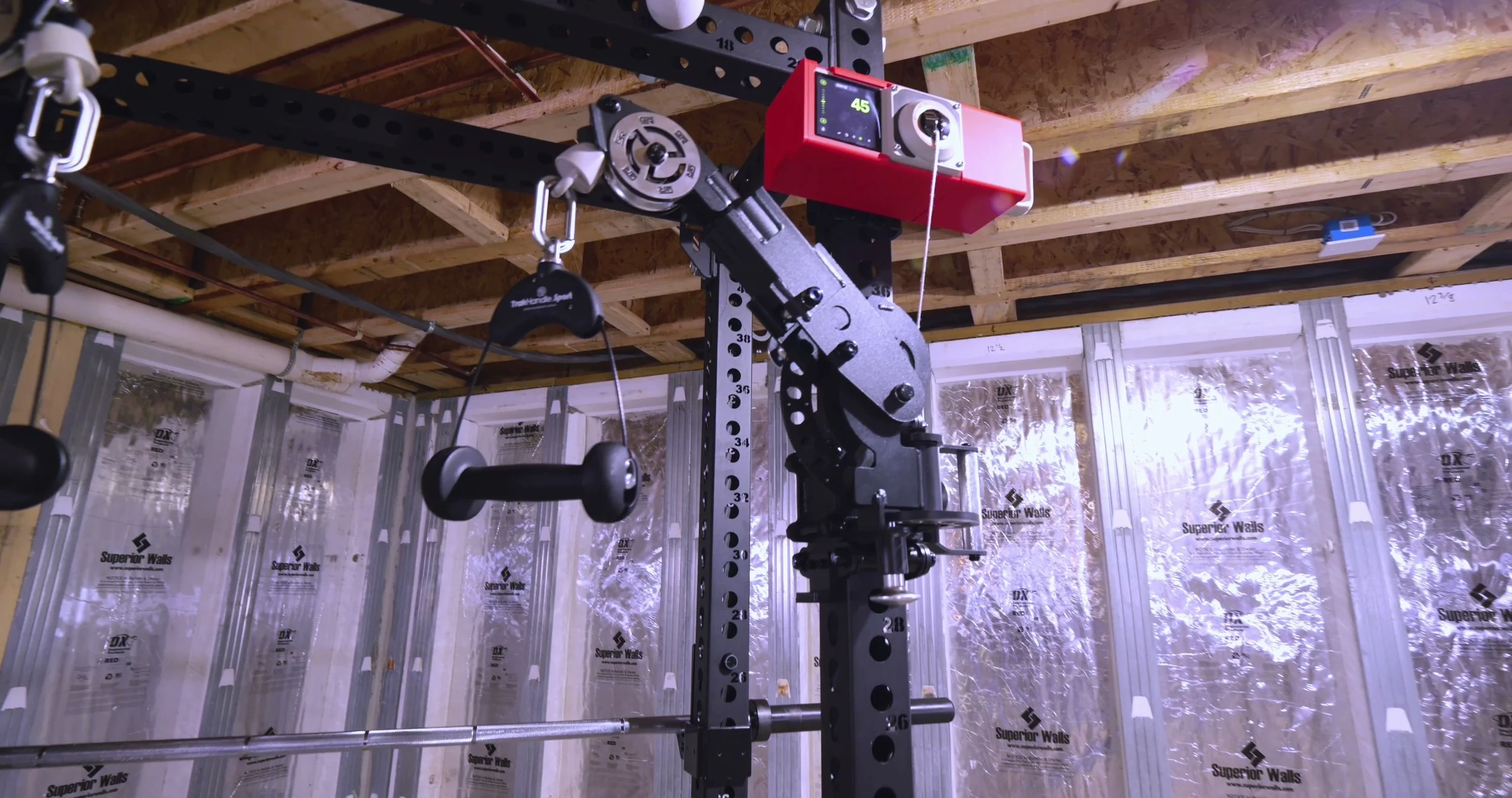
In hands-on use, the Voltra + Tornado combo is functional but not seamless. Because the Voltra constantly monitors cable length, you need to micromanage it when you move the Tornado Arms. If you move an arm from the top of the rack to the bottom you create slack in the cable. In testing I had to disengage the weight, pull the cable so the Voltra could relearn the new length, and then re-engage the weight to avoid the cable jumping off the pulleys.
Mounting matters: depending on how the Voltras sit relative to the arm, the cable can rub the Voltra’s plastic housing when pulling from certain angles. That rubbing will cause premature wear on the Kevlar cable if not addressed. Also, because the Voltra has a finite cable length, moving the arm all the way to the bottom uses a lot of that length — attempting a long-range movement like a standing chest fly from the bottom position can run you into the cable’s limit before the rep is finished.
Comparisons / Alternatives
Standard Functional Trainers: A dedicated functional trainer (like the REP FT-5000) is easier to use because you don’t have to manage electronic cable lengths or worry about rubbing. However, it takes up a lot more floor space and doesn’t give you the same horizontal adjustability as the Tornado Arms.
Ares / Athena Attachments: Rack-mounted weight stacks are a solid middle ground and are fixed in place, making them simpler day-to-day. The Tornado Arms’ ability to swing the pulleys inward for a narrower starting position is better for movements like chest flys, though.
Tradeoffs
Voltra integration is tedious. Having to recalibrate the cable length every time you adjust the arm height becomes annoying during complex sessions.
Cable wear. If you don’t mount the Voltras cleanly, the cable will rub against the housing and fray.
Rack stability. Pulling 200 pounds per side on a lightweight or unanchored rack can tip or shift it. Bolt the rack down or weigh it with plates.
Who Should Buy
Buy the GetRXd Tornado Arms 2.0 if you want maximum adjustability from a rack-mounted cable solution and you value saving floor space. If you already own Voltras and are comfortable with semi-permanent mounts and routine cable management, this setup can deliver a compact, high-function solution.
Who Should Skip
Skip this specific Voltra integration if you want a plug-and-play experience. The need to recalibrate cable lengths will frustrate lifters who just want to move between exercises quickly. If you have the space, a traditional mechanical weight stack is a smoother, lower-maintenance option.
Common Questions
Q: Can I use the Tornado Arms 2.0 with any 3x3 rack?
A: Yes—the arms fit most 3x3 racks with 1" holes, but you should confirm clearance for your rack’s top crossmembers and mounting points. I mounted mine to GetRXd uprights with MagPin mounts on the crossmembers and that layout worked well.
Q: How often will I need to recalibrate the Voltra cables when moving the arms?
A: Expect to recalibrate whenever you move the arm significantly (e.g., top to bottom). The process is manual: disengage the weight, pull the cable so the Voltra relearns the new length, then re-engage. I did this multiple times while testing and it’s a real time sink during sessions with lots of height changes.
Q: Will the Voltra cable wear out faster with this setup?
A: It can, if the units are not mounted to avoid contact with the Tornado Arms’ pulleys or housing. During my testing I observed that imperfect routing leads to rubbing against plastic and accelerated fraying, so take time to align the Voltra housing and use protective routing where possible.
Final Verdict
The GetRXd Tornado Arms 2.0 are a well-executed update that largely fixes the trolley friction issue from the original. The internal rollers and tighter tolerances make arm adjustments easy in daily use. Powering them with Beyond Power Voltras creates a compact, electronically driven functional trainer, but it adds notable operational overhead: repeated cable recalibration, potential cable wear, and careful mounting. For most users who want reliability and low maintenance, pairing the Tornado Arms with a mechanical weight stack is the more practical choice. For space-constrained, tech-oriented setups where you accept the tradeoffs, the Voltra integration is viable and interesting.
CHECK PRICE — GETRXD TORNADO ARMS 2.0
Affiliate Disclosure: Some links may be affiliate links, which help support The Jungle Gym Reviews at no extra cost to you.