Fringe Sport Kodiak Review
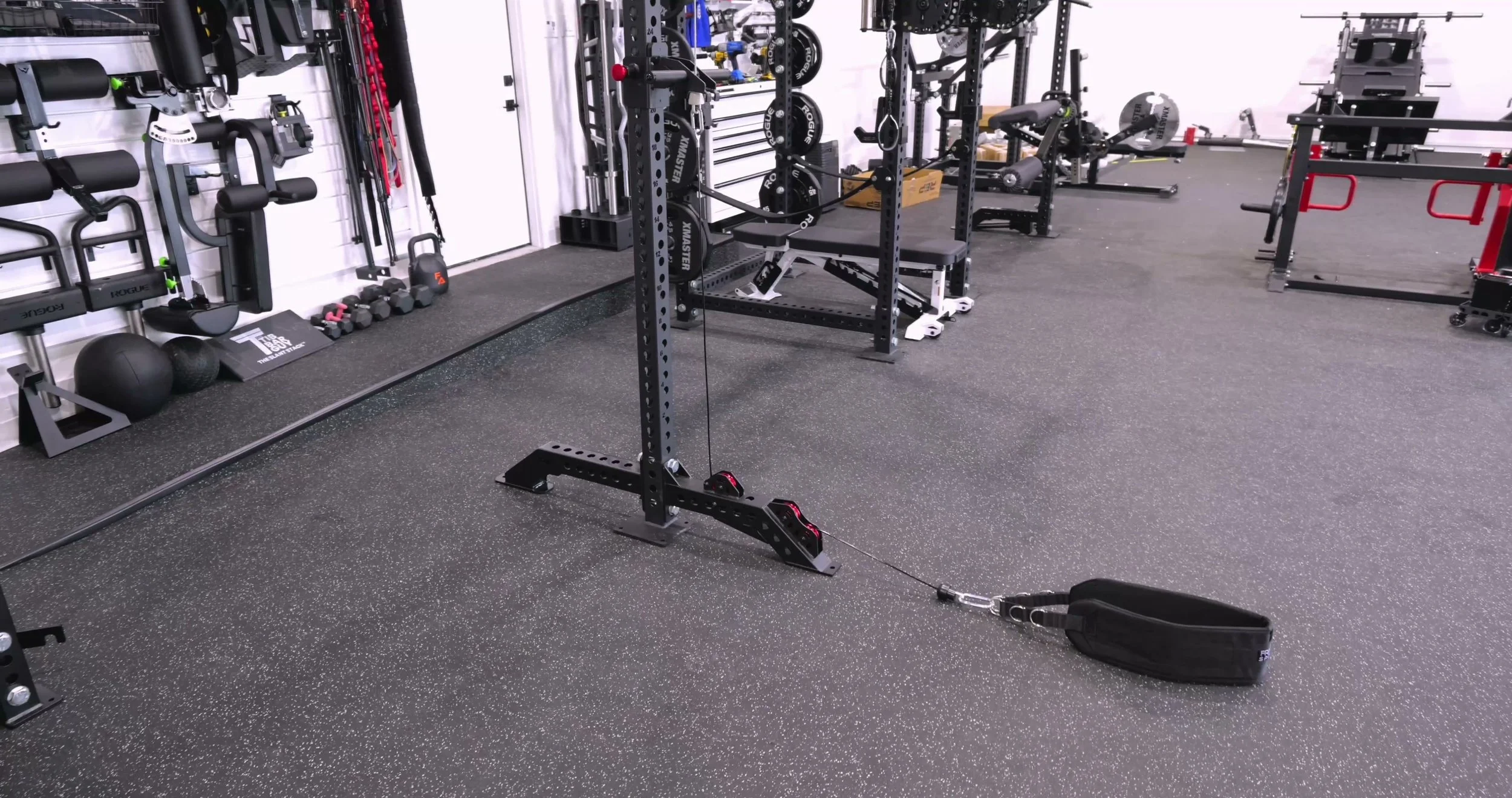
The Fringe Sport Kodiak is a rack-mounted cable belt squat attachment, and after testing it I find it a practical, affordable option for lifters with a top-down cable system who want an easier way to get into deep belt squats without buying a dedicated machine. By combining an integrated front foot pulley system with a flip-down handle and weight stopper, the Kodiak lets you start and finish sets from a standing position rather than awkwardly shimmying into the bottom of a squat. It works with Fringe's cable systems and similar top-down setups, though there are loading quirks you need to understand before buying.
Quick Takeaway
The Kodiak offers good value at $349: the low cable exit and stopper handle make belt squats easier to set up and allow for a deeper range of motion than most crossmembers. The flip-down handle holds the load so you can clip into your belt from a standing position, then flips out of the way to let you squat. The main tradeoff is loading logistics on plate-loaded systems—you'll probably need to hook the empty cable and then add plates—so plan for that. If you have a top-down cable or an electronic resistance system, the Kodiak is a solid, space-efficient way to add belt squats to your rack.
Quick Specs
Price: ~$349
Type: Rack-mounted cable belt squat attachment
Components: Front foot extension with integrated pulleys, adjustable flip-down handle/stopper
Compatibility: Requires an existing top-down cable system on your rack
Key Feature: Weight stopper allows starting the movement from a standing position
Range of Motion: Excellent (cable exit point is ~5 inches from the floor)
Where to Buy
You can check the current price directly through Fringe Sport below.
My Real-World Experience
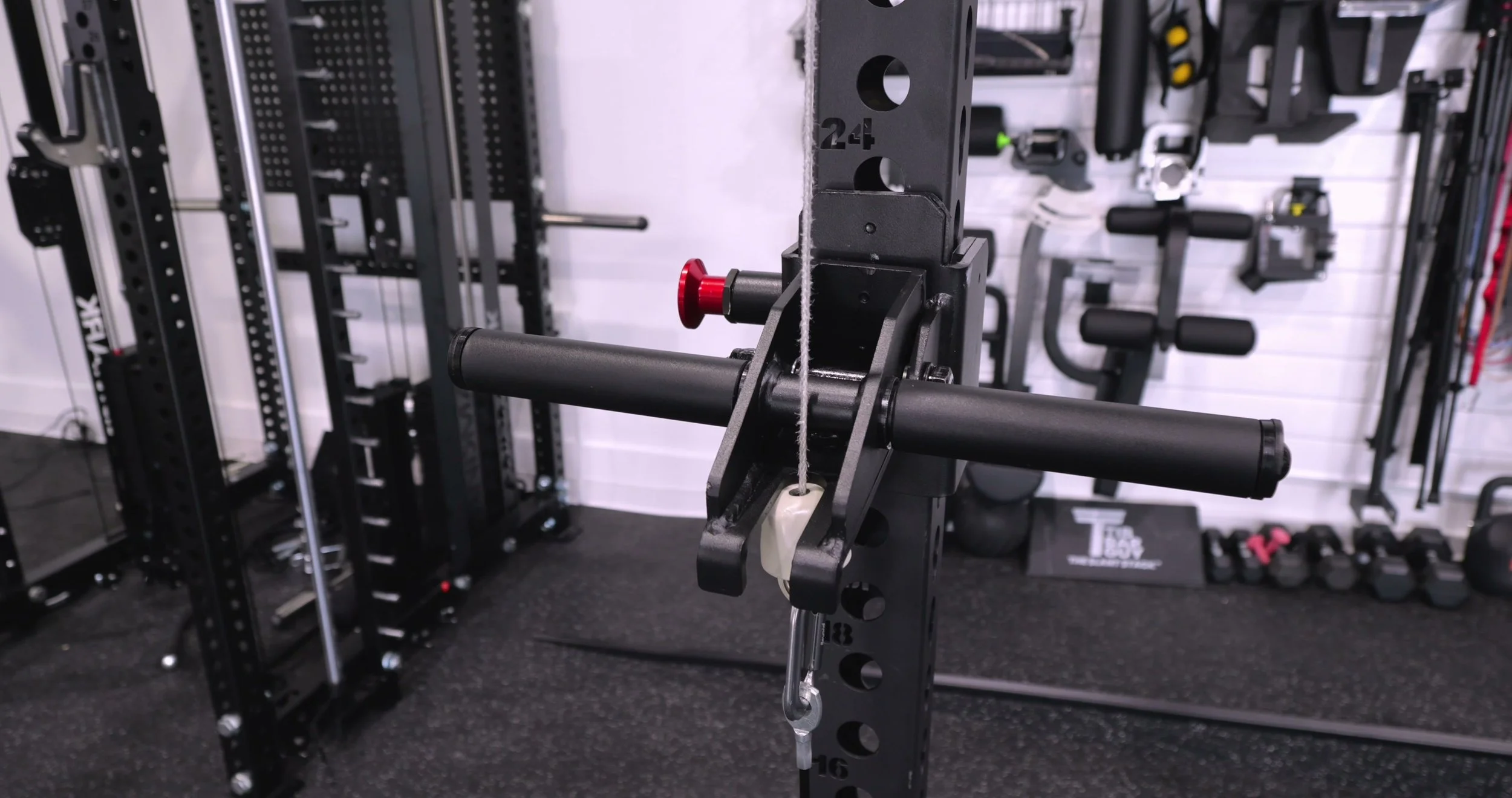
I tested the Kodiak mounted to a rack with a Beyond Power Ultra cable system. The design is a true two-part system: a front foot extension with the pulleys built in, and the flip-down handle/weight stopper that holds the cable for you. In practice the workflow is straightforward—I pull the cable down, hook the ball end under the stopper lip on the handle, stand up, clip my belt into the hook, and then stand tall so the handle flips down and the weight engages. That sequence made getting into sets noticeably easier than traditional cable belt squats where you have to crawl into the bottom of the movement.
During testing I ran multiple sets of belt squats to assess depth and stability. The low pulley exit (about five inches off the floor) let me hit full depth without the cable bottoming out. The pulleys run smoothly and the rotating handle is comfortable to grip when stashing the cable. I also noticed the practical tradeoffs: when using heavier loads in the 200–300 lb range, the front foot lifts a little due to the lever created by pulling weight forward. Fringe Sport includes a hole to anchor the foot to concrete, which I tried and found reduced that float. If you don't want to anchor the foot you'll likely see a small amount of movement on heavy sets, but it's not unsafe on a stable rack.
Loading is the other real-world wrinkle. For plate-loaded cable systems you can't easily pull large weights down by hand to engage the stopper, so I ended up hooking the empty cable into the stopper and then adding plates to the weight horns. That works, but loading the carriage while it's suspended can feel awkward depending on your setup. With an electronic resistance system like the Beyond Power Ultra this issue disappears—you just set the resistance after you clip in.
Range of Motion and Stability
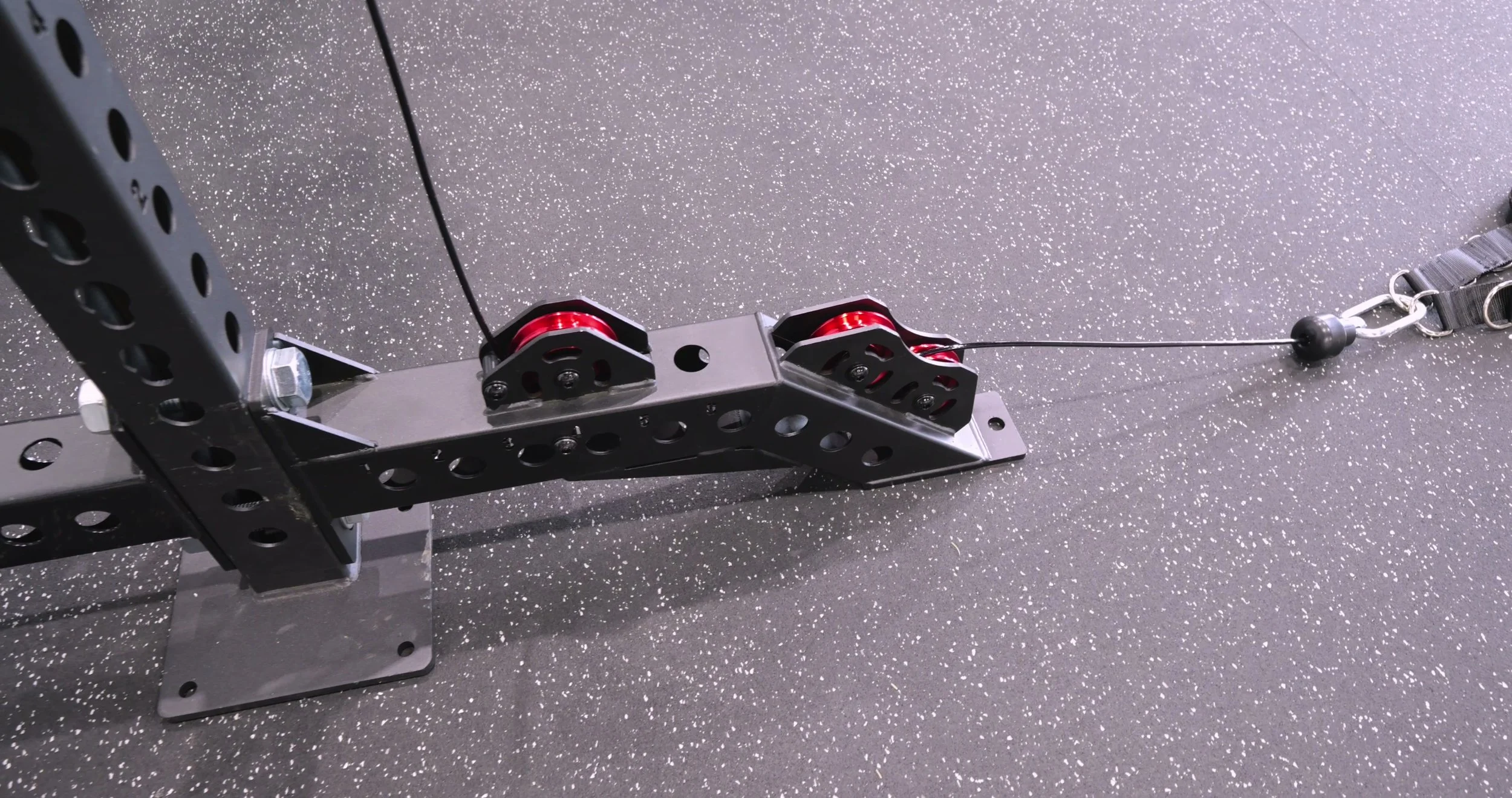
The other major benefit of the Kodiak is the range of motion. Because the pulleys are built directly into the front foot extension, the cable exits very close to the floor—around five inches up. Most rack-mounted belt squats or crossmembers sit higher, which limits how deep you can squat before the weight stack bottoms out. With the Kodiak, you can get deep without issue.
The front foot also adds some stability to your rack, which is helpful if you have a half rack or a narrower setup. However, because the pull is forward of the rack's base you create a lever. With heavier loads I've seen the front foot lift slightly; anchoring it to concrete reduces that. It's not something that will tip over a heavy power rack, but it's a practical consideration for heavier users who want a completely fixed feel.
The Loading Quirk
The biggest limitation of the Kodiak is how you load it, specifically if you are using a plate-loaded cable system. To use the stopper mechanism, you have to pull the cable down and hook it in. If you want to squat 300 pounds, you cannot easily pull 300 pounds down by hand to hook it into the stopper.
The practical workaround is to pull the empty cable down, hook it into the stopper, and then load your plates onto the weight horns. This works fine, but it means you are loading plates while the carriage is suspended, which can be slightly awkward depending on your setup. If you are using an electronic resistance system like the Beyond Power Ultra, this is a non-issue because you just dial in the resistance after you are in position. But for traditional plate-loaded or selectorized stacks, plan for the loading logistics.
Build Quality
As is typical with Fringe Sport, the Kodiak prioritizes function and value over premium aesthetics. The powder coat is basic, and the welds aren't aimed at showroom looks. At $349 it doesn't need to be pretty—what matters is the function, and the pulleys are smooth, the rotating handles are comfortable to grip, and the parts that move do so reliably. It does what it is supposed to do without adding a lot of unnecessary cost.
Comparisons / Alternatives
Fringe Sport Mammoth Belt Squat: If you do not have a cable system on your rack, the Mammoth is Fringe Sport's plate-loaded, lever-style belt squat attachment. It costs about the same as the Kodiak but operates on a pendulum rather than cables. It is a good alternative if you prefer plate-loaded levers.
Dedicated Belt Squat Machines (e.g., Rogue Rhino): A dedicated machine will offer the smoothest experience and easiest loading, but it will cost significantly more (often over $1,000) and take up a lot more floor space. The Kodiak delivers similar functionality for a fraction of the price and footprint if you already have a compatible cable system.
Who Should Buy
Buy the Fringe Sport Kodiak if you already have a top-down cable system on your power rack and want to add heavy, deep belt squats to your routine without the awkwardness of starting from the bottom. It's a clever, cost-effective attachment that meaningfully improves the cable belt squat workflow for home gym users with compatible setups.
Who Should Skip
Skip the Kodiak if your rack's cable system pulls from the bottom rather than the top, as it will not be compatible. You should also skip it if you do not want to deal with the slight logistical annoyance of loading plates after the cable is locked into the stopper, or if you strongly prefer the feel of a lever-style belt squat over a cable-driven one.
Common Questions
Will the Kodiak work with bottom-pull cable systems?
No. The Kodiak requires a top-down cable system because the pulleys and stopper are designed around a cable that feeds from above. If your rack only has bottom-pull cables, consider a lever-style attachment instead.
Do I have to anchor the front foot?
Not strictly, but if you plan to use heavier loads (200–300+ lbs) you'll likely notice the front foot lift slightly. The Kodiak includes an anchor hole for concrete; anchoring reduces that movement and gives a firmer feel.
How do I load heavy weights with the stopper engaged?
For plate-loaded systems, hook the empty cable into the stopper first, then add plates to the weight horns. It can feel awkward depending on your setup but it works. With electronic systems like the Beyond Power Ultra, you can just set the resistance after clipping in.
Final Verdict
The Fringe Sport Kodiak is a practical, well-thought-out solution for adding belt squats to a rack that already has a top-down cable system. For $349 you get a low cable exit, a usable stopper/handle that makes getting into position far easier, and a compact footprint. The main real-world downsides are the plate-loading logistics and the potential for slight front-foot movement under heavy loads—both manageable if you plan for them. If you want deeper cable belt squats without buying a full machine and you have a compatible cable system, the Kodiak is worth considering.
CHECK PRICE — FRINGE SPORT KODIAK
Affiliate Disclosure: Some links may be affiliate links, which help support The Jungle Gym Reviews at no extra cost to you.