Rogue Monster Lever Arms 2.0 Review
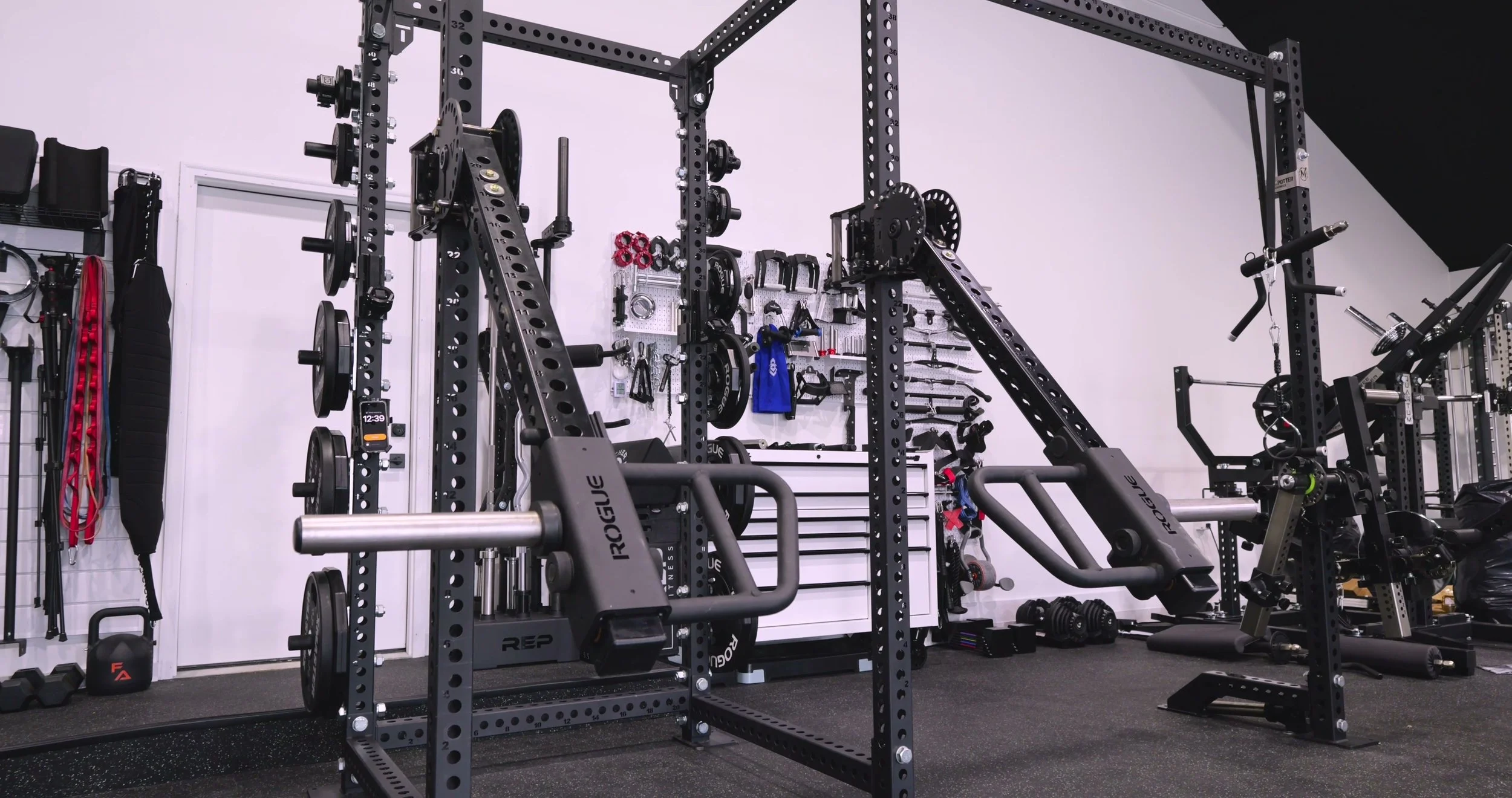
The Rogue Monster LT-1 50 Cal Trolley and Lever Arm Kit (Rogue Monster Lever Arms 2.0) is a high-end lever arm system for home gyms; after testing I find it's best for owners with limited space who want machine-like functionality and are willing to buy aftermarket brackets and handles to fix the resistance curve. Lever arms are a polarizing piece of home gym equipment. They offer the ability to simulate dozens of commercial gym machines in a tiny footprint, but they are notoriously heavy, cumbersome, and difficult to adjust. Rogue set out to solve this problem with the Monster LT-1 50 Cal Trolley and Lever Arm Kit (which I will just call the Lever Arms 2.0). Featuring a trigger-style adjustment mechanism and acetal rollers, these are among the smoothest-adjusting lever arms on the market. But at over $1,200, are they worth the investment, or are you better off buying a dedicated machine?
Quick Takeaway
The Rogue Monster Lever Arms 2.0 are well-built and made in the USA. The acetal rollers make sliding the ~55-pound arms up and down your rack significantly easier than traditional friction-based brackets. However, out of the box they still have the standard lever arm limitations: a poor resistance curve and awkward starting positions. To get a usable pressing feel you should plan on buying Vendetta brackets and better handles, which pushes the total cost well above the base price. If you have the budget and the patience to set them up, they become a versatile tool; if you want a simple, out-of-the-box solution, a dedicated machine may be a better choice.
Quick Specs
Price: ~$1,230 (for the 48-inch Monster version)
Compatibility: Available for Monster (3x3, 1" hole) and Monster Lite (3x3, 5/8" hole) racks
Arm Length Options: 35-inch (Short) or 48-inch (Long)
Weight: ~55 lbs per arm (bracket + arm)
Adjustment Mechanism: Trigger-style release with acetal rollers and detent pin safety
Included Handles: Multi-grip, 1.25" diameter with textured black powder coat
Where to Buy
You can check the current price directly through Rogue Fitness below.
The Trolley System (The Best Feature)
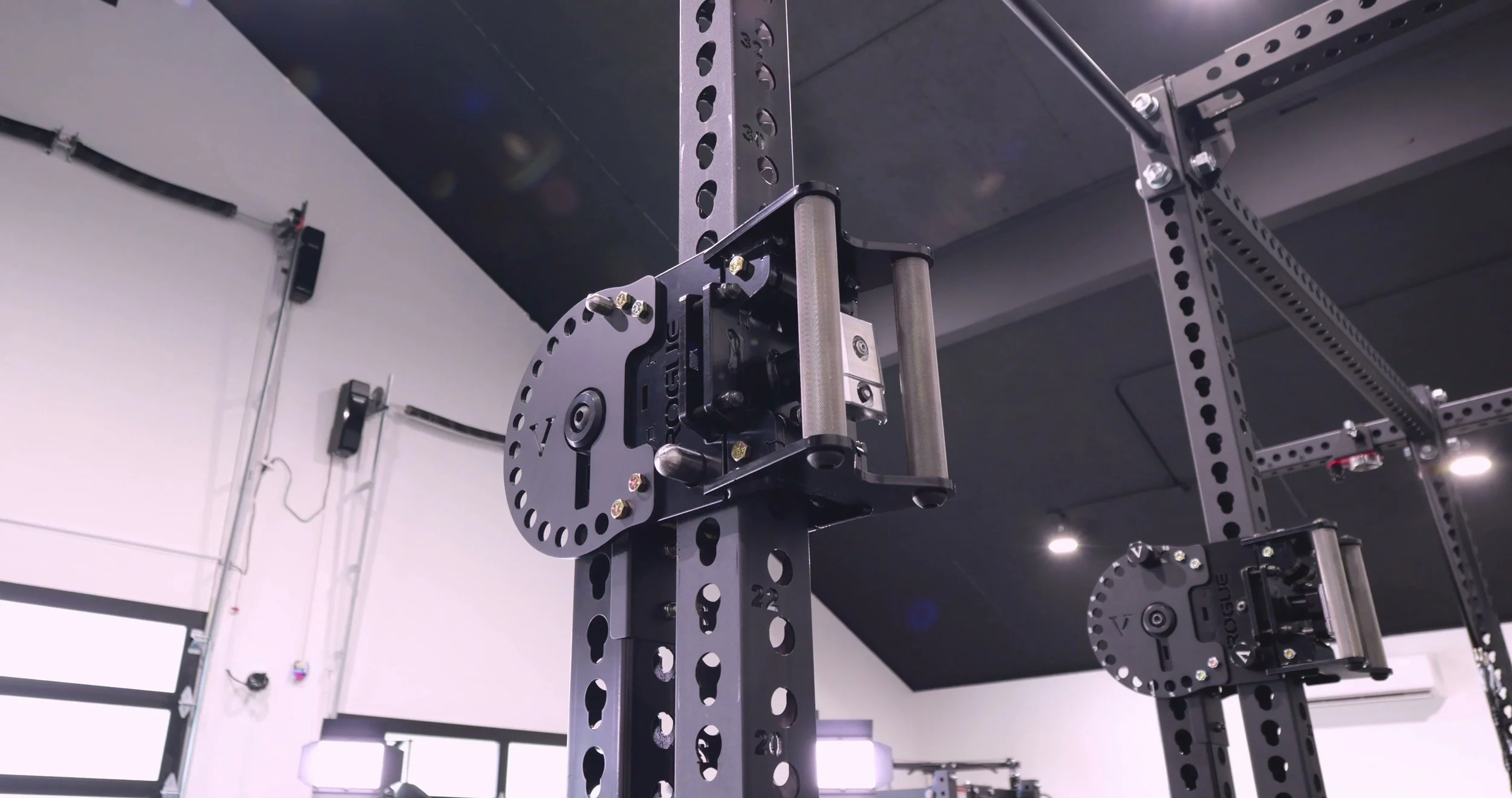
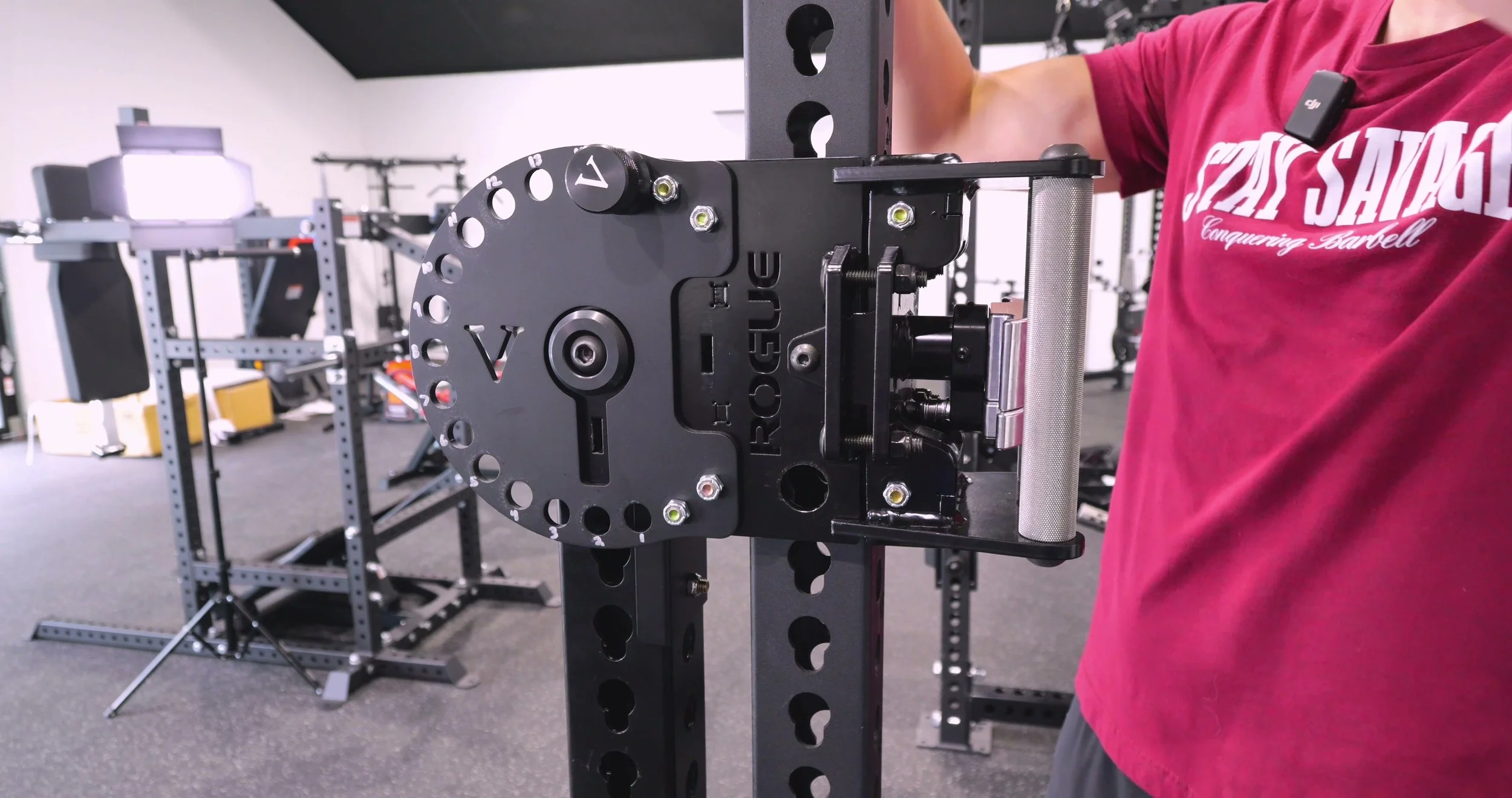
The standout feature of the Rogue Lever Arms is the trolley bracket. Instead of a simple metal sleeve that scrapes against your uprights, Rogue uses four acetal rollers inside the bracket. To move the arm, you pull a detent pin, squeeze the trigger handle (which releases a secondary safety catch), and slide the arm up or down.
In the video and during my hands-on testing I mention that the trigger design was inspired by World War II weaponry — you literally grab both handles and the trigger and can slide the assembly up and down. Because each arm weighs roughly 55 pounds, moving them is still a physical chore, but the rollers make the movement much smoother and you don't have to fight friction or worry as much about scratching the rack paint. In practice the trolley raises the usability from the typical friction-bracket experience to a substantially more manageable one, especially when re-racking between sets or changing heights for different exercises.
Why You Should Buy the 48-Inch Version
Rogue offers these arms in two lengths: 35 inches and 48 inches. The price difference is only $5, and I recommend getting the 48-inch version unless you are severely space-constrained.
Lever arms move in a fixed arc. The shorter the arm, the tighter and more unnatural that arc feels during pressing movements. The 48-inch arms provide a flatter, more natural movement path that feels closer to a commercial chest press or shoulder press machine.
The Hidden Costs: Upgrades You Actually Need
Here is the hard truth about lever arms: out of the box, they are flawed. Because they hang straight down, gravity provides near-zero resistance at the bottom of the movement. To make them feel like a real machine, you need to change the starting angle, which requires aftermarket upgrades.
1. Vendetta Brackets (~$290): These brackets bolt onto the lever arms and allow you to set a starting height using a hitch pin. This means you can start a chest press with the arms already parallel to the floor, where the resistance is highest. In my experience these make a dramatic difference to the pressing feel and are, in my opinion, mandatory if you plan to use the arms for pressing movements.
2. Better Handles (~$120 - $300): The included multi-grip handles are functional but limited. I recommend a straight handle and a separate plate horn (either from Rogue or Amazon) so you can set the handle height independently of the weight. In testing, articulating handles reduced wrist strain and felt more joint-friendly for heavy presses.
Comparisons / Alternatives
PRx Lever Arms: PRx makes a set of lever arms that also feature a roller system, but they are only available for 5/8" hole racks and tend to be pricier.
Titan Fitness Lever Arms: Titan's arms are significantly cheaper (around $300), but they use a friction-based bracket that is difficult to adjust and will likely scratch your rack.
Dedicated Machines: By the time you buy the Rogue arms, Vendetta brackets, and upgraded handles, you are often spending over $1,600. For that price, a dedicated plate-loaded chest press or a functional trainer may be a better value if you have the floor space.
Tradeoffs
Heavy: Even with the smooth rollers, moving a ~55-pound arm up and down your rack takes effort.
Cost to optimize: The base price is ~$1,230, but expect to spend another $300–$500 on brackets and handles to make them function like a proper pressing machine.
Setup time: Transitioning from squats to a lever-arm chest press takes time — move the trolleys, set the Vendetta brackets, adjust the handles, and load plates.
Who Should Buy
Buy the Rogue Lever Arms 2.0 if you have a small home gym, a reasonable budget, and a desire to simulate commercial gym machines without buying standalone equipment. If you are willing to buy the necessary aftermarket upgrades and accept the setup time between exercises, they provide a flexible, space-saving solution.
Who Should Skip
Skip these if you have the floor space for dedicated machines or if you dislike spending time setting up equipment between exercises. Also skip them if you are on a tight budget — the fully optimized cost is closer to $1,600.
Common Questions
Do these work on Monster Lite racks?
Yes — Rogue sells versions for both Monster (1" hole) and Monster Lite (5/8" hole) racks. Make sure you choose the correct hole spacing when ordering.
Can one person move the arms alone?
You can move them solo because the trolley rollers make adjustment much easier, but each arm is heavy (~55 lbs) so it still requires care and a bit of strength to handle safely.
Are Vendetta brackets absolutely necessary?
If you want a usable pressing experience, in my testing the Vendetta brackets are effectively mandatory — they let you set a starting angle so the resistance curve is practical for pressing movements.
Final Verdict
I like the Rogue Monster Lever Arms 2.0 for what they are: a well-made lever arm solution that significantly improves adjustability with acetal rollers and a trigger-style trolley. In hands-on use the trolley and trigger made changing heights smoother and reduced rack wear, but the units still carry the intrinsic limitations of lever arms — a poor bottom-of-movement resistance curve and non-trivial setup time. If you want a space-saving way to replicate machine presses and are prepared to buy Vendetta brackets and better handles, these are a practical, long-term option. If you want a simple, inexpensive, or out-of-the-box machine-like feel, look at dedicated plate-loaded equipment instead.
CHECK PRICE — ROGUE LEVER ARMS 2.0
Affiliate Disclosure: Some links may be affiliate links, which help support The Jungle Gym Reviews at no extra cost to you.