REP Nighthawk Adjustable Bench Review: My Favorite Traditional Adjustable Bench?
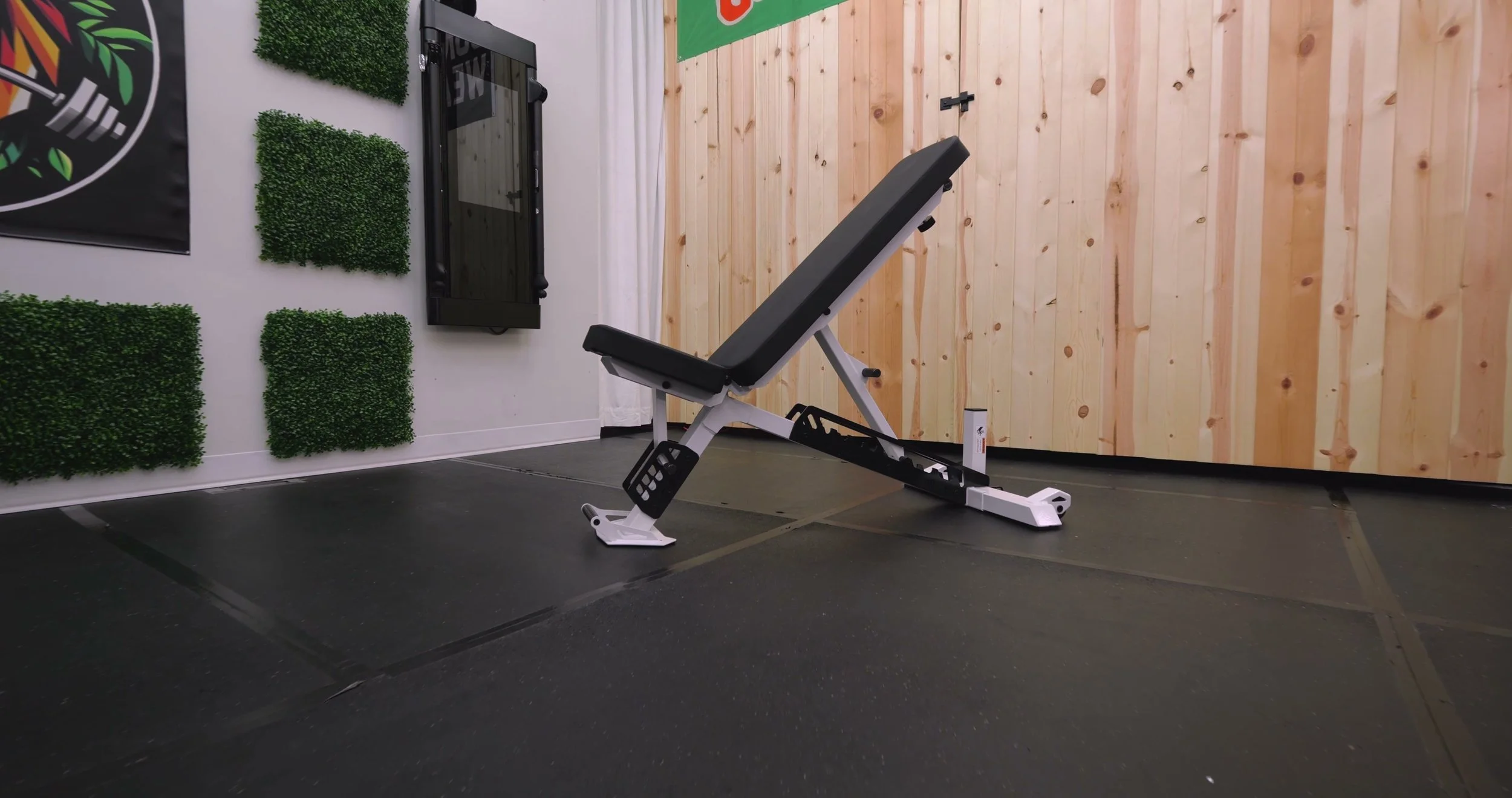
This bench was tested in house by Michael at the Jungle Gym Reviews.
If you're building a home gym, the adjustable bench is arguably the most important piece of equipment you'll buy after your rack and barbell. It's the centerpiece of your space, and you're going to use it for almost every upper body movement. A bad bench makes everything worse. A good bench disappears under you and lets you focus on the lift.
I've tested dozens of benches over the years, from budget Amazon options to premium commercial pieces. For the last six months, the REP Nighthawk Adjustable Bench has been the one I keep coming back to. It's easily one of my top two favorite benches on the market right now, and it's the one I recommend to most people building a traditional home gym setup.
Here is my full, six-month review of the REP Nighthawk, including what makes it stand out, where it falls short, and whether it's the right choice for your setup.
Quick Takeaway
At $449.99, the REP Nighthawk sits in a really interesting spot. It's not the cheapest bench you can buy, but it's nowhere near the most expensive either. What you get for that price is a bench that feels significantly more expensive than it actually is — the pad, the knurled details, the stability, and the attachment ecosystem all punch above their weight class. If you want a bench that you can grow with and not have to replace in two years, this is one of my top recommendations.
Quick Specs
Price: $449.99
Bench Type: FI (Flat/Incline)
Product Weight: 88 lbs
Footprint: 51" L x 25.9" W
Pad Width: 11.8"
Back Pad Angles: 0, 15, 30, 45, 60, 75, 85 degrees (7 positions)
Seat Pad Angles: -15, 0, 10, 20 degrees (4 positions)
Pad Gap: 1.57"
Weight Capacity: 1,000 lbs
Storage: Vertical (molded plastic base included)
Where to Buy
You can check the current price directly through REP below.
My Real-World Experience
I've been using the Nighthawk as my primary bench for the last six months. It has handled everything from heavy flat benching to incline dumbbell presses to seated overhead work. The short version is that it just works — it gets out of the way and lets you lift, which is exactly what you want from a bench.
The thing I keep noticing, even after six months, is the pad. Every time I set up for heavy flat benching, I'm reminded of how much I like it. It grips without being sticky, it supports without being too hard, and it's wide enough to press on without being so wide that it limits your scapula movement. That's a hard balance to strike, and REP nailed it here.
The Pad
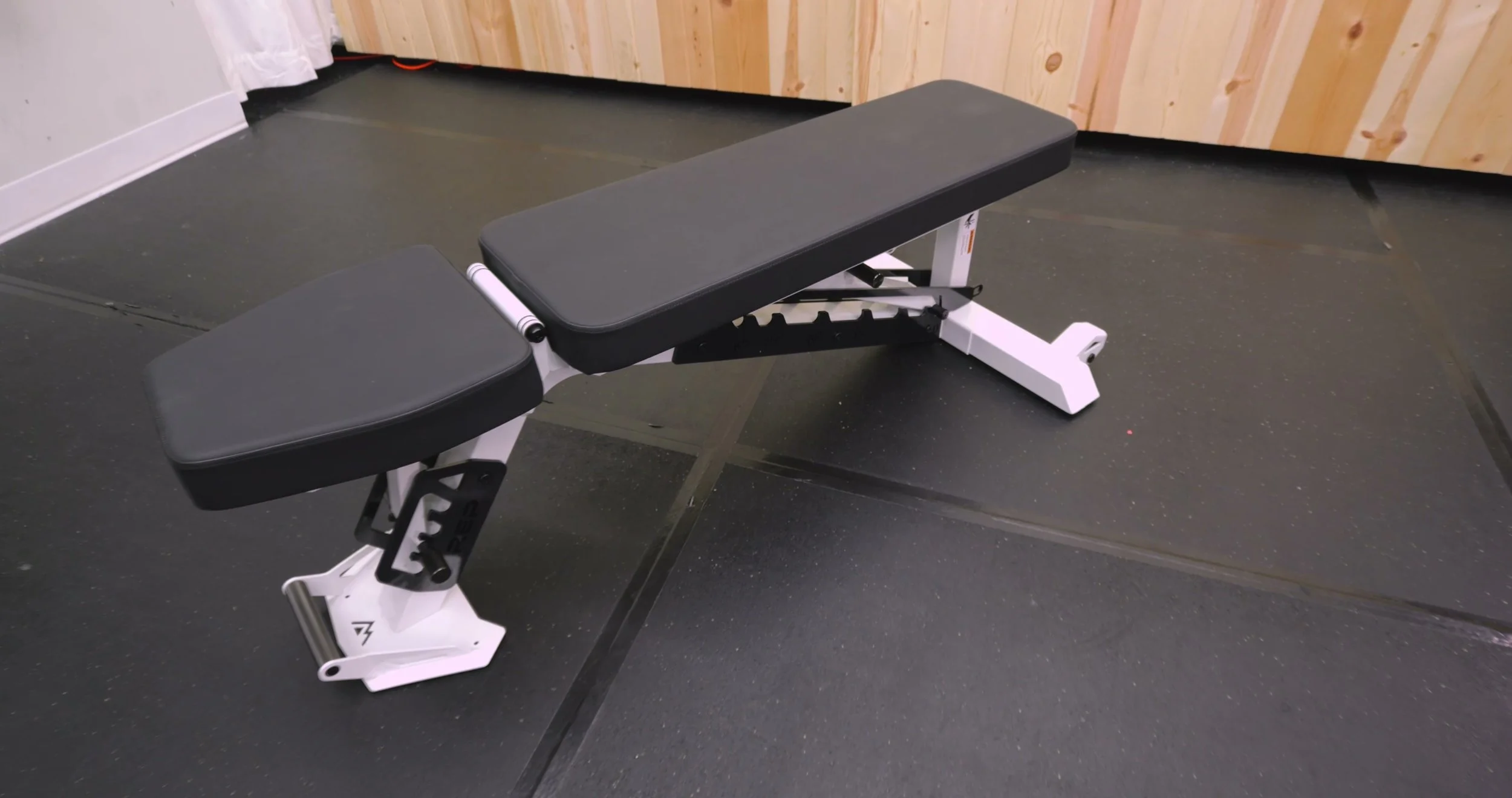
The pad is the standout feature of the Nighthawk, and it's the reason I keep recommending this bench to people.
REP uses their "Clean Grip" vinyl material on the Nighthawk. It provides a grippy surface that keeps you planted during heavy pressing without feeling tacky or uncomfortable against bare skin. Some bench pads are too slick — you slide around during heavy sets. Some are too sticky — they grab your shirt and bunch it up. The Nighthawk pad avoids both of those problems.
The foam density is what I'd call the Goldilocks zone. Some benches (like Rogue) tend to run on the harder side, which can feel like you're pressing on a board. Other budget benches go too soft, and you sink in and lose your arch. The Nighthawk is right in the middle — supportive enough to maintain your position under heavy loads, but with enough give that it's comfortable for longer sessions.
The pad width is 11.8 inches. That's slightly under 12 inches, which is actually a good thing for most lifters. It's wide enough to fully support your back during flat pressing, but narrow enough that you can get a little more range of motion for your scapula to retract and depress properly. If you've ever used a bench that's too wide and felt like your shoulders were pinned, you'll appreciate this.
One construction detail worth noting: the pad sits on a piece of wood inside the frame. You can see about 3 inches of padding visible from the side, but the foam doesn't extend the full depth of the frame. This is standard construction for this price range and doesn't affect performance, but it's worth knowing if you're comparing it to benches with full-depth foam.
Build Quality
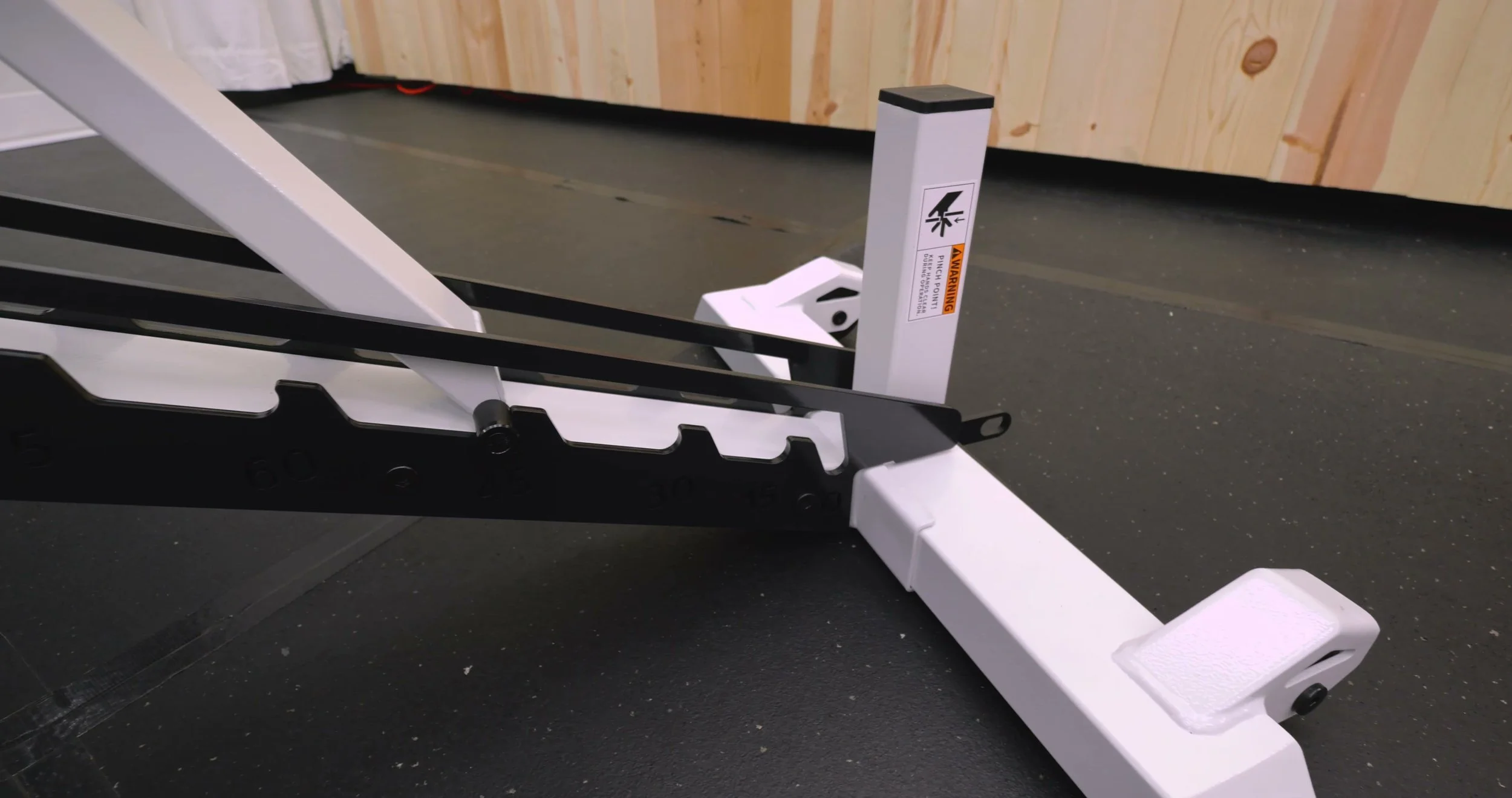
The build quality on the Nighthawk is where you really feel the difference between this and a $200 bench.
REP included knurled knobs throughout the adjustment system. These are the kind of small details you'd normally expect on a Rogue product — they literally have little knurled knobs for you to grab the ladder-style system when making adjustments. It's a small thing, but it makes the bench feel more intentional and well-thought-out.
The ladder adjustment system itself uses a rubber grip at the top for disengaging the ladder. Is it necessary? No. But it feels nice and makes the whole adjustment process smoother. These are the kinds of touches that separate a $450 bench from a $200 bench — none of them individually justify the price difference, but together they add up to a bench that just feels better to use every day.
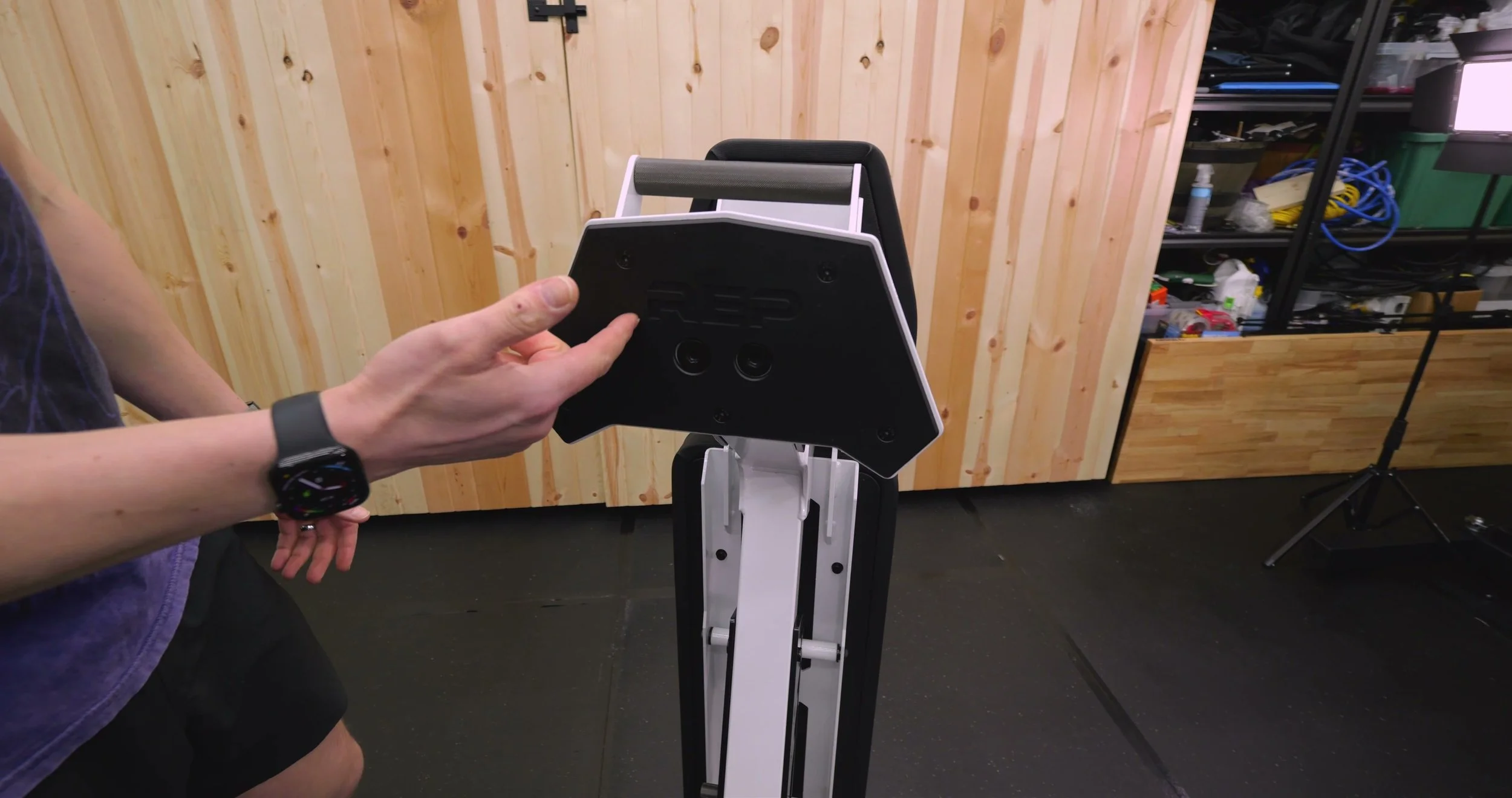
For moving the bench around your gym, REP included a dedicated barbell-style knurled handle at the rear. You grab it, tilt the bench back onto its rear wheels, and roll it wherever you need it. It's smooth and easy, even at 88 lbs.
For storage, the Nighthawk stores vertically on a molded plastic base that's included with the bench. You stand it up on end and it sits securely on the base. This is a nice space-saver for smaller garage gyms where floor space is at a premium.
Almost everything about this bench — from the look, from the design, from the details — just feels higher-end. But it's not even the most expensive bench in its category, which is what makes it such a compelling option.
Stability and Performance
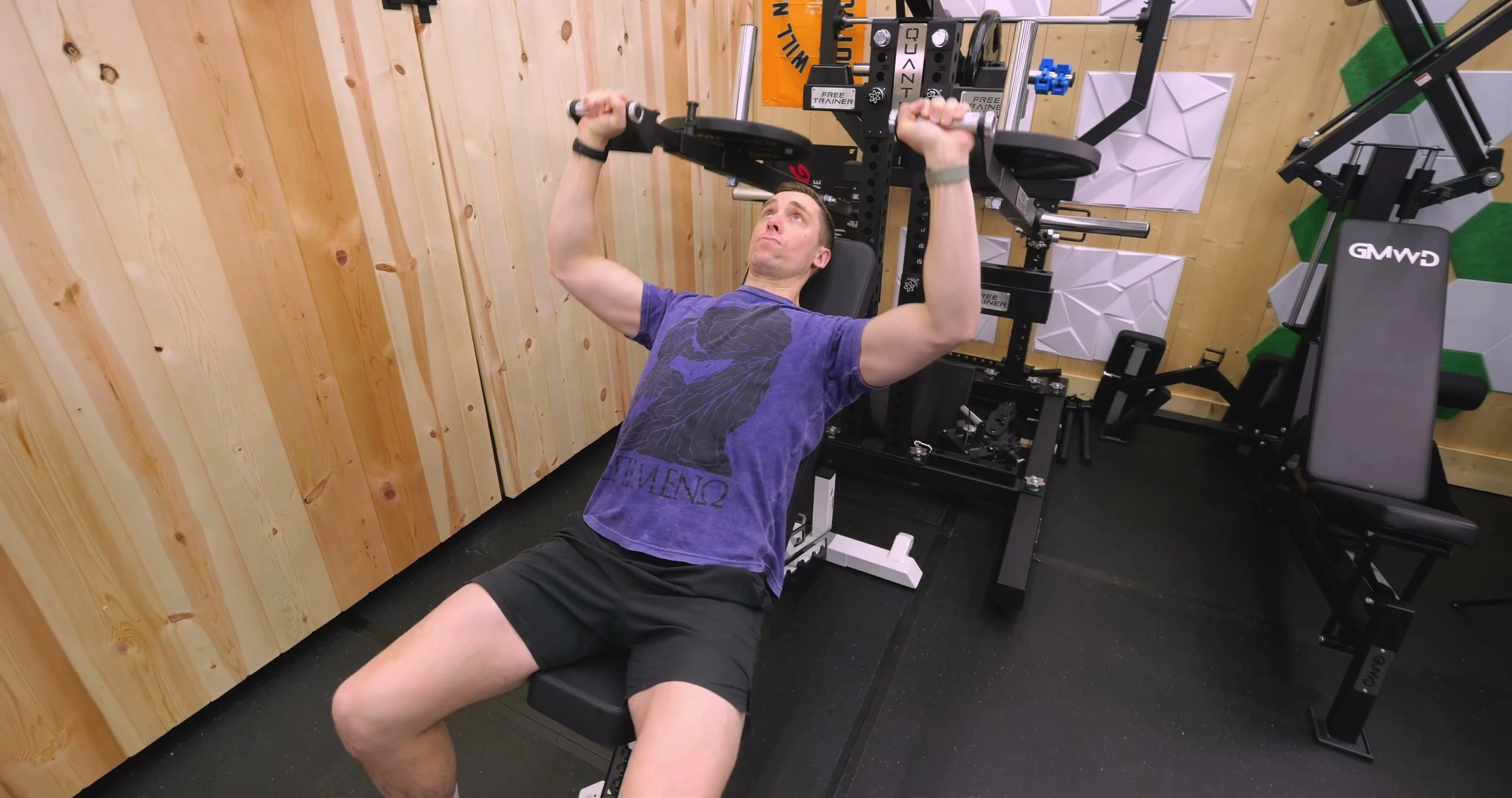
The Nighthawk uses a traditional triangular base design. The frame itself on the ground is very solid — there's no lateral wobble or shifting when you're pressing.
For flat benching, the bench feels planted. I've pressed heavy on this bench for six months and never felt unsafe or unstable. It does what you want it to do: it stays put.
For incline dumbbell presses, same story. Two heavy dumbbells at once, the bench stays stable. Any movement you might feel is in the ladder mechanism itself — not the frame. That's just the nature of the beast with adjustable ladder benches. Every ladder-style bench has a tiny amount of play where the ladder engages the notch. The Nighthawk has less of this than most, but it's still there. It doesn't translate to actual instability during a lift, and I've never felt like it was a safety concern.
One thing to note: because the rear pillar is fixed at 0 degrees, there's no native decline position. If you want to do decline movements, you'll need the leg roller attachment (more on that below). This isn't unusual for FI benches, but it's worth knowing if decline bench press or decline sit-ups are part of your regular programming.
Attachment Ecosystem
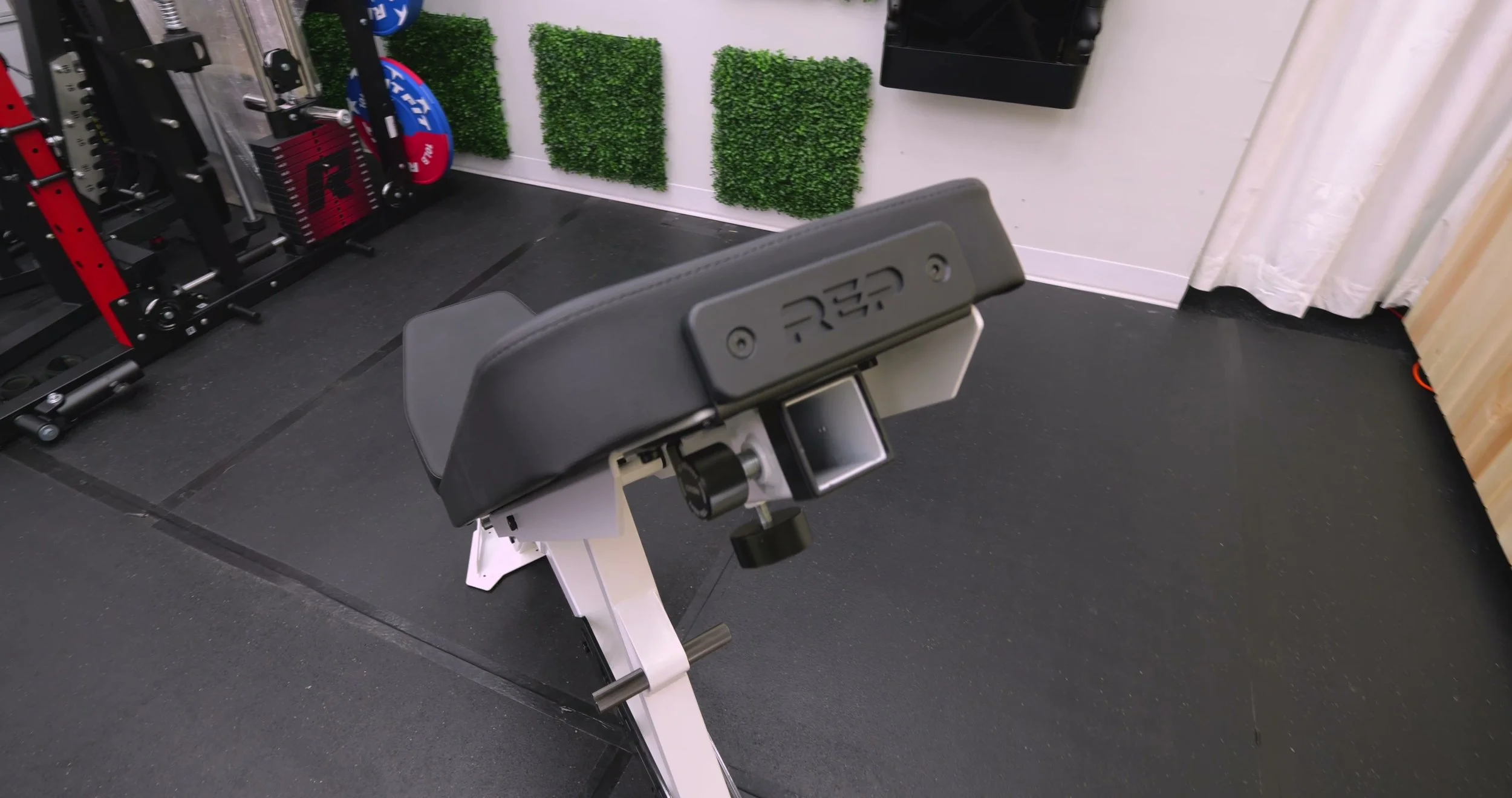
The Nighthawk has a universal receiver tube at the head of the bench. This is the mounting point for REP's growing attachment ecosystem, and it's one of the reasons I think this bench is a smart long-term investment.
Right now, the main attachments available are:
The leg roller — this is a simple roller that locks into the receiver and allows you to hook your feet for decline movements and ab work. It looks like it's all meant to be together — same finish, same build quality, same knurled adjustment hardware.
The leg developer — this is REP's leg extension and leg curl attachment. It's a more premium piece that actually costs more than the bench itself. I've reviewed it separately, but the short version is that it turns the Nighthawk into a leg extension and hamstring curl station without needing a standalone machine.
Why does this matter? Because it means the Nighthawk isn't just a bench today — it's a platform you can build out over time. You can start with just the bench, and as your budget allows, add the leg roller for decline work, then eventually add the leg developer for leg training. You're not locked into what the bench can do on day one.
Compare this to a simple flat/incline bench with no receiver tube: that bench will always be just a bench. The Nighthawk gives you a path to expand without replacing the whole unit.
Comparisons / Alternatives
vs. Freak Athlete ABX: The ABX is my other top recommendation, but it's a fundamentally different product. The ABX is designed to be a 10-in-1 modular station — it has an integrated chest support pad, more attachment options out of the box, and 11 back pad angles. If you want maximum versatility from a single footprint, the ABX is the better choice. If you want the better pure benching experience and plan to use your bench primarily for pressing, the Nighthawk wins.
vs. REP BlackWing: The BlackWing is REP's higher-tier bench. It's more expensive and targets a slightly different buyer. If you've already decided you want a REP bench and budget isn't the primary concern, the BlackWing is worth looking at. But for most home gym owners, the Nighthawk offers the better value.
vs. Keppi 5000/6000: The Keppi benches are significantly cheaper and offer true FID (Flat/Incline/Decline) functionality. If budget is your primary constraint and you need native decline, the Keppi is a solid option. But you're trading pad quality, build details, and long-term durability for that lower price.
vs. XMARK Black Diamond: The XMARK is a strong FI bench with an excellent pad and great incline stability. It's in a similar price range to the Nighthawk. The main difference is the attachment ecosystem — the Nighthawk's universal receiver gives it more room to grow over time.
vs. GetRXd FIDAB-2: The FIDAB-2 is a heavy-duty FID bench at a competitive price. It's overbuilt and feels very secure. If you want a heavier, more traditional bench with native decline and don't care about attachments, the FIDAB-2 is worth considering.
Tradeoffs
No bench is perfect for everyone, and the Nighthawk has some clear limitations you should know about before buying.
Seven back pad angles in ~15-degree jumps. The Nighthawk offers 0, 15, 30, 45, 60, 75, and 85 degrees. That's standard for this price range, but it means you don't get the in-between angles (like 22 or 37 degrees) that some competitors offer. If you're particular about finding the exact right incline angle for your pressing, this could matter.
No native decline. The rear pillar is fixed, so you can't set the back pad below flat without an attachment. If decline bench press or decline sit-ups are part of your regular routine, you'll need to buy the leg roller attachment separately.
Not the cheapest option. At $449.99, you're paying more than a budget FID bench like the Keppi. The build quality and pad justify the price in my opinion, but if you're on a tight budget, there are cheaper benches that get the job done.
Not as attachment-heavy as the ABX. The Nighthawk accepts attachments through its universal receiver, but the total number of available attachments and the sheer versatility of the system doesn't match what Freak Athlete offers with the ABX. If you want your bench to also be a chest-supported row station, a preacher curl station, and a dip station, the ABX is the better platform for that.
Who Should Buy
The Nighthawk is the right bench if you want a traditional adjustable bench that does the basics extremely well. You value pad quality, build details, and a bench that feels more expensive than it is. You plan to use your bench primarily for flat and incline pressing, and you like the idea of being able to add attachments over time without replacing the whole unit.
Who Should Skip
Skip the Nighthawk if you want the most versatile bench possible and plan to use your bench as a chest-supported row, leg extension, leg curl, decline, and attachment platform. In that case, the Freak Athlete ABX probably makes more sense. Also skip it if you're on a strict budget under $250 — the Keppi 5000 or 6000 will serve you well at a lower price point.
Final Verdict
The REP Nighthawk is one of my top two bench recommendations right now. It does the fundamentals really well — the pad is one of the better pads I've used, the build quality is higher-end without getting into the really expensive bench category, and the attachment ecosystem gives you room to grow. It's a bench that should serve you well for a very long time.
If you're torn between the Nighthawk and the ABX, check out my Head-to-Head Comparison where I break down exactly which bench wins in every category.
Affiliate Disclosure: Some links may be affiliate links, which help support The Jungle Gym Reviews at no extra cost to you.