Dialed Motion Cable Machine Attachments Review
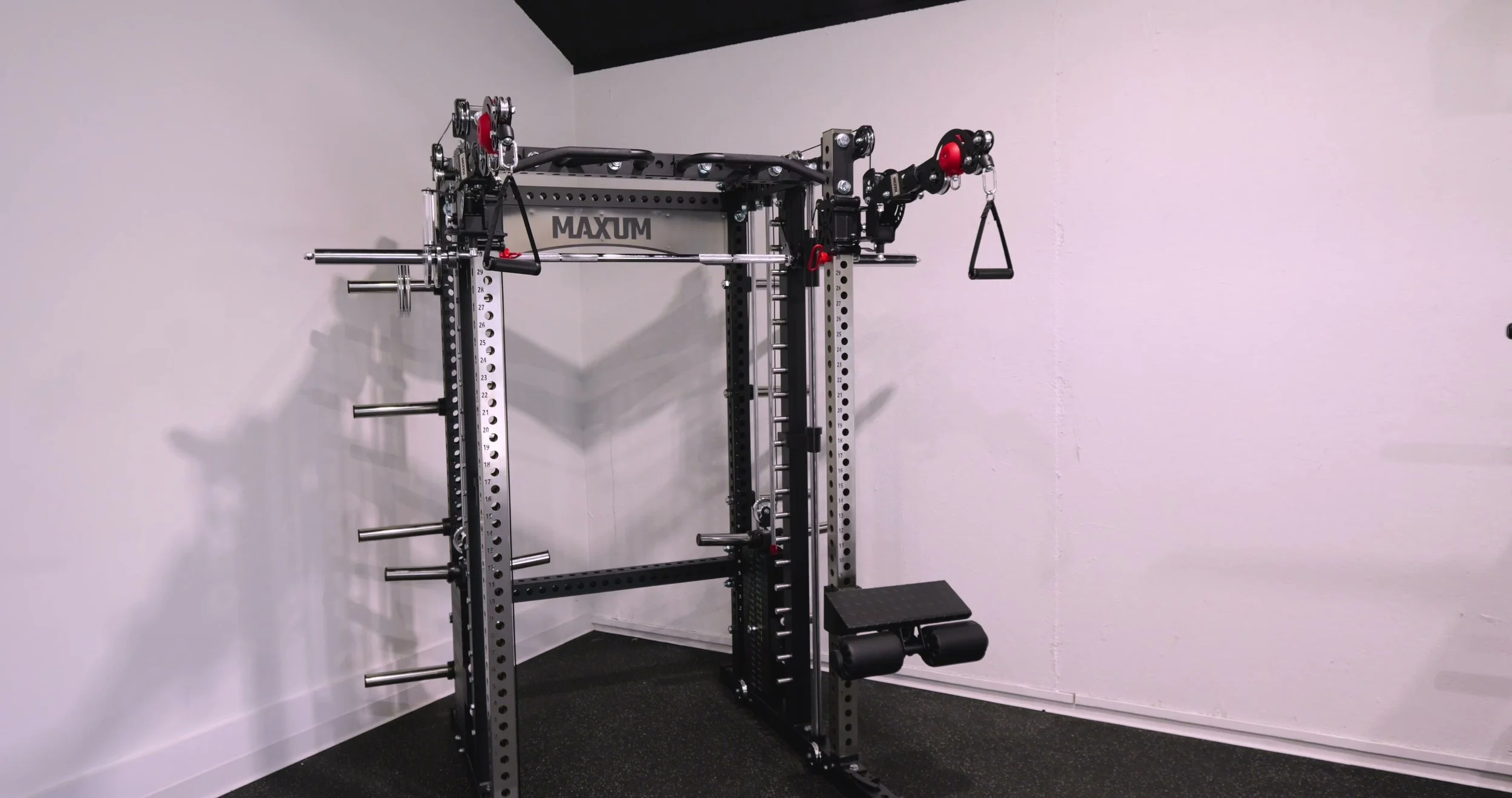
This product was tested in-house by Michael at The Jungle Gym Reviews.
Dialed Motion’s new dual leg holder/low-row footplate, low-profile strap safeties, and Bearing D-Handle 2.0 follow the company’s pattern: thoughtful engineering, high-end finish, and practical fixes for home-gym problems. They’re not inexpensive, and they come through a preorder model that can mean a multi-month wait, but the fit-and-finish and small functional touches make these worth considering if you care about how attachments feel and interact with a busy rack.
Quick Takeaway
These attachments aren’t flashy gimmicks, they’re small, well-executed solutions. The dual-function leg holder/footplate is robust and easy to mount, the strap safeties solve the “where do I put a bulky bracket?” problem, and the Bearing D-Handle 2.0 delivers noticeably smoother rotation than most D-handles I’ve used. Expect to pay a premium for the polish and to wait a few months when you preorder.
Quick Specs
Leg Holder / Low Row Footplate: Fits 3x3 racks (5/8" or 1" holes); comes with 1" rod and a 5/8" adapter; single knurled mounting knob; five adjustable pad angles via side pop-pin; diamond-tread footplate; $259.
Low-Profile Strap Safeties: Bracket-less, low-profile design using a magnetic knurled pin; holds up to 43" strap option shown; fits 3x3 racks (5/8" or 1" holes); option to buy brackets only; $359 for the 1" version with 43" straps.
Bearing D-Handle 2.0: Aluminum construction, ~30mm grip diameter; low-to-medium knurling; bearings on both ends for smooth rotation; $29 each.
Where to Buy
Check current availability and pricing below:
My Real-World Experience
I got hands-on with each of these in my garage setup after first seeing prototypes at Home Gym Con. Dialed Motion’s consistent theme is meticulous packaging and finish — opening the boxes feels like unboxing consumer electronics rather than tossed-together attachments. That first impression matters because this product line is an exercise in details: knurled knobs, small UHMW backing plates to save paint and steel, and polished cutouts for branding. Those touches don’t add strength, but they signal the kind of thinking that shows up in how the parts adjust, lock, and interact with a loaded rack.
Leg Holder & Low Row Footplate
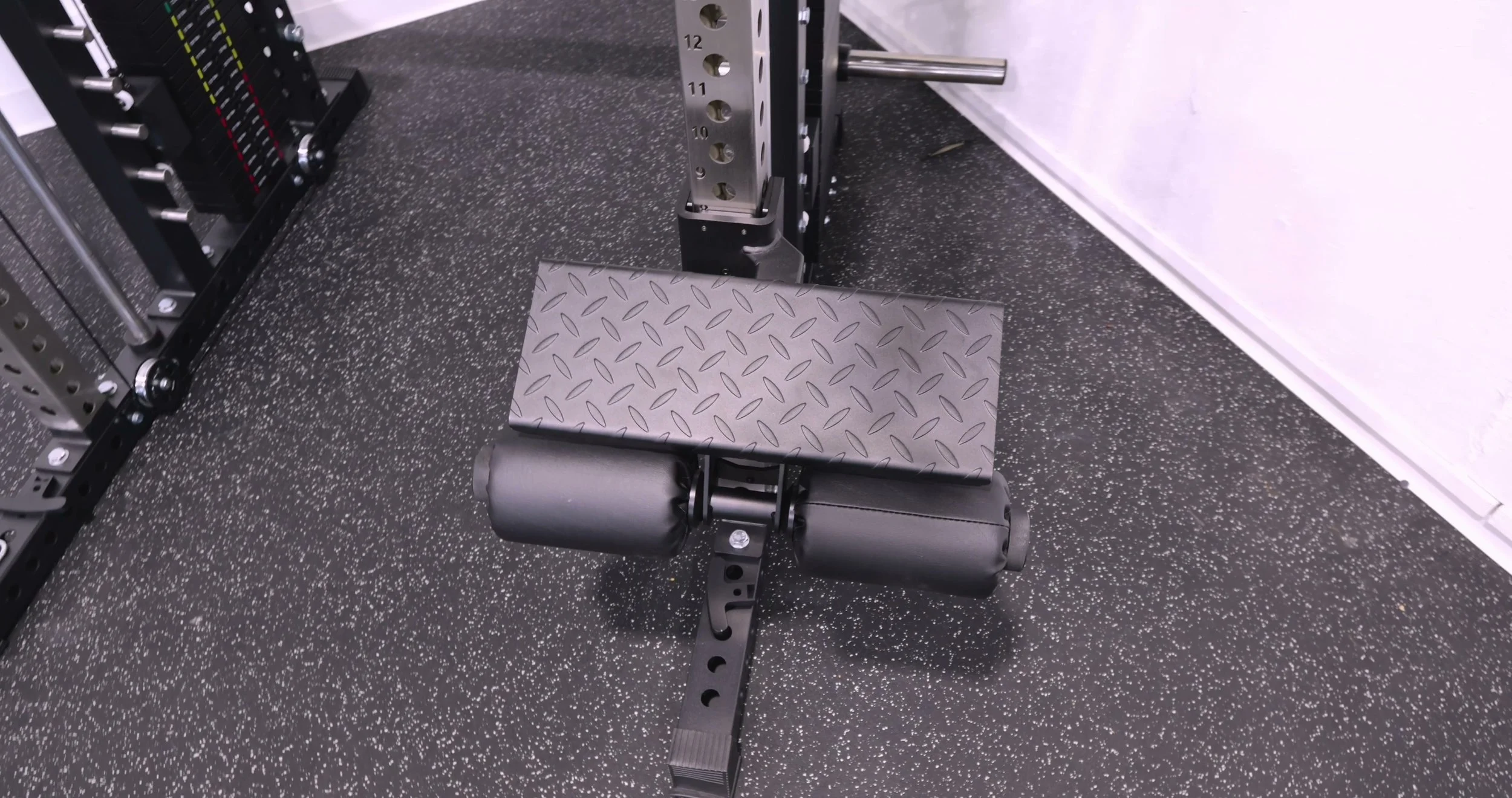
The dual-purpose roller/footplate is the most mechanically interesting of the three. It mounts to 3x3 uprights and ships with a one-inch threaded rod and knurled knob. If your rack uses 5/8" holes, Dialed Motion includes a 5/8" rod you swap in using a small Allen screw — nice to see that forethought rather than forcing customers to source adapters.
Mounting and adjustment are straightforward. The main mounting knob is heavily knurled, which lets you cinch the bracket down by hand and eliminate play without wrestling with a wrench. That knurled knob pairs with a thick backing plate and a UHMW-style pad against the upright to protect finishes. Once tightened I tried to seesaw the unit under load, transitioning weight from one side to the other, and it didn’t budge. That kind of stability matters when you’re doing seated lat pulldowns or heavy seated low rows and don’t want a floating platform.
The lateral roller pads sit on an arc and use a small pop-pin to set five discrete angles. In practice that gives you enough adjustments to find comfortable contact whether you’re seated for a pulldown or using the plate as a footplate for seated rows. The mechanism itself is simple and positive: pull the pin, rotate the pads, drop the pin. Because the pad bracket moves on an arc, the pads come down and slightly under as you lower them, so you’ll combine hole height and pad angle to find the sweet spot for your height and rack position.
The leather-covered pads are thick and noticeably comfortable, they compress significantly under load, which makes workouts pleasant but raises a question about longevity. The leather feels dense up front, yet it gives under pressure; I don’t have a long-term wear sample, so I’m flagging that as a potential durability unknown. In contrast, the diamond-pattern footplate feels very robust and gives predictable grip for foot bracing on low rows or using the bracket as a step-up surface.
One important layout note: this footplate is offset from the rack center. Dialed Motion designed it to align with their cable systems, which also tend to have offset exits. If you’re using a center-driven pulley you can still use the footplate, but you’ll shift your body over a touch during lat pulldowns or rows. The company told me a centered version is planned later in the product cycle, so if you need a centered plate wait for that variant.
Price-wise, $259 puts it above basic single-purpose rollers but below some full bench/seat assemblies. If you value quick mounting, the included rods/adapters, and the heavy knurled knob to remove play, this unit delivers a clean, functional package.
Low-Profile Strap Safeties
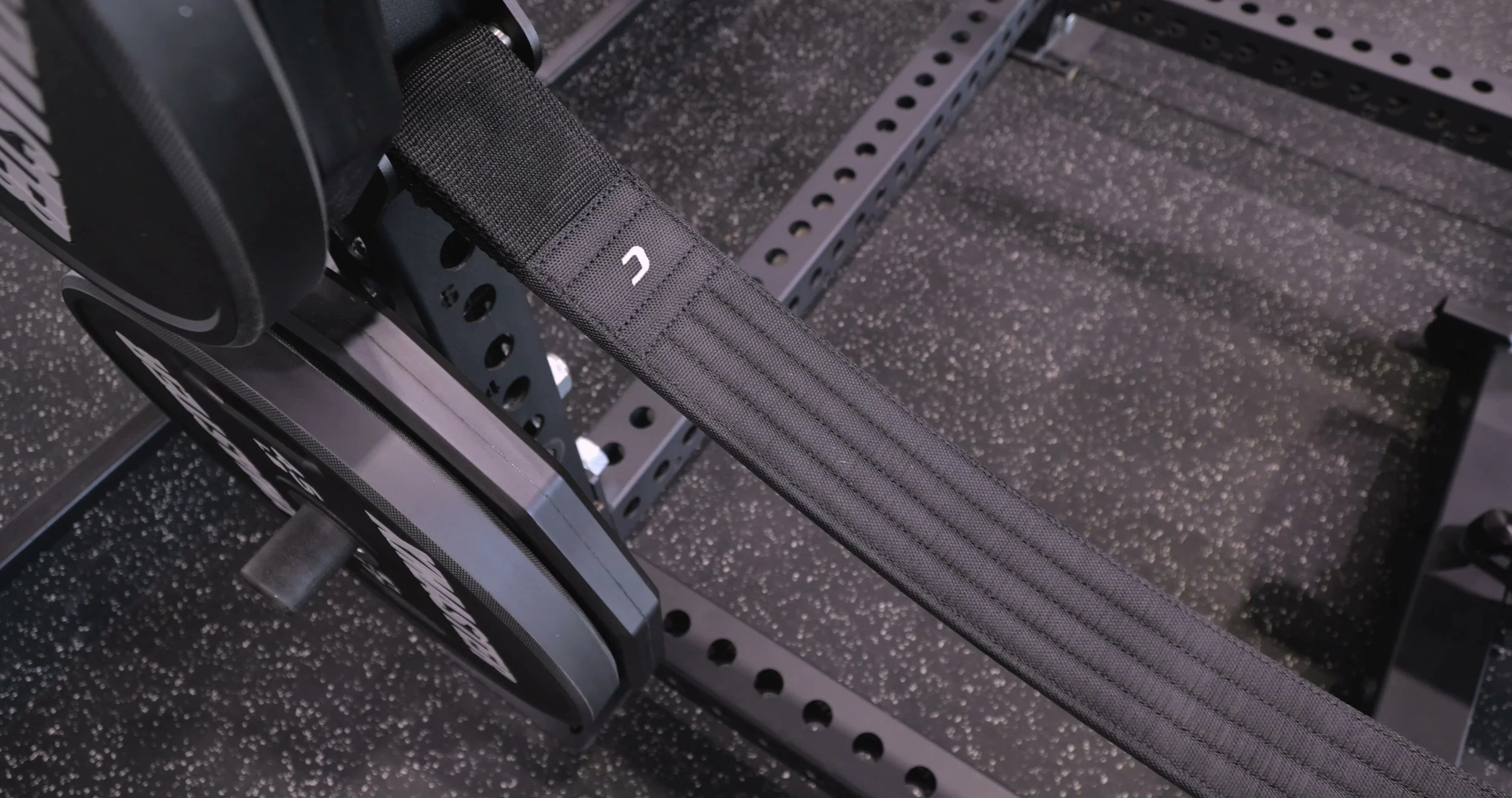
These were the product I found most practically useful for a rack with tight real estate. Traditional strap safeties or strap J-cups wrap around the upright, which is problematic if you already have plate storage, band pegs, or other attachments on the uprights. Dialed Motion’s safeties remove the rear bracket entirely and rely on a single knurled magnetic pin to secure the bracket to the upright.
The mag pin is a small engineering flourish that matters. As you move the bracket up and down the upright the magnet holds the piece in place so it doesn’t flop off while you’re trying to line holes or thread the pin. When the pin seats you get a satisfying engagement, a tactile click that makes it obvious the bracket is locked. That combination of a slender profile and magnetic retention means you can mount the brackets between plate pegs or other protrusions where a normal J-bracket would not fit.
The kit is available with strap lengths: Dialed Motion showed a 43" strap option (useful for deeper racks like my Titan-series 42"), and a 30" option for shallower uprights. If your rack falls outside those common depths you don’t have to buy their straps, you can purchase the brackets alone and use custom straps. That flexibility is handy for DIY racks or uncommon depths.
On the downside, the safeties with straps are priced at a premium. The one-inch version with 43" straps landed at $359 in the sample I handled, which is noticeably more than generic strap safeties you can find in the $150–$200 range. For me the premium is justified if you need a low-profile solution to fit between plate storage or other attachments; if you’re fine mounting a bulkier bracket around an upright, the cheaper options will do the job.
Bearing D-Handle 2.0
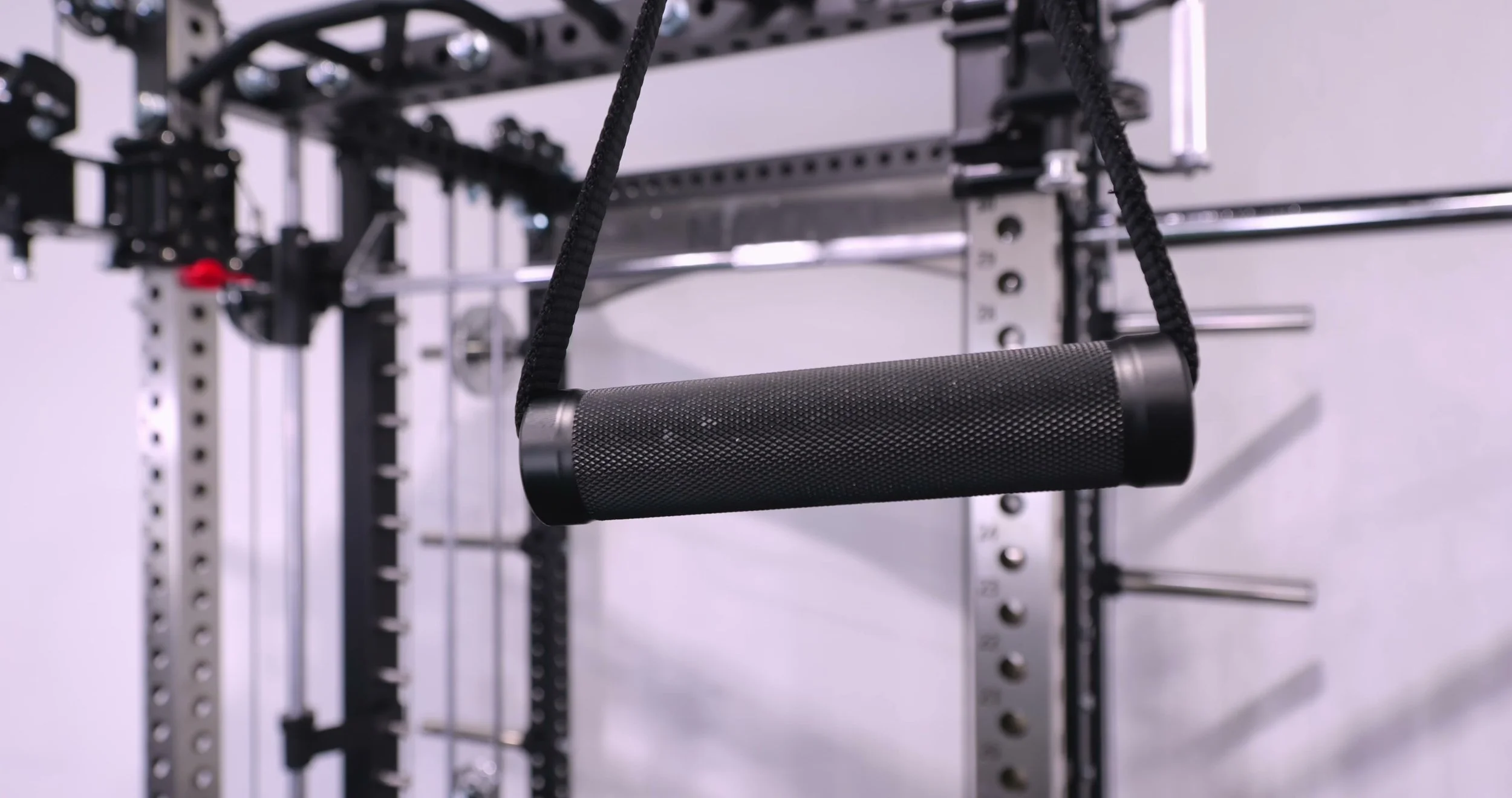
The Bearing D-Handle 2.0 was the surprise standout. Dialed Motion’s original 1.0 handles were heavier steel; 2.0 goes to lightweight aluminum, tight manufacturing, and bearings on each shoulder. Grip diameter sits around 30mm, and the knurling is in the low-to-medium territory, enough bite without being abrasive.
Where the handle earns its keep is rotational movement. With bearings on both ends the handle pivots smoothly under curls, pushdowns, flies, and cross-body movements. I noticed the difference in wrist comfort and the lack of torsional drag compared to non-bearing handles. If your programming includes a lot of movements where the handle should rotate with your wrist, this one genuinely feels “buttery” compared to standard fixed handles. For heavy, straight-line pulling, think a maximal seated row or heavy lat pulldown where you want a rigid feel, I still reach for a fixed handle or a wide lat bar. The bearing action is more about joint comfort and fluidity than raw transfer of force.
At $29 each, these handles undercut several comparable bearing or quality aluminum handles I’ve seen; previously similar Rogue aluminum handles were priced near $50. For the price and the feel, the D-Handle 2.0 becomes my go-to for accessory work.
Comparisons / Alternatives
If you’re shopping alternatives: Rep’s Pegasus lat seat has a removable leg roller that gives a similar utility for a lat seat/roller combo, the concept of a removable leg holder isn’t unique, but Dialed Motion’s single-knob mounting and offset geometry are their spin on it. For strap safeties, low-profile bracketless options are rarer; most budget safeties are J-cup style and sell between $150 and $200. If you can live with that bracket, you’ll save cash.
For handles, Rogue and other brands offer aluminum D-handles historically in the $45–$60 range, sometimes with different diameters and knurl profiles. Dialed Motion’s $29 price for a bearing-equipped 30mm handle is strong value if smooth rotation matters to you.
Tradeoffs
Preorder model: Dialed Motion sells primarily in preorder windows. That means you often pay up front or reserve inventory and then wait multiple months for shipment, I’ve seen windows where orders placed months ahead ship in December/January. If you need an attachment immediately, that’s a real constraint.
Price vs. generic options: The strap safeties and leg holder sit above budget alternatives. You’re paying for fit-and-finish, the magnetic pin, included adapters, and tighter tolerances.
Offset footplate: The leg holder’s offset geometry aligns with Dialed Motion cable systems. It still works on center-driven systems but requires you to shift your position slightly. A centered version is planned later.
Unknown long-term wear on pads: The leather pads are comfortable and compress under load, which is great for sessions but raises a question about how they’ll age under repeated heavy use.
Bearing handle use case: Fantastic for rotational accessory work but less desirable when you want a rigid connection for max effort horizontal pulls.
Who Should Buy This
Buy if you run a compact rack with plate storage or pegs that prevent a bulky back-bracket safety; if you prefer well-finished attachments with intuitive, fast adjustments; or if you do a lot of rotational accessory work and want a smooth-bearing D-handle at a reasonable price.
Who Should Skip It
Skip if you need attachments right away (Dialed Motion’s preorder windows can introduce multi-month waits), if you’re on a tight budget and don’t mind generic strap safeties, or if you want a centered footplate right now — the current leg holder is offset.
Common Questions
Will the leg holder work with my non-Dialed Motion cable system?
Yes — it functions on center-driven cable systems, but the current model is offset. You’ll shift your torso slightly to line up with the cable during lat pulldowns or seated rows. Dialed Motion has said a centered version is planned for a later release.
Do I have to buy the straps with the safeties?
No — you can purchase the low-profile brackets by themselves and use your own custom straps if your rack depth is non-standard or you prefer a different strap length.
Final Verdict
Dialed Motion’s new attachments don’t reinvent anything, but they refine several friction points I see in home gyms: awkwardly large safety brackets, play in adjustable rollers, and stiff swivel handles. The leg holder/footplate is solidly built, the strap safeties solve a real mounting problem for racks with storage, and the Bearing D-Handle 2.0 stands out as a useful, affordable bearing handle for accessory work.
The practical downsides are straightforward, preorder cadence and a price premium on the safeties. If you value convenience, polish, and small engineering wins, these attachments are worth the price and potential wait. If you need gear immediately or are maximizing bang-for-buck with generic parts, look elsewhere.
Check availability here: Dialed Motion latest preorder. No discount code supplied, check the link for current availability.
The Jungle Gym Reviews may earn a commission from affiliate links in this article.