Bells of Steel Smith Machine Power Rack Attachment Review
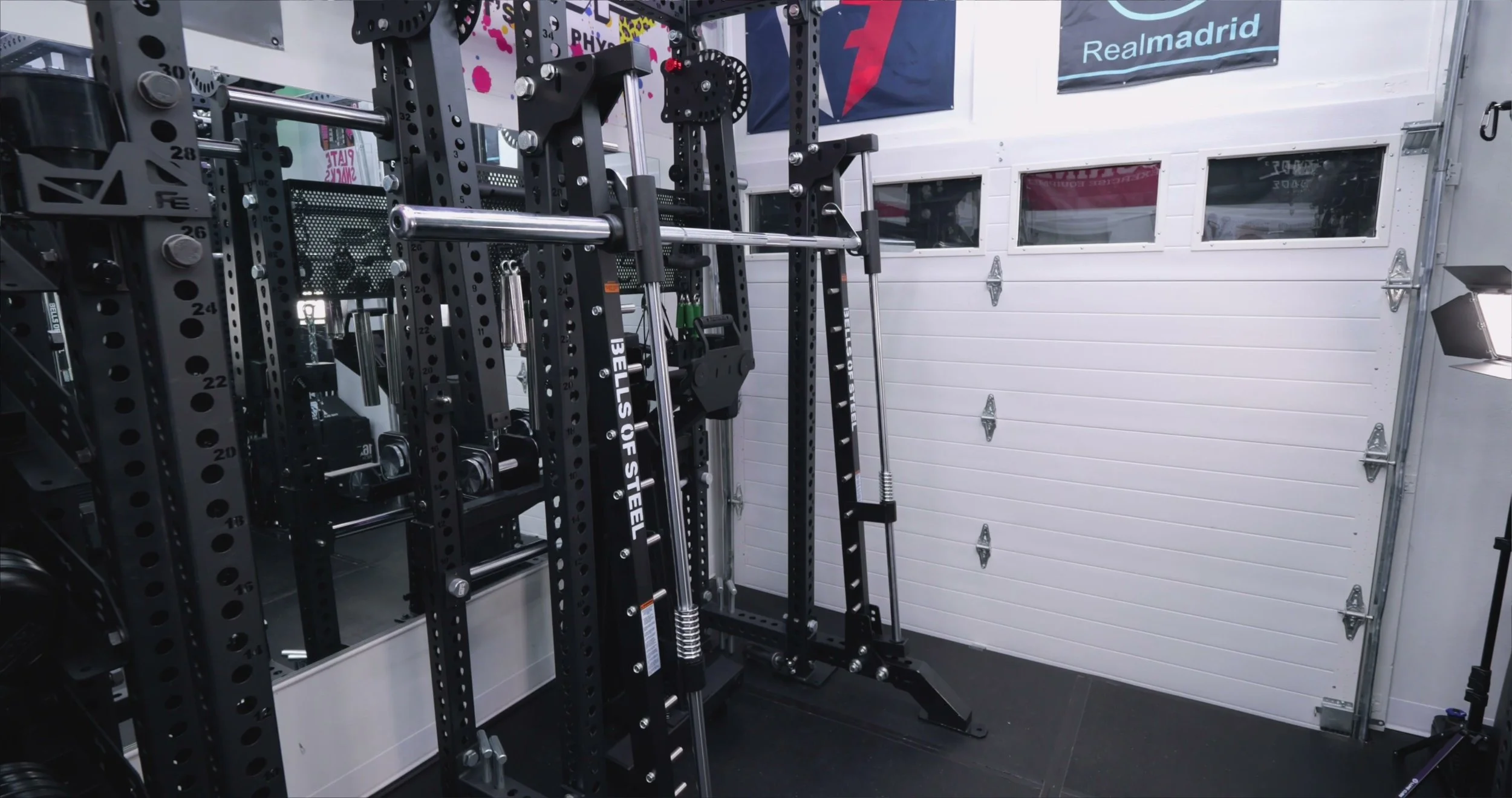
This product was in-house tested by Michael at The Jungle Gym Reviews.
This is a true drop-in Smith machine attachment that turns an existing power rack into a functional Smith setup without dedicating floor space to a standalone unit. The biggest strengths are universal rack compatibility, flexible mounting options, and price. The main tradeoffs are height limitations for taller lifters and a restricted lower range of motion for pulling movements. It’s best for home gym owners who want Smith functionality without replacing their rack, and less ideal for very tall lifters or anyone who prioritizes full-range deadlifts on a Smith.
Quick Specs
Type: Drop-in Smith machine attachment
Rack Compatibility: 3x3 racks with 1-inch or 5/8-inch holes
Supported Exterior Rack Widths: 47”, 48”, 49”
Supported Interior Rack Widths: 41”–43”
Tubing Compatibility: 2.3” to 3” uprights
Bar Options: Hollow Smith bar (32mm) or BYOB (25mm–30mm bars)
Starting Weight (Hollow Bar): ~16 lb including trolley
Rated Load Capacity: 600 lb
Mounting Orientation: Angled or vertical
Extension From Rack: ~10–11” when mounted flat
Minimum Bar Height: ~20.5” (measured to bar center)
Price: ~$850 (sale pricing as low as ~$640)
Where to Buy the Bells of Steel Smith Machine Power Rack Attachment
Check current pricing and configuration options directly from the official product page.
My Real-World Experience
I have this mounted on a Titan Fitness Titan Series rack with a 48-inch exterior width and 42-inch interior, which is important because Bells of Steel doesn’t officially list 48-inch racks as compatible. In practice, it fits perfectly, which effectively makes this one of the first truly universal Smith attachments for modern 3x3 racks.
Installation is flexible. You can mount it off an upright or a crossmember, choose an angled or vertical bar path, and place it almost anywhere on the rack. I prefer the angled configuration, which I currently have set around four degrees. Changing the angle is as simple as moving the bottom bracket up or down on the front foot. You can make it steeper—around six to seven degrees—or shallower, closer to two degrees, depending on where you mount it.
Once installed, the attachment doesn’t take up much space. It only sticks out about ten to eleven inches from the rack, which means even on a rack with a 16-inch depth crossmember, you could mount it on the back uprights and still have usable interior space for other lifts.
Bar Options and Load Feel
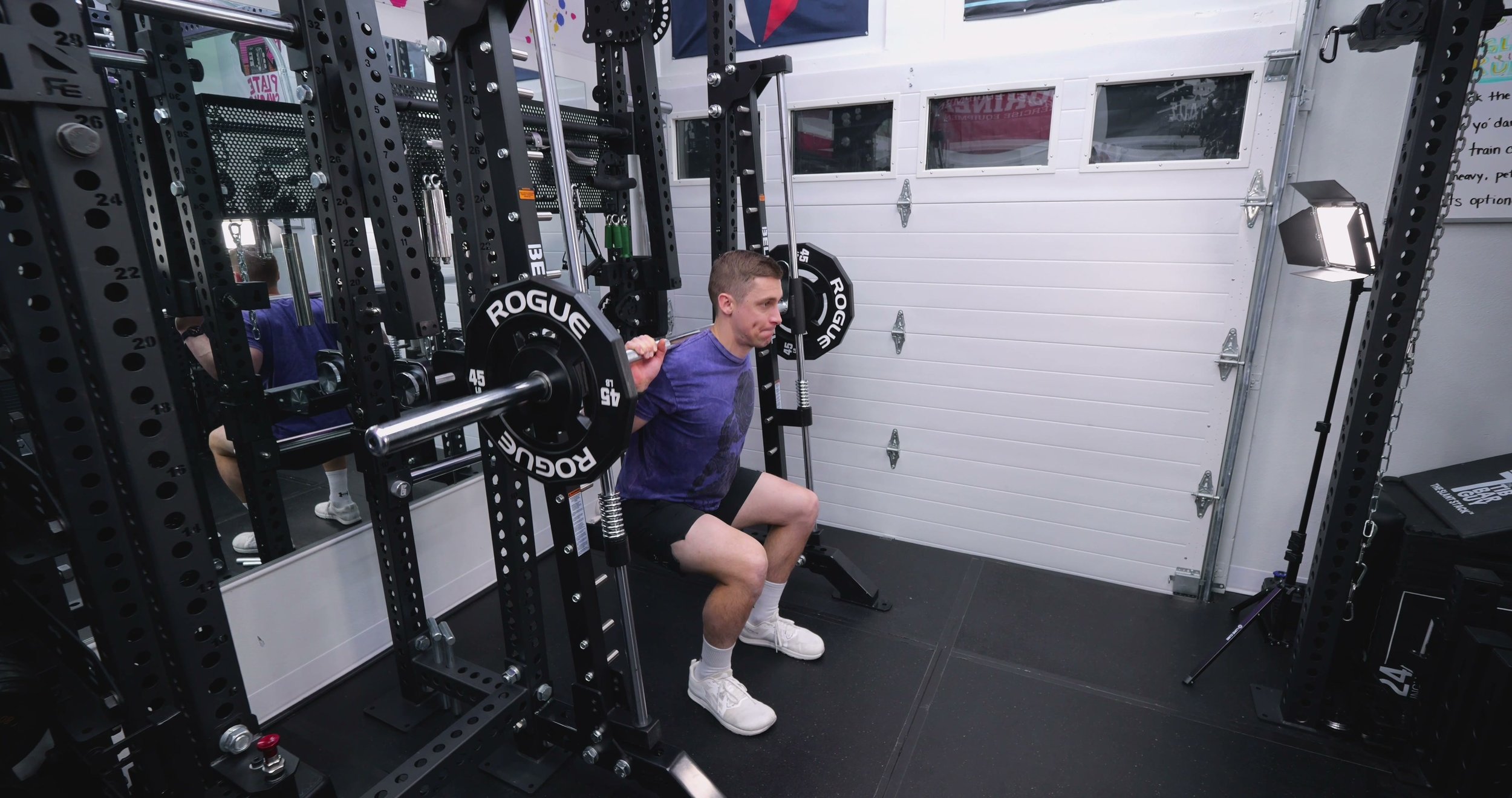
Bells of Steel offers two versions: a hollow Smith bar or a BYOB setup where you clamp your own barbell into the trolley. The hollow bar version starts at about 16 pounds, which is very manageable for lighter movements, rehab work, or higher-rep accessories. If you go with the BYOB option and use a standard 45-pound Olympic bar, the starting weight jumps significantly, which may be fine if you’re strong and never train light, but it’s something to think about if you value a lighter starting resistance.
Under load, the system feels solid. The linear ball bearings are smooth with no front-to-back or side-to-side play. I can grab the bar anywhere—center, ends, or even one-handed—and it stays balanced with no torquing or wobble. At a rated capacity of 600 pounds, it handles heavy loading confidently.
Universal Fit and the Tradeoffs That Come With It
The universal fit is achieved through a clever but imperfect solution. The mounting brackets have both 1-inch and 5/8-inch bolt holes, and spacers are included to dial in different rack widths. By repositioning the spacers inside or outside the bracket, you can fit racks from 41-inch interior width up to 43 inches.
The tradeoff is the latching system. The screw-in hooks protrude about two to two and a half inches into the rack. That extra reach is what allows the attachment to work across different rack widths, but it can get in the way. At full arm extension on pressing movements—especially incline press or military press—my elbows sometimes come close to or make contact with the hooks. I’m 6’2” with long arms, so taller lifters are more likely to notice this. For me, it’s a minor annoyance that I’m willing to accept given the price and compatibility.
Height Limitations
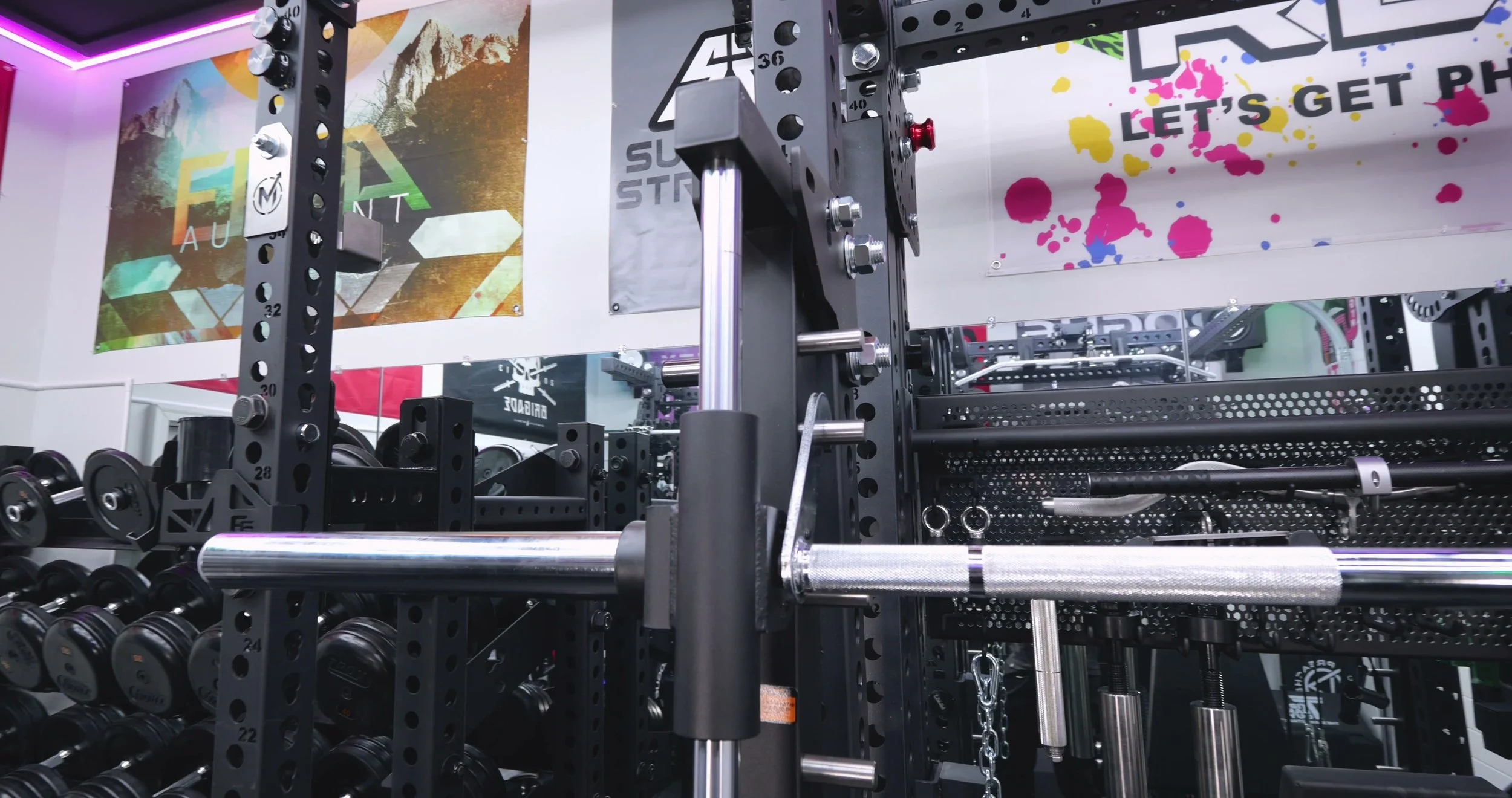
Height is the first real downside. Depending on how and where you mount it, the unit ends up somewhere in the 69- to 72-inch range. At my height, I’m right at the upper limit. I mounted mine as low as possible so I could still do bent-over rows, Romanian deadlifts, and bench pressing.
If you mount it higher, you gain a little more room for overhead movements, but you lose lower range. Standing overhead press isn’t realistic on this setup. Seated military press works fine, and squatting is usable, but when mounted at an angle, the very top stopper isn’t accessible due to the bracket design. I end up using the second-highest stopper for squats, which puts the practical height limit somewhere around 6’4” to 6’5” for comfortable use.
I’d love to see Bells of Steel offer two height options in the future—a standard version like this and a taller one, even if it cost a bit more.
Lower Range of Motion and Workarounds
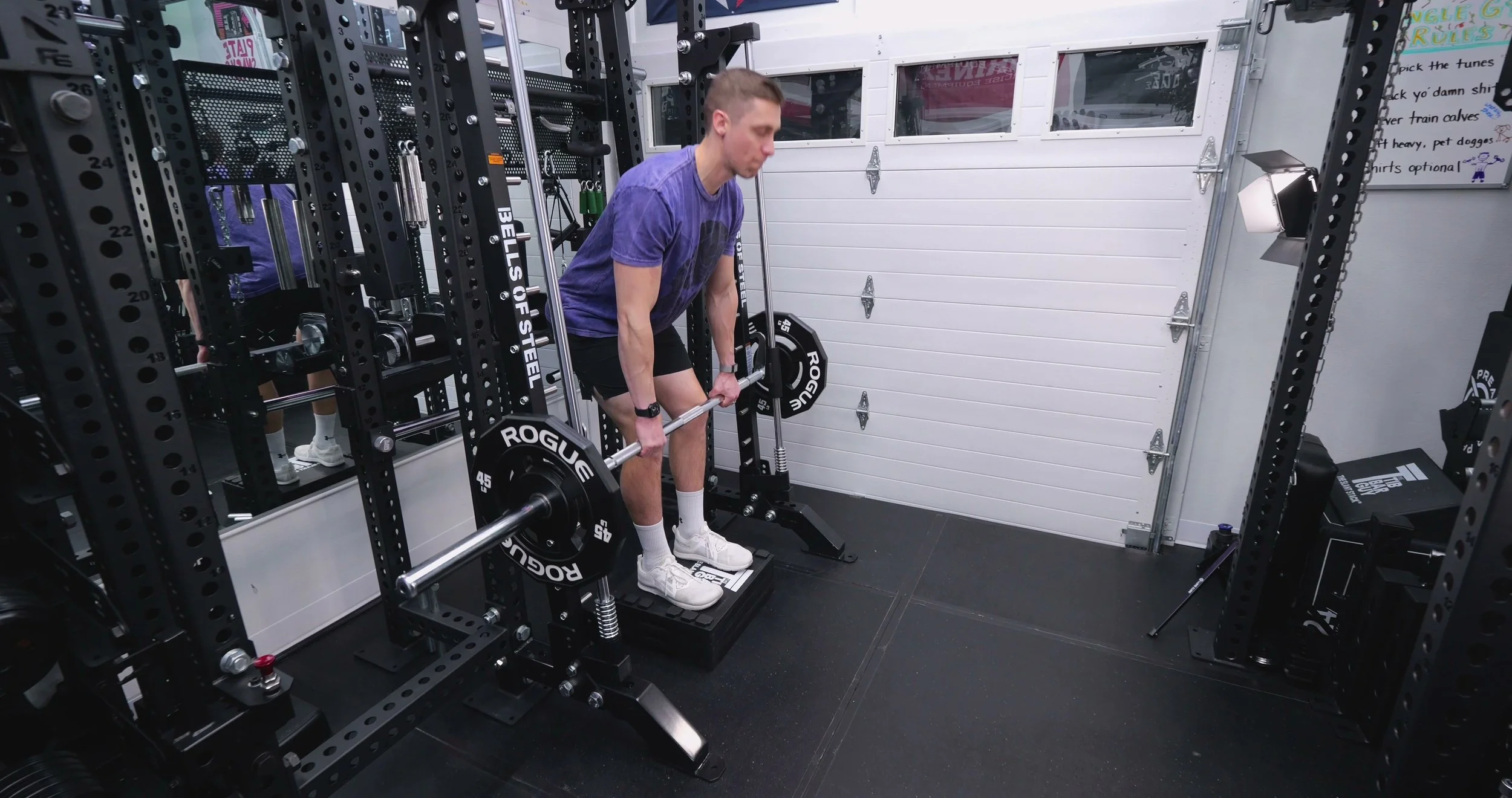
The second major downside is the lower range of motion. The lowest the bar can travel is about 20.5 inches from the ground, measured to the center of the bar. That’s just under my kneecaps, which is too high for deadlifts or RDLs. Bent-over rows work, but I’m coming within an inch or two of the spring stopper at the bottom.
The spring stopper is there to absorb the load if you drop the carriage, but it eats up about 4.5 inches of vertical travel. If that spring were replaced with a thicker rubber or plastic washer, you’d gain meaningful range of motion and drop the minimum bar height closer to 16 inches. I’ve seen similar changes made on other Smith systems for the same reason, and it’s the single biggest improvement I’d like to see here.
My workaround is simple: I stand on a raised platform. I use a Tib Bar Guy slant stack that’s about six inches tall, but a plyo box, stacked plates, or a DIY wooden platform would do the same thing. That extra height makes pulling movements far more comfortable.
Value and Alternatives
For the price, this attachment is hard to beat. You’re getting universal rack compatibility, angled or vertical bar paths, and the ability to mount it almost anywhere on your rack. Standalone Smith machines cost significantly more and take up far more space, while many rack-specific Smith attachments lock you into a single ecosystem.
The compromises—height limits and reduced lower range—are real, but they’re also understandable given the design goal of universal fit.
Who Should Buy This
This makes sense if you already own a 3x3 rack and want Smith machine functionality without replacing your setup. It’s especially appealing if space is tight and you value flexibility over a perfectly optimized Smith path.
Who Should Skip It
Very tall lifters, or anyone who wants full-range Smith deadlifts without platforms, may find the limitations frustrating. If aesthetics matter more than versatility, a rack-specific or standalone Smith may be a better fit.
Final Verdict
If you want an affordable, genuinely universal Smith machine attachment that integrates cleanly into an existing rack, this delivers. You’re trading some height and range-of-motion limitations for flexibility, compatibility, and value—but for the right home gym, that’s a fair trade.
Affiliate Disclosure
This article may contain affiliate links. If you purchase through these links, The Jungle Gym Reviews may earn a small commission at no additional cost to you.